
721-1 Evidence Trumps Scholarship
Yet Yahuah has not given you a heart to perceive, and eyes to see, and ears to hear, until this day.
People do not need to be educated scholars to find or know truth. People just need to learn the nature and character of “evidence” and its significance.
- The definition of “evidence” is the available body of facts or information indicating whether a belief or proposition is true or valid. The title of this article is a “proposition”.
The content of this article presents “evidence” or “facts” to illustrate that the “proposition” is true. “Facts” are things that are known to be true or have been proven true. “Truth” is that which is in accordance with fact or reality. It is something we can “see” with our eyes and “hear” with our ears. For example, the following object is an orange circle.

If I were to tell people that this object is a green square, is this the truth? Is it a fact? In our current society, the shape of this object has been labelled a circle and its color has been labelled orange. When people use these labels in our society, we all picture the same thing in our minds because we are all using the same labels. In our present society, the truth is that this object is an orange circle. We see the object and its color with our own eyes. No one can convince us otherwise.
In our day and age, we esteem scholars and their testimony. These are people who have received years of education from reputable institutions after their high school education. They have acquired knowledge from other scholars and have studied subjects to a much greater depth. In our minds, these individuals are “experts” in their field of study. An “expert” is a person who has a comprehensive and authoritative knowledge of or skill in a particular area. Because these scholars are “experts,” we tend to rely upon their perspective especially as it relates to their particular field of study. Generally speaking, we have been conditioned to accept their perspective even when solid evidence contradicts their testimony. Essentially, scholars can tell people that the orange circle is a green square and people believe them instead of the evidence that can be seen with their own eyes.
Let’s consider an example. Most linguists say that the oldest language in the world is Sumerian. “Linguists” are scholars who study languages. They base this assumption upon the thousands of tablets discovered by archaeologists, written in the Sumerian language. No other artifacts written in another language have been found that predate these stone tablets. Therefore, they conclude that Sumerian is the oldest language to date.
Scholars say that the Hebrew written language was developed around the 10th century BCE which is 1000 years before Messiah Yahusha was born. Researchers say that the Prophet Moshe (Moses) lived somewhere between 1300 and 1400 BCE. Based on these conclusions from scholars, it would have been impossible for the Prophet Moshe to have written the Torah. The Torah includes the first five books of Bibles and Tanakhs. Moshe was a Hebrew. According to scholars, the Hebrew written language did not develop until 300-400 years later after Moshe lived.
Scholars establish the date of the Hebrew written language upon the oldest “accepted” artifacts found by archaeologists, thus far. One piece of “evidence” is called the Zayit Stone. Here is an excerpt taken from Wikipedia regarding this artifact.
The earliest known inscription in the Paleo-Hebrew script is the Zayit Stone discovered on a wall at Tel Zayit, in the Beth Guvrin Valley in the lowlands of ancient Judea in 2005, about 50 km (31 mi) southwest of Jerusalem. The 22 letters were carved on one side of the 38 lb (17 kg) stone, which resembles a bowl on the other. The find is attributed to the mid-10th century BCE. The so-called Ophel inscription is of a similar age, but difficult to interpret, and may be classified as either Proto-Canaanite or as Paleo-Hebrew. The Gezer calendar is of uncertain date, but may also still date to the 10th century BCE. https://en.wikipedia.org/wiki/Paleo-Hebrew_alphabet#:
Three of the oldest artifacts with the Paleo-Hebrew script include the Zayit Stone, the Ophel inscription and the Gezer calendar. All three have been dated to approximately 1000 BCE which is around the time of King David.
Scholars claim that the “Proto-Canaanite” script preceded or was the foundation for the Paleo-Hebrew language. They do not consider this language or its alphabet as a “Hebrew language”. For this reason, they say the Hebrew language was not developed until 1000 BCE which is the date of the Zayit stone. Jeff A. Benner on his website Ancient Hebrew Research Center discusses this situation in the following which includes discoveries not accepted by a majority of scholars.
The standard presentation of Phoenician being the first alphabet is curious, since scholars have long known of much older alphabetic inscriptions. In 1904-1905 Sir Flinders Petrie, the father of Egyptian archaeology, and his wife Hilda discovered several rudimentary alphabetic inscriptions in the copper and turquoise mines that were controlled by the ancient Egyptians on the Sinai Peninsula. Sir Alan Gardiner, the premier linguist of his day, deciphered some of the writings and proclaimed that they were a form of primitive alphabet and that they used a Semitic language. The script became known as “Proto-Sinaitic” and was dated to the late Middle Bronze Age in the 1600s or early 1500s BC. W. F. Albright, the American known as the father of biblical archaeology, popularized the idea that these were Semitic writings and many took up the idea that Israelite slaves were responsible for these inscriptions. Hebrew, as the world’s oldest alphabet, was first claimed in the 1920’s by German scholar Hubert Grimme. “Although Grimme identified some of the Egyptian inscriptions as Hebrew, he was unable to identify all of the alphabet correctly,” explained Roni Segal, academic adviser for The Israel Institute of Biblical Studies, an online language academy specializing in Biblical Hebrew, who spoke to Breaking Israel News.
As modern skepticism about the biblical account of the Exodus period took hold late in the 20th century, scholars have generally retreated from the idea that the Proto-Sinaitic inscriptions were the product of Israelite mine workers. Additionally, the discovery of many other alphabetic inscriptions in the Canaan area dated to the period from 1200-1050 BC prompted the need for a new category. These, and a few earlier fragments from that area that were all similar to the Proto-Sinaitic constructions, were labeled as “Proto-Canaanite.”
The system for all these forms appeared to have been developed from Egyptian Hieroglyphics, which was used as a basis for creating 22 alphabetic letters representing consonantal sounds expressing the Semitic language of the writings. The first writings accepted by scholars as using “Hebrew” script are all from after 1000 BC and classified as using the “Paleo-Hebrew” alphabet. https://www.ancient-hebrew.org/alphabet/new-discoveries.htm
Scholars do not “accept” Hebrew script before 1000 BCE even though there is evidence to suggest otherwise. The “Proto-Canaanite” alphabet are pictographic letters as illustrated below:

Scholars do not consider this a “Hebrew” alphabet. Letters from this particular language date to at least 1500 BCE. This language would have been in existence 100-200 years before the prophet Moshe (Moses). It is entirely possible that this is the language used by Moshe, but then would it be considered “Proto-Canaanite” or “Hebrew” in his case?
Multiple inscriptions were found at Serabit el-Khadim, the ancient Egyptian mining site. Following is one inscription found at this site with a clear transcription to the right. The link to this inscription can be found at the following website. https://library.biblicalarchaeology.org/sidebar/mining-the-history-of-the-alphabet-at-serabit-el-khadem/. We can clearly see the letters in this inscription with our own eyes and compare it with the “Proto-Canaanite” alphabet above.
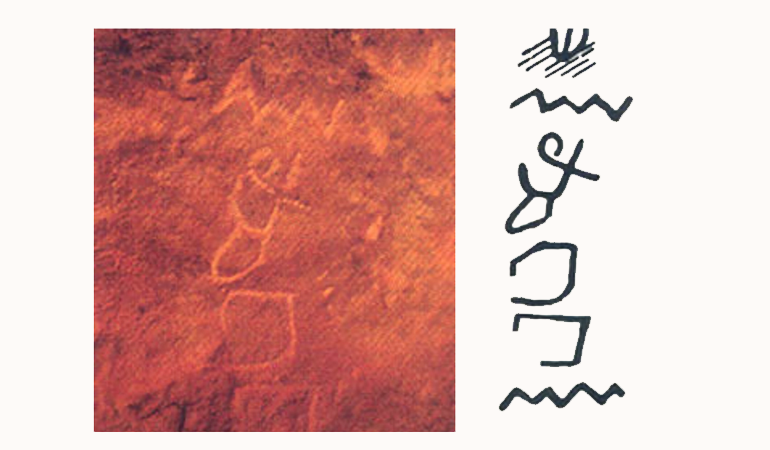
All twenty-two pictographic letters in the “Proto-Canaanite” script have been found in many inscriptions. Jeff A. Benner provides multiple examples of inscriptions on his website: Ancient Hebrew Research Center at the following link: https://www.ancient-hebrew.org/inscriptions/101.html. He provides the following description of this particular inscription:
Description: This inscription, discovered by William Flinders Petrie in 1904, dated to about 1500 BCE, was found on rocks in Serabit El-Khadim in the Sinai Peninsula. The ancient letter ‘aleph’ is clearly visible in the upper left corner of the image. Not as visible is the letter ‘lamed’ below the aleph, and the letter ‘mem’ to the right of the aleph, forming the word m’el meaning ‘from God’. https://www.ancient-hebrew.org/inscriptions/101.html
This is “evidence”. We can see these letters that have been carved into the wall at Serabit El-Khadim. They have been dated to 1500 BCE which is 100-200 years before the time of the prophet Moshe (Moses) so it is likely he was using this language, both spoken and written. However, this language is called “Proto-Canaanite” and not “Hebrew”. This is like these scholars telling us that the orange circle is a green square. This “evidence” reveals the errors in their conclusions in this matter.
Evidence Trumps Scholarship
If the prophet Moshe (Moses) spoke and wrote in this language, then a logical conclusion would lead us to believe and understand that the “Proto-Canaanite” language is also “Hebrew”. If the prophet Moshe didn’t write the Torah as scholars claim, then the following words are a lie.
And Moshe wrote all the words of Yahuah, and rose up early in the morning, and built an altar under the hill, and twelve pillars, according to the twelve tribes of Yashar’El.
If this is a lie, then what other parts of the Torah are a lie from the perspective of these scholars? The conclusions of these scholars are undermining the integrity of the testimony found within the Torah, itself. It is clear that these scholars do not consider the Torah a reliable witness and they reveal belief systems within them that deny our Father’s existence. Do their personal beliefs influence their conclusions? Yes!
Testimony from the Torah confirms that the prophet Moshe (Moses) was a “Hebrew”. He was from the tribe of Levi. People who can read the underlying Hebrew or translations of the Torah, can see this evidence with their own eyes. We do not need to be scholars to see this and we don’t need scholars to verify these words for us.
And there went a man of the house of Levi, and took to wife a daughter of Levi. And the woman conceived, and bare a son: and when she saw him that he was a goodly child, she hid him three months. And when she could no longer hide him, she took for him an ark of bulrushes, and daubed it with slime and with pitch, and put the child therein; and she laid it in the flags by the river’s brink. And his sister stood afar off, to wit what would be done to him. And the daughter of Pharaoh came down to wash herself at the river; and her maidens walked along by the river’s side; and when she saw the ark among the flags, she sent her maid to fetch it. And when she had opened it, she saw the child: and, behold, the babe wept. And she had compassion on him, and said, This is one of the Hebrews’ children. Then, said his sister to Pharaoh’s daughter, Shall I go and call to you a nurse of the Hebrew women, that she may nurse the child for you? And Pharaoh’s daughter said to her, Go. And the maid went and called the child’s mother.
“Hebrews” speak and write Hebrew, not Canaanite. Testimony says that the prophet Moshe wrote the Torah and instructed the Levitical Priests to place this scroll in the side of the ark of the covenant.
And it came to pass, when Moshe had made an end of writing the words of this Law [Torah] in a book [scroll], until they were finished, That Moshe commanded the Levites, which bare the ark of the covenant of Yahuah, saying, Take this book [scroll] of the Law [Torah], and put it in the side of the ark of the covenant of Yahuah your Elohiym, that it may be there for a witness against you.
The prophet Moshe had a spoken and written language. He was a Hebrew so we can conclude that he was writing in a “Hebrew language”. It is highly probable that the Canaanites and the Hebrews spoke and wrote the same language because testimony says that the patriarch, Abraham, spoke to the sons of Heth in the following passage. This evidence illustrates that Hebrews and Canaanites understood one another’s speech.
And Abraham stood up from before his dead, and spoke unto the sons of Heth, saying,
Abram who later became “Abraham” was also described as a “Hebrew” in the following passage:
And there came one that had escaped, and told Abram the Hebrew; for he dwelt in the plain of Mamre the Amorite, brother of Eshcol, and brother of Aner: and these were confederate with Abram.
Testimony in the Torah says that Heth was a son of Cannan.
And Canaan begat Sidon his firstborn, and Heth,
It appears that the Hebrews and Canaanites spoke the same language and therefore, used the same written language. If the Canaanites and the Hebrews spoke the same language, then the “Proto-Canaanite” script can also be labelled as, “Hebrew script”. This evidence illustrates that the prophet Moshe (Moses) wrote the Torah as testimony states in Shemoth (Exodus) 24:4 and Debarim (Deuteronomy) 31:24-26.
Testimony from Yahusha (Joshua), Son of Nun, labels the Torah as the “Law of Moshe”. He is a second witness in the ancient Hebrew writings.
Then Yahusha built an altar unto Yahuah Elohiym of Yashar’El in mount Ebal, As Moshe the servant of Yahuah commanded the children of Yashar’El, as it is written in the book of the Law [Torah] of Moshe, an altar of whole stones, over which no man has lifted up any iron: and they offered thereon burnt offerings unto Yahuah, and sacrificed peace offerings.
Testimony from firsthand eyewitnesses is considered “evidence”. Yahusha, Son of Nun, is a firsthand eyewitness to the events surrounding the prophet Moshe (Moses). Shemoth (Exodus) and Debarim (Deuteronomy) were written by the prophet Moshe (Moses) and the book of Yahusha (Joshua) was written by the Yahusha, Son of Nun who was the successor to Moshe. Yahusha (Joshua) says the “Law of Moshe” was written. Therefore, the Hebrews at that time had a written language. This “evidence” illustrates that scholars are essentially telling people that the orange circle is a green square. This evidence reveals the errors in their conclusions.
Evidence Trumps Scholarship
The Alphabet as Evidence:
The “Proto-Canaanite” script includes 22 letters. The first letter is the picture of an ox-head. The definition of this letter relates to the actual picture of the letter. Oxen are strong. They were commonly yoked together and were used to plow fields. This pictographic letter is easily seen in the inscription found at Serabit El-Khadim. We can see this evidence for ourselves. The lamed is a picture of a shepherd’s staff which is used to guide and discipline sheep. It is a symbol of authority. Here are the two letters together read from right to left.
AL
Together, these pictures mean “strong authority”. We can see this definition for ourselves just by looking at the pictures of these letters. If this is the language used by the prophet Moshe in his writings, then the definition of this simple word could be found in the context of his writings. This would confirm that this was the language used by Moshe.
The Hebrew word translated as “God” is “Elohiym”. The root of this word is an “aleph and lamed” as pictured above in the “Proto-Canaanite” script. The context of this passage calls our Creator, Yahuah, a “Strong Authority”.
These are the generations of the heavens and of the earth when they were created, in the day that Yahuah, Strong Authority [Elohiym] made the earth and the heavens,
People who are in positions of “authority” have power. They have the ability to enact and impose laws or rules upon people. For example, an employer has the authority to define an employee’s job description. If an employee does not fulfill the job description, the employer has the power to remove the employee from his or her job position. Employers are examples of “strong authorities”. Moshe identified Yahuah as a “Strong Authority”. We would expect a “strong authority” to have a set of “laws”. Testimony says that Yahuah wrote a Law [Torah] and commandments and instructed the prophet Moshe (Moses) to teach them to the House of Yashar’El.
And Yahuah said unto Moshe, come up to me into the mount, and be there: and I will give you tables of stone, and a Law [Torah], and commandments which I have written; that you may teach them.
The context of this testimony illustrates that Yahuah has “authority” because He essentially wrote a “job description” for the House of Yashar’El. If they did not fulfill the “job description” then they would be removed from the land just like an employer removes an employee who does not meet the requirements of the job description. This is what Yahuah said in the following passage:
And if you will not for all this hear and obey me, but walk contrary unto me; Then I will walk contrary unto you also in fury; and I, even I, will chastise you seven times for your sins. And you shall eat the flesh of your sons, and the flesh of your daughters shall you eat. And I will destroy your high places, and cut down your images, and cast your carcasses upon the carcasses of your idols, and my soul shall abhor you. And I will make your cities waste, and bring your sanctuaries unto desolation, and I will not smell the savor of your sweet odors. And I will bring the land into desolation: and your enemies which dwell therein shall be astonished at it. And I will scatter you among the heathen, and will draw out a sword after you: and your land shall be desolate, and your cities waste.
Testimony says that the House of Yashar’El disobeyed His instructions as illustrated in the following passage:
For so it was, that the children of Yashar’El had sinned against Yahuah their Elohiym, which had brought them up out of the land of Egypt, from under the hand of Pharaoh king of Egypt, and had feared other strong authorities, And walked in the statutes of the heathen, whom Yahuah cast out from before the children of Yashar’El, and of the kings of Yashar’El, which they had made. And the children of Yashar’El did secretly those things that were not right against Yahuah their Elohiym, and they built them high places in all their cities, from the tower of the watchmen to the fenced city. And they set them up images and groves in every high hill, and under every green tree: And there they burnt incense in all the high places, as did the heathen whom Yahuah carried away before them; and wrought wicked things to provoke Yahuah to anger: For they served idols, whereof Yahuah had said unto them, You shall not do this thing. Yet Yahuah testified against Yashar’El, and against Yahudah, by all the prophets, and by all the seers, saying, Turn from your evil ways, and keep my commandments [mitzvot] and my statutes, according to all the Law [Torah] which I commanded your fathers, and which I sent to you by my servants the prophets. Notwithstanding they would not hear, but hardened their necks, like to the neck of their fathers, that did not believe in Yahuah their Elohiym. And they rejected his statutes, and his covenant that he made with their fathers, and his testimonies which he testified against them; and they followed vanity, and became vain, and went after the heathen that were round about them, concerning whom Yahuah had charged them, that they should not do like them. And they left all the commandments of Yahuah their Elohiym, and made them molten images, even two calves, and made a grove, and worshipped all the host of heaven, and served Baal. And they caused their sons and their daughters to pass through the fire, and used divination and enchantments, and sold themselves to do evil in the sight of Yahuah, to provoke him to anger. Therefore, Yahuah was very angry with Yashar’El, and removed them out of his sight: there was none left but the tribe of Yahudah only.
As a result, Yahuah removed them from the land. He removed them from their “job position”. He had the power to do so which proves that Yahuah is indeed a “Strong Authority”. He is an LA. The context of these passages confirms the definition of this word using the ancient “Hebrew” pictographic language.
Historical sources say the House of Yashar’El was removed from the land by the Assyrians in 722 BCE. The Words in Vayikra (Leviticus) 26:27-33 came to pass hundreds of years after the prophet Moshe (Moses) lived. This evidence illustrates that Yahuah has “authority”. This “evidence” confirms the meaning of the word, “elohiym” and the use of the ancient “Proto-Canaanite” script by the prophet Moshe.
In 2 Melakim (Kings) 17:7-18, the House of Yashar’El were fearing other “strong authorities” by walking in the statutes of the heathen. They were obeying the laws of other “strong authorities” rather than the Laws of Yahuah. These “strong authorities” had laws that were different than the Laws of Yahuah. The House of Yashar’El was “employed” by another employer.
Based on this “evidence,” scholars who teach people that the Torah could not have been written by the Prophet Moshe is like telling people that the orange circle is a green square. The evidence illustrates that the testimony from scholars is in error.
Evidence Trumps Scholarship
Evidence for the Original Language:
There is more “evidence” to be considered in this matter. The English language originated from these pictographic letters as well. Here is the example with the letter, “aleph” and “lamed”.
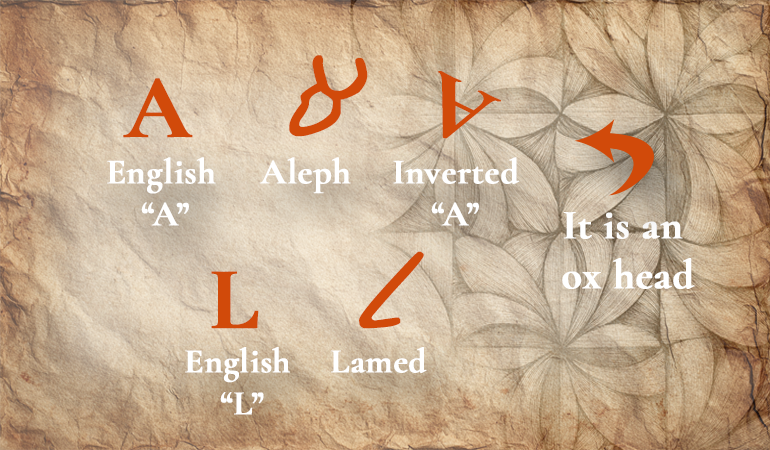

The English language descended from these ancient pictographic “Hebrew” letters. The pictures of these letters are very significant. The horns on the ox-head represent the crown of a king and the shepherd’s staff is represented by the King’s scepter.
Kings are “strong authorities” who establish and impose laws within their realm. They have the power to punish those who choose to disobey their laws. They can also remove people from their “job positions”. Every culture throughout time has leaders with some sort of “crown” or “head-piece” and a “staff” of authority. Here are some examples:
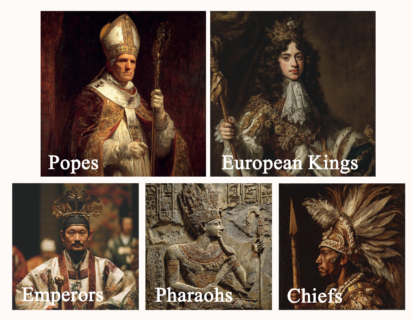
Each one of these examples is “evidence”. We can see the letter, “aleph and lamed” in these pictures with our own eyes. This evidence illustrates that the “Proto-Canaanite” script is the oldest original language of all people groups. We do not see the Sumerian script pictured in these cultures. We see the “Proto-Canaanite” script which is actually the “Hebrew” language.
Testimony in Shemoth (Exodus) 24:12 says that Yahuah actually wrote His Laws on tables of stone. This means He also has a language of His own. Moshe (Moses) understood Yahuah’s language and could read it. His language was preserved among the Hebrews after languages were confused at the Tower of Babel incident. But we can see remnants of our Creator’s original language in ALL people groups throughout ALL time. Therefore, the oldest language on the earth is the language spoken and written by ancient Hebrews. Here is an illustration.
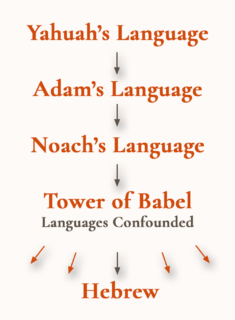
Linguists who say that the Sumerian language is the oldest language is like telling people that the orange circle is a green square. The “evidence” illustrates that their testimony is in error.
Evidence trumps scholarship
Conclusion:
Let’s review the facts:
- “Evidence” from the Torah, suggests that Abraham and the Canaanites understood one another’s language. They likely spoke the same language. This is evidence we can see with our own eyes by reading the text.
- The inscription from Serabit El-Khadim illustrated in this article says “m’el” and is translated as “from God”. It dates to 1500 BCE which is 100-200 years before the time of Moshe. This is evidence that we can see with our own eyes.
- The prophet Moshe (Moses) was a Hebrew which means he spoke and wrote in the Hebrew language, not Canaanite. This is evidence that we can see with our own eyes.
- Testimony says that the prophet Moshe wrote the Torah and this is confirmed by Yahusha, Son of Nun (Joshua). This is evidence that we can see with our own eyes.
- The “Proto-Canaanite” script, LA, means “strong authority”. We can see this evidence for ourselves in these pictographic letters.
- The context in the Torah verifies that AL, means “strong authority”. This evidence illustrates that the “Proto-Canaanite” script was the written language in use by the prophet Moshe, which means these letters are “Hebrew” as well as “Canaanite”. This is evidence we can see with our own eyes.
- The English language originated from the ancient “Hebrew” pictographic language also known as “Proto-Canaanite” script. We can see this with our own eyes.
- The word AL can be visualized in every culture throughout time. These “strong authorities” are wearing a “crown” or “head-piece” and have a “scepter” in their hands as symbols of their authority. These include Popes, European Kings, Emperors, Pharaohs and Chiefs. This shows the influence of the original language of our Creator. We can see this evidence with our own eyes.
Restoring the Ancient Path website presents evidence. It is not necessary for any author on this website to be a scholar because the focus is not upon “professional opinion” but on “evidence”. This does not mean scholars do not have value. They have devoted their lives to researching and their efforts ought to be recognized as such. But they are men and women. They are fallible. They are influenced by their own personal beliefs. It is prudent to consider the “evidence” before drawing conclusions because…
Evidence Trumps Scholarship
Download this Article here