421-1 Love Yahuah
Shema, O Yashar’El: Yahuah our Strong Authority is a united Yahuah: And you shall love Yahuah your Strong Authority with all your heart, and with all your soul, and with all your might. And these words, which I command you this day, shall be in your heart: And you shall teach them diligently unto your children, and shall talk of them when you sit in your house, and when you walk by the way, and when you lie down, and when you rise up. And you shall bind them for a sign upon your hand, and they shall be as frontlets between your eyes. And you shall write them upon the posts of your house, and on your gates.
V’ahavta Yahuah Elohiym Kol Lebab
Love (Ahav H157) Yahuah Elohiym with ALL (Kol H3605) your heart (Lebab H3824), with ALL your soul [Nephesh H5315] and ALL your might [Meod 3966].
ואהבת את יהוה אלהיך בכל־לבבך ובכל־נפשׁך ובכל־מאדך
And you shall love Yahuah your Elohiym with all your heart, and with all your soul, and with all your might.
Primary verses in the Torah to consider:
And now, Yashar’El, what does Yahuah your Elohiym require of you, but to fear Yahuah your Elohiym, to walk in all his ways, and to love him, and to serve Yahuah your Elohiym with all your heart and with all your soul, To guard the commandments of Yahuah, and his statutes, which I command you this day for your good?
You shall not Shema [hear and obey] the words of that prophet, or that dreamer of dreams: for Yahuah your Elohiym TESTS you, to know whether you love Yahuah your Elohiym with all your heart and with all your soul.
And Yahuah your Elohiym will circumcise your heart, and the heart of your seed, to love Yahuah your Elohiym with all your heart, and with all your soul, that you may live.
Occurrences in the Torah (11):
Debarim (Deuteronomy) 6:5, 7:9, 10:12, 11:1, 11:13, 11:22, 13:3, 19:9, 3:6, 30:16, 30:20 (11)
Occurrences in the Prophets (8):
Yahusha (Joshua) 23:11 (1)
Yeshayahu (Isiah) 56:6 (1)
Dani’El 9:4 (1)
Tehillim 18:1, 31:23, 97:10, 116:1, 145:20 (5)
What does “Ahav (love), Kol (all), Lebab (heart), Nephesh (soul) and Meod (might)” mean in the underlying Hebrew?
Definition of עהב (Love H157):
The two-lettered root of “ahav” is defined the following way by The Ancient Hebrew Lexicon of the Bible written by Jeff A. Benner as:
BH הב Action: Give, Supply Object: Gift, Burden Abstract: Love Definition: One does not choose the household which one is born into, including tribe, parents, children and wife (as marriages were often arranged by the father), it is a gift from God. These gifts are seen as a privilege and are to be cherished and protected. Ancient Hebrew: The pictograph H represents one who is looking at a great sight with his hands raised as when saying behold. The B is a representation of the tent or house. Combined these pictures mean “look toward the house” or “provide for the family”.
The Hebrew word translated as “love” has the letter “aleph” also. Together, they mean the following:
BHA ( common, אהב / a.h.b) Translation: LOVE (V) Definition: To provide and protect that which is given as a privilege. An intimacy of action and emotion. Strong affection for another arising from personal ties. KJV Translations: love, lover, friend, beloved, like, lovely, loving Strong’s Hebrew #: h.0157
BHA אהב Definition: The expressions and actions toward the family, which one was privileged with.
The letter “aleph” is seen as something that is “strong”. In its most basic sense, it is a “strong, looking towards the house or family”. We can see this in the following pictures:
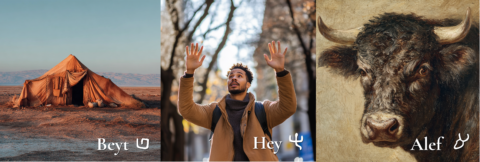
The “hey” is a guy trying to get someone’s attention to show them something pretty awesome or trying to warn someone. It also symbolizes breath. In this case, he is trying to get our attention towards the family or house. The letter “aleph” can represent our Father in Heaven as well. He is our “strong authority” which is the deeper meaning of this letter.
Yahuah Elohiym is a real individual with feelings, thoughts and preferences. He wants us to be a part of His family. We did not get to choose our Creator as a husband chooses a wife. We can either see Him as a curse or a blessing but He is still our Creator regardless of how we choose to perceive Him.
“Love” from a Hebrew perspective is an action. The context of passages can help us define “love” from the perspective of our Father.
And now, Yashar’El, what does Yahuah your Elohiym require of you, but to fear Yahuah your Elohiym, to walk in all his ways, and to love him, and to serve Yahuah your Elohiym with all your heart and with all your soul, To guard the commandments of Yahuah, and his statutes, which I command you this day for your good?
“Loving Yahuah” is associated with the following actions in this passage:
- Fear Yahuah
- Walk in His Ways
- Serve Him with ALL our heart and with ALL our soul
- Guard His commandments, statutes and ordinances
Yahusha says the first and greatest commandment is the following:
Yahusha said unto him, “You shall love Yahuah your Elohiym with all your heart, and with all your soul, and with all your mind”.
He did not have the Greek writings. He was not referring to the writings of Shaul of Tarsus. There was no “new covenant” given. His reference is strictly from the Torah or the Law of Moshe (Moses). Our Messiah was telling us to do the following:
- Fear Yahuah
- Walk in Yahuah’s Ways
- Love Yahuah
- Serve Yahuah with ALL our heart and with ALL our soul
- Guard Yahuah’s commandments, statutes and ordinances
This is what He was communicating to the people. Here is another passage in the Torah:
And you shall love Yahuah your Elohiym with all you heart, and with all your soul, and with all your might. And these words, which I command you this day, shall be in your heart: And you shall teach them diligently unto your children, and shall talk of them when you sit in your house, and when you walk by the way, and when you lie down, and when you rise up. And you shall bind them for a sign upon your hand, and they shall be as frontlets between your eyes. And you shall write them upon the posts of your house, and on your gates.
“Loving Yahuah” is associated with the following actions:
- The Words of Yahuah shall be in your heart.
- Teach them diligently to your children.
- Talk about Yahuah’s Words when you sit in your house.
- Talk about Yahuah’s Words when you walk by the way.
- Talk about Yahuah’s Words when you lie down.
- Talk about Yahuah’s Words when you rise up.
- Bind Yahuah’s Words upon your hands which represents ALL of our works.
- Bind them between our eyes which represents our thoughts.
- Write Yahuah’s Words on the doorposts of our houses.
- Write Yahuah’s Words on our gates.
These actions demonstrate love for our Father. When our Messiah referred to this commandment, he was instructing all of his followers to do these things because these things embody the commandment to “Love Yahuah”. Let’s examine another passage:
And it shall come to pass, if you shall hear and obey diligently unto my commandments which I command you this day, to love Yahuah your Elohiym, and to serve him with all your heart and with all your soul, That I will give you the rain of your land in his due season, the first rain and the latter rain, that you may gather in your corn, and your wine, and your oil. And I will send grass in your fields for your cattle, that you may eat and be full.
“Loving Yahuah” is associated with the following actions:
- Diligently hear and obey (Shema) His commandments spoken in that day.
- Serve Yahuah with ALL our heart and soul.
Our Messiah was also telling people to do these actions when he told them the first and greatest commandment. These actions cannot be separated from “Loving Yahuah”. Yahusha, Son of Nun, is a second witness describing what it means to “Love Yahuah”.
But take diligent heed to do the commandment and the Law, which Moshe the servant of Yahuah charged you, to love Yahuah your Elohiym, and to walk in all his ways, and to keep his commandments, and to cleave unto him, and to serve him with all your heart and with all your soul.
“Loving Yahuah” is associated with the following actions:
- Heed the commandments and the Law spoken and written by the Prophet Moshe.
- Do Yahuah’s commandments.
- Walk in Yahuah’s Ways
- Guard Yahuah’s commandments
- Cleave to Yahuah
- Serve Him with ALL your heart and with ALL your soul
The same actions are consistently being mentioned every single time the commandment to “Love Yahuah” is mentioned. Yeshayahu (Isaiah) is another witness:
Also the sons of the stranger, that join themselves to Yahuah, to serve him, and to love the name of Yahuah, to be his servants, every one that guards the Shabbat from polluting it, and takes hold of my covenant;
“Loving Yahuah” is also associated with the following actions:
- Joining themselves to Yahuah
- Serving Yahuah
- Those who guard Yahuah’s Shabbats and do not pollute it
- Those who take hold of the Covenant given at Mount Sinai.
These are also things our Messiah was conveying to his followers when he told people to “Love Yahuah with ALL their heart, soul and might”.
When we perceive Yahuah as a gift to be cherished and protected, we do those things that please Him. “Guarding” His Shabbats is the action of “protecting” them. This is how He views “Love”. He is our Father and we are respecting the rules of His House.
When we don’t respect the rules of His House, He perceives this as “hating” Him.
But the soul that does ought presumptuously, whether he be born in the land, or a stranger, the same reproaches Yahuah; and that soul shall be cut off from among his people. Because he has despised [bazah H959] the word of Yahuah and has broken his commandment, that soul shall utterly be cut off; his iniquity shall be upon him.
The Hebrew word translated as “despised” is “bazah”. The Ancient Hebrew Lexicon of the Bible defines the two-lettered root as:
ZB בז Action: Spoil, Divide, Despise Object: Spoils Abstract: Profit Definition: An enemy would plunder a household for goods to supply themselves as a bird of prey attacks its prey.Ancient Hebrew: The pictograph B represents a house. The Z represents an agricultural implement or a weapon. Combined these pictographs have the meaning of “a house cut” or “attacked”.
When thieves break into a house, they typically tear the house apart looking for valuables. They do not put things back in order. They do not respect the belongings of another or their boundaries. The three-lettered root has the addition of a “hey” on the end of the word.
HZB ( common, בזה / b.z.h) Translation: DISDAIN (V) Definition: A feeling of contempt for what is beneath one; to look with scorn on; to treat something as spoiled or no longer of value. KJV Translations: despise, disdain, scorn, contemned Strong’s Hebrew #: h.0959
HZB בזה Definition: To treat something as spoiled, no longer of value.
The “presumptuous people” in Bemidbar (Numbers) 15:30-31 treat the Word of Yahuah Elohiym as something spoiled and no longer of any value. They look upon His Word with disgust, disdain and contempt. The behaviors associated with “despising” the commandments of Yahuah include:
- Being presumptuous or full of pride
- Reproaching Yahuah
- Breaking Yahuah’s commandments
These behaviors communicate to our Father that we “hate” Him. Christian doctrine is an example. They actively teach people to disobey the Laws written by the Prophet Moshe and treat His Word as if it no longer has any value. In Bemidbar (Numbers) 15:30-31, our Father says these people are not forgiven. They will bear their iniquity and be cut off from their people.
King Shlemoh (Solomon) is another witness and says those who “despise” the Ways of our Father will die.
He that guards the commandment guards his own soul; but he that despises [bazah H959] His ways shall die.
“Despising” the Word of Yahuah is associated with the following actions:
- Not guarding the commandments of Yahuah.
This is also opposite of “Loving Yahuah”.
The House of Yahudah was removed from the land because they “despised” His Words.
Moreover, all the chief of the priests, and the people, transgressed very much after all the abominations of the heathen; and polluted the house of Yahuah which he had hallowed in Yerushalayim. And Yahuah Elohiym of their fathers sent to them by his messengers, rising up betimes, and sending; because he had compassion on his people, and on his dwelling place: But they mocked the messengers of Elohiym, and despised [bazah H959] his words, and misused his prophets, until the wrath of Yahuah arose against his people, till there was no remedy.
The behaviors associated with “despising” our Father’s Words include:
- Transgression of His Laws very much
- Doing the behaviors of the surrounding nations and their abominations
- Pollution of Yahuah’s Temple
- They mocked the messengers of Yahuah
- They misused the messengers of Yahuah
They had driven Yahuah to a point in which there was no remedy. In the next passage, we see the Law of Sowing and Reaping in effect. Because the priests despised the Word of Yahuah by departing from His Law, Yahuah made them despised and base.
For the priest’s lips should keep knowledge, and they should seek the Law at his mouth: for he is the messenger of Yahuah of hosts. But you are departed out of the way; you have caused many to stumble at the Law; you have corrupted the covenant of Levi, says Yahuah of hosts. Therefore, have I also made you despised [bazah H959] and base before all the people, according as you have not guarded my ways, but have been partial in the Law.
“Despising” the Word of our Father includes the following behaviors:
- Departing from His Ways
- Causing people to stumble in His Law
- Corrupted the covenant given to Levi
- Not guarding His Ways
- Followed the Law partially
These are behaviors that communicate to our Father that we “despise” Him. They are the exact opposite of the behaviors that communicate to our Father that we “Love” Him. Our Messiah said the following:
No man can serve two masters: for either he will hate the one, and love the other; or else he will hold to the one, and despise the other. You cannot serve Elohiym and mammon.

We cannot serve two masters. “Serving” a master is associated with “loving” him from the perspective of our Messiah. “Not serving” a master is associated with “despising” them. “Serving” Yahuah is associated with “loving Him” in nearly all passages we reviewed. Messiah Yahusha confirms the definition of “Loving Yahuah” and “Despising Yahuah” from a Hebrew perspective.
Definition of כל (Kol H3605):
The two-lettered root of “kol” is defined the following way by The Ancient Hebrew Lexicon of the Bible written by Jeff A. Benner as:
LK כל Action: Complete, Able, Sustain, Finish, Restrain, Eat Object: Vessel, Food, House, Prison Abstract: Whole, Villain Definition: An animal or land that is tamed has been worked and is complete and ready for use. Taming include; construction of holding pens, putting the soil to the plow, harvesting of crops, milk or meat. One eats once the harvest is complete. Ancient Hebrew: The pictograph K is a picture of the bent palm representing the bending or subduing of the will, the L is a picture of a shepherd staff or yoke. Combined these mean “tame for the yoke”.

The “Lamed” can represent “yoke” which connects an older stronger ox to a younger ox who is untrained. This forces the younger ox to learn the things it needs to do to be functional. When we “yoke” ourselves to Yahuah, we are learning His Ways. He is teaching us and training us to walk.
Eventually, we are fully trained and tame. We will reach a point in which our training is complete. The Hebrew word “kol” also has the addition of the “vav” and it is defined the following way by The Ancient Hebrew Lexicon of the Bible as:
LWK ( masc., כול / kol) Translation: ALL Definition: The whole of a group. Relationship to Root: In the sense of being full of food. Alternate Translations: any; every; among (when followed by the prefix “to~”) Edenics: whole KJV Translations: everything, all, whosoever, nothing, yet Strong’s Hebrew #: h.3605 Strong’s Aramaic #: a.3606
LWK ( common, כול / k.w.l) Translation: SUSTAIN (V) Definition: To provide what is needed to make someone or something whole or complete. KJV Translations: contain, feed, sustain, abide, nourish, hold, receive, victual, bear, comprehend Strong’s Hebrew #: h.3557
When we eat food, we are full. We are complete. We are whole. When we are fully trained in the Ways of our Father, we are completed ready to serve in the capacity for which we have been created. Here are the pictures that refer to the Hebrew word “kol”.
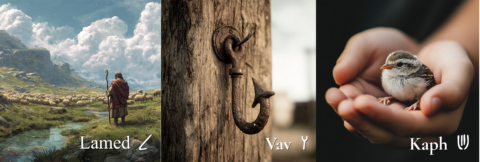
When the younger ox has been fully trained, it is completely submitted to the will of the older ox. It no longer resists. So, when our Father asks us to “love Him with ALL of our heart,” He is asking for ALL of it. He is asking for 100% complete submission. This is reflected in the actions mentioned in Debarim 6:5-9:
- The Words of Yahuah shall be in your heart.
- Teach them diligently to your children.
- Talk about Yahuah’s Words when you sit in your house.
- Talk about Yahuah’s Words when you walk by the way.
- Talk about Yahuah’s Words when you lie down.
- Talk about Yahuah’s Words when you rise up.
- Bind Yahuah’s Words upon your hands which represents ALL of our works.
- Bind them between our eyes which represents our thoughts.
- Write Yahuah’s Words on the doorposts of our houses.
- Write Yahuah’s Words on our gates.
These are the actions that illustrate someone giving Him their ALL.
Definition of לבב (Heart H3824):
The two-lettered root of “lebab” is defined the following way by The Ancient Hebrew Lexicon of the Bible written by Jeff A. Benner as:
BL לב Object: Heart, Flame, Thirst, Loin Abstract: Think Definition: The consciousness of man is seen as coming from deep inside the chest, the heart. Thirst as an Inside desire for water. Ancient Hebrew: The pictograph L is a picture of the shepherd staff representing authority, the B is a picture of a tent representing what is inside. Combined these mean “authority inside”.
BL ( masc., לב / leyv) HBL ( fem., לבה / liy-bah) Translation: HEART Definition: Literally, the vital organ which pumps blood, but, also seen as the seat of thought; the mind. Relationship to Root: The organ that pumps blood. This organ is also seen as the seat of thought and emotion, the mind. Alternate Spellings: לבב Edenics: life; love; liver – the seat of passion; lava KJV Translations: heart, mind, understanding, wisdom, friendly Strong’s Hebrew #: h.3820, h.3824, h.3826 Aramaic Spelling: בל Strong’s Aramaic #: a.1079, a.3821, a.3825
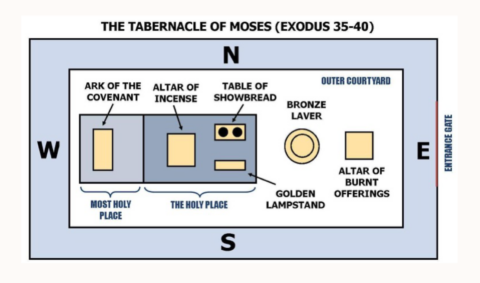
Our heart is akin to the Ark of the Covenant in the Tabernacle in the wilderness. This contained the mercy seat where Yahuah would dwell. There is a seat in our heart as well. We can give this seat to Yahuah Elohiym or we can give it to another.
The Hebrew word for “Lebab” has two “beyts”. This can be translated as “authority in the house of the house”. Our body is the outside house and our heart is the inside house. So, this is specifically talking about our “heart” or “”mind”.
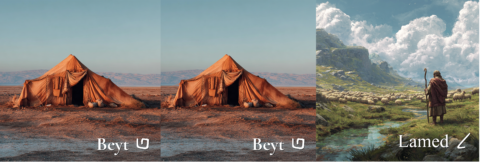
Yahuah wants to be the “complete” authority that sits in the seat of our hearts. He wants our whole heart… ALL of it.
Definition of נפש (Nephesh H5315):
“Nephesh” is defined the following way by The Ancient Hebrew Lexicon of the Bible written by Jeff A. Benner as:
FPN ( fem., נפש / ne-phesh) Translation: BEING Definition: A person or creature that has breath. The whole of an individual, god or animal including the body, mind, emotion, character and inner parts. Alternate Translations: everyone (when following the word “to~ ALL”) KJV Translations: soul, life, person, mind, heart, creature, body, dead, will, desire, man, self, any, appetite Strong’s Hebrew #: h.5315
Most of the words in this Hebrew word-family are associated with things that are “spread-out”. Here are three examples with verses added for context.
1. Chophshıiy:
FPX ( masc., חפשי / hhaph-shi) Translation: FREE Definition: Released from bondage or burden of obligation. Emancipation. KJV Translations: free, liberty Strong’s Hebrew #: h.2670
If you buy a Hebrew servant, six years he shall serve: and in the seventh he shall go out free for nothing.
2. Pashah:
HFP ( common, פשה / p.sh.h) Translation: SPREAD.ACROSS (V) Definition: To spread out excessively. Alternate Spellings: פשה KJV Translations: spread, abroad Strong’s Hebrew #: h.6581
But if the scab spread much abroad in the skin, after that he hath been seen of the priest for his cleansing, he shall be seen of the priest again:
Note: “spread much abroad” is an infinitive absolute in Hebrew grammar. Link to What is an Infinitive Absolute?
3. Pashaq:
QFP ( common, פסק ) Translation: SPREAD (V) Definition: [To be verified] To spread wide. Alternate Spellings: פשק KJV Translations: open Strong’s Hebrew #: h.6589
You have built your high place at every head of the way, and have made your beauty to be abhorred, and has opened your feet to everyone that passed by, and multiplied your whoredoms.

The two-lettered root includes the letters “pey and shin”. The “pey” is a picture of the mouth and the “shin” is a picture of the two front teeth. Creatures that are alive, open their mouth and eat food. When they eat, they have the energy to spread-out in their territory. They can reproduce young which also causes them to spread-out and be scattered abroad. Here are the word pictures associated with the word, “nephesh”.
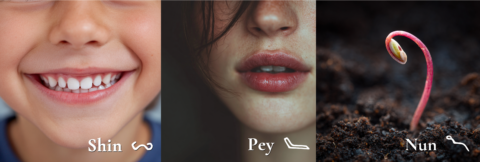
After fasting for a day or two, eating a meal is very satisfying. We feel refreshed. Dead men and women do not eat food. They do not move about or spread abroad. They do not reproduce young. Our “nephesh” includes everything about us. We cannot separate our mind and heart from our body. If we do, we are no longer a “living, breathing” man or woman who eats and moves about.
Our Father wants us to give ALL of our nephesh to Him.
Definition of מאד (Moed H3966):
The two-lettered root of “meod” is defined the following way by The Ancient Hebrew Lexicon of the Bible written by Jeff A. Benner as:
DA ( masc., אד / ad) Translation: MIST Definition: A vapor or fine spray. Relationship to Root: An overwhelming abundance of ash raked in the fire causing a cloud of dust. KJV Translations: mist, vapor Strong’s Hebrew #: h.0108

The “aleph” represents strength or might and the “dalet” is a door that swings back and forth. Ash creating a cloud of dust, goes back and forth with the wind. It goes everywhere. “Meod” has the addition of the letter “mah” and the “vav”. It is defined by The Ancient Hebrew Lexicon of the Bible as:
DWAM ( masc., מאוד / me-od) Translation: MANY Definition: A large but indefinite number. An abundance of things (many, much, great), actions (complete, wholly, strong, quick) or character (very). Alternate Translations: great; greatly; more; much; very KJV Translations: very, greatly, sore, exceedingly, great, much, diligently, good, might Strong’s Hebrew #: h.3966
The letter “mah” is a picture of the sea or the heavens which are quite massive and powerful. This would be much bigger, more massive mist or cloud of ash in the air. The “vav” means to add or secure something. Based on this evidence, “meod” represents actions that are massive and secure or all-encompassing. Here are three of the four pictures associated with this Hebrew word:
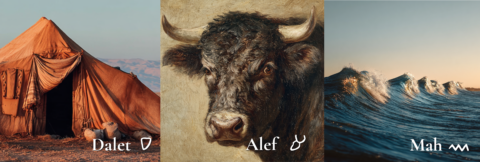
Here is the Hebrew word “meod” used in context.
And the waters prevailed, and were increased greatly [Meod H3966] upon the earth; and the ark went upon the face of the waters. And the waters prevailed exceedingly [Meod H3966 Meod H3966] upon the earth; and all the high hills, that were under the whole heaven, were covered.
Note: “Prevailed exceedingly” is an infinitive absolute. This would double the massiveness indicated by “meod”. Link to What is an Infinitive Absolute?
“Meod” represents our strength and power. Our Father wants ALL of our strength and power. This represents our efforts and energy.
What is the “Circumcision of the Heart” and how does this relate to “circumcision in the flesh”?
“Circumcision” of the foreskin on a man is the process of cutting actual flesh away from the penis. We are instructed to “circumcise” the foreskin of our hearts in the following passage:
Circumcise therefore the foreskin of your heart, and be no more stiff-necked.
“Circumcision” of the foreskin of our hearts is the action of subduing the primitive impulses of our flesh. The heart is the seat of authority which directs our life. If our Father is our Authority, then we will not commit adultery. Men may actually experience a desire within their hearts to be intimate with their best friend’s wife. This is a primitive urge of the flesh that does not necessarily see boundaries. When men are submitted to the authority of Yahuah, they suppress this desire that rises within them. This is what it means to “circumcise” the foreskin of our hearts. When a man chooses to act upon that desire, his flesh has now become the authority in his heart. Yahuah is no longer sitting in the seat of authority in his heart.
This is why Yahuah says that He will circumcise our hearts so that we may “Love Yahuah with ALL our hearts and with ALL our souls”.
And Yahuah your Elohiym will circumcise your heart, and the heart of your seed, to love Yahuah your Elohiym with all your heart, and with all your soul, that you may live.
“Loving Yahuah” is associated with doing His commandments. Yahuah will circumcise the foreskin of our hearts so that we will “do His commandments”. This is also prophesied in the following passage:
And they shall come there, and they shall take away all the detestable things thereof and all the abominations thereof from there. And I will give them one heart, and I will put a new spirit within you; and I will take the stony heart out of their flesh, and will give them a heart of flesh: That they may walk in my statutes, and keep mine ordinances, and do them: and they shall be my people, and I will be their Elohiym. But as for them whose heart walks after the heart of their detestable things and their abominations, I will recompense their way upon their own heads, says Adonai Yahuah
“Circumcision of the heart” describes an individual who walks in our Father’s statutes, guards His ordinances and does them. These are people who “Love Yahuah”. They have firmly established His Authority in their hearts and will not stray from His Ways.
What principles are based on this Law?
“Love” is an action and a character trait of our Father and His people. In concrete terms, it is the action of “looking towards the family”. We pay attention to the needs of our family and provide for them. If they need clothing, we give them clothes. If they need food, we give them food. If they need help, we help them. This is our responsibility for our immediate family and our community in the House of Yashar’El.
It is also a mindset. We view the members in our family as a gift and a precious treasure. We appreciate them and consider them in all of our decisions. We respect them and their boundaries. We edify and lift them up.
We also adopt the same mindset towards our Father. He is a gift and a precious treasure. We show Him appreciation for Him and consider Him in all of our decisions. We respect Him and His boundaries which are His Laws. We edify and lift Him up. We do not desecrate His Laws or speak about them with disdain. His Laws are a gift from His perspective to be cherished and protected.
The modern-day concept of “principle” is defined the following way by Wikipedia and Biblehub:
A principle may relate to a fundamental truth or proposition that serves as the foundation for a system of beliefs or behavior or a chain of reasoning.[2] They provide a guide for behavior or evaluation.[2] A principle can make values explicit, so they are expressed in the form of rules and standards. https://en.wikipedia.org/wiki/Principle
In the context of the Bible, the term “principle” refers to fundamental truths or doctrines that guide behavior and belief. These principles are derived from the teachings and commandments found in Scripture and serve as the foundation for Christian living and moral decision-making. https://biblehub.com/topical/p/principle.htm
What character attribute is associated with this Law?
“Love” is a character attribute of our Father. He loves His people.
Yahuah did not set his love upon you, nor choose you, because you were more in number than any people; for ye were the fewest of all people: But because Yahuah loved you, and because he would keep the oath which he had sworn unto your fathers, has Yahuah brought you out with a mighty hand, and redeemed you out of the house of bondmen, from the hand of Pharaoh king of Egypt. Know therefore that Yahuah your Elohiym, he is Elohiym, the faithful Elohiym, which keeps covenant and mercy with them that love him and keep his commandments to a thousand generations; And repays them that hate him to their face, to destroy them: he will not be slack to him that hates him, he will repay him to his face.
Our Father’s love is expressed through covenant promises. He is faithful to fulfill all of His promises to those whom He loves. He extends mercy and kindness to those He loves. “Love” is the action of “looking after the family”. We see this in our Father’s example.
Wherefore it shall come to pass, if you hear and obey these judgments, and keep, and do them, that Yahuah your Elohiym shall keep unto you the covenant and the mercy which he swore unto your fathers: And he will love you, and bless you, and multiply you: he will also bless the fruit of your womb, and the fruit of your land, your corn, and your wine, and your oil, the increase of your Kine, and the flocks of your sheep, in the land which he swore unto your fathers to give you. You shall be blessed above all people: there shall not be male or female barren among you, or among your cattle. And Yahuah will take away from you all sickness, and will put none of the evil diseases of Egypt, which you knew, upon you; but will lay them upon all them that hate you.
“Love” includes blessing others. Our Father causes us to be fruitful and heals us of all diseases. He “delights” in His people:
Only Yahuah had a delight in your fathers to love them, and he chose their seed after them, even you above all people, as it is this day.
We love Him when we keep the covenant given at Mount Sinai. We love Him, when we bless Him and speak about Him in a positive way to others. We love others when we bless them and help them heal. We love others when we keep our promises to one another. We love others when we pay attention to the needs of those within our families. This is “Love” from the perspective of our Father.
Insights from the Greek writings:
1 Corinthians 16:22 discusses those who do NOT “love” Yahusha:
If any man love NOT Messiah Yahusha, let him be Anathema Maranatha.
“Anathema” means “accursed”. Shaul of Tarsus is cursing people who do not “love” Yahusha. Our Messiah says those who “hate” him also “hate” our Father.
He that hates me hates my Father also.
People who “hate” our Father do not serve Him. Therefore, people who “hate” our Messiah do not serve him either. They do not obey him and his words. They do not obey our Father and His Words. Shaul is cursing people who do not hear and obey the Words of our Father written by the Prophet Moshe. This is the message we receive when the Torah becomes our foundation for understanding the Greek writings. We must maintain context by remembering Shaul’s perspective.
It is important for us to view testimony from Shaul from his perspective so that we do not take his words out-of-context. Here is a review of factors influencing his perspective:
- He uses the Law to define “sin”. This means that anywhere he talks about “sin”, he is referring to transgression of the Law of Moshe (Moses). This is based on testimony in Romans 7:7.
- He believes that people who do not obey the Law of Moshe are cursed and quoted Debarim (Deuteronomy) 27:26. This is based on testimony in Galatians 3:10.
- He believes all things written in the Law of Moshe and the Prophets. This is based on testimony in Acts 24:14.
- He believes that the Law of Moshe and the Prophets are good for doctrine, reproof, correction and instruction in righteousness. This is based on testimony in 2 Timothy 3:16.
- He taught the message of salvation given to us by Messiah Yahusha, from the Law and the Prophets until the very end of his life. This is based on testimony from Acts 28:23.
When people interpret anything written by Shaul that violates his perspective, they are taking the verse or passage out-of-context and giving it a new meaning based upon their perspective. Refer to our study titled, What is Context?
Based on Shaul’s perspective, his definition of “Loving Yahuah” is in alignment with the Torah as well. People who choose to disobey the Laws of our Father are “cursed”.
Cursed be he that confirms not all the words of this Law to do them. And all the people shall say, Amen.
People ARE cursed if they do not hear and obey the Laws of our Father written in the Torah. They are cursed if they do not “love” Him. 1 Corinthians 16:22 is the truth.
Our Messiah associates keeping his commandments with “love”. This is in complete alignment with testimony in the Torah and Prophets. The commandments of Yahusha are his Father’s commandments in the Torah.
Herein is my Father glorified, that you bear much fruit; so shall you be my disciples. As the Father has loved me, so have I loved you: you continue in my love. If you keep my commandments, you shall abide in my love; even as I have kept my Father’s commandments, and abide in his love.
Yahusha “abides in the love of his Father”. He abides by the conditions set-forth in the covenant given at Mount Sinai. This is what it means to “abide in our Father’s love” as we have illustrated in this study. Yahusha associates obedience to the commandments of our Father with “love” in the following passage:
He that has my commandments, and keeps them, he it is that loves me: and he that loves me shall be loved of my Father, and I will love him, and will manifest myself to him. Yahudah said unto him, not Iscariot, Adonai, how is it that you will manifest yourself unto us, and not unto the world? Yahusha answered and said unto him, If a man loves me, he will keep my words: and my Father will love him, and we will come unto him, and make our abode with him. He that loves me not keeps not my sayings: and the word which you hear is not mine, but the Father’s which sent me.
Those who do NOT love him, does not keep the commandments of our Father written by the Prophet Moshe. Yahusha plainly says that the Words he speaks is not his. The Words he speaks are the Words of our Father. These are the same Words spoken by the Prophet Moshe in the Law.
Yahusha is telling us that the Set-apart Spirit of our Father and his spirit only come to those who “love” him and our Father. This means that those who disobey the Laws of Moshe do not have the Spirit of Yahuah Elohiym or the spirit of Messiah. Our Messiah is using the definition of “love” as revealed in the Law of Moshe.
How can we apply this Law to our lives?
The steps are straight-forward.
- Read and study the Word of Yahuah Elohiym which is His Voice.
- When you come across something that you are not doing, START doing it.
- When you realize that a behavior you are doing transgresses one of His commandments, STOP doing it.
- Seek our Father’s forgiveness with a humble contrite heart.
- Repeat steps 1-4.
If Yahuah says “jump,” we “jump”.
We must resolve ALL contradictions in our interpretations using the Law, Prophets and Tehillim as our foundation for understanding.
Enter and keep the covenant given at Mount Sinai with Yahuah Elohiym.
Download this Article here