522-3 Work and Rest
Thus the heavens and the earth were finished, and all the host of them. And on the seventh day Elohiym ended his work which he had made; and he rested on the seventh day from all his work which he had made. And Elohiym blessed the seventh day, and set it apart: because that in it he had rested from all his work which Elohiym created and made.
Work six days, Rest on the seventh day
Commandment: Six days shall work be done: but the seventh day is the Shabbat of rest…
שׁשׁת ימים תעשׂה מלאכה וביום השׁביעי שׁבת שׁבתון מקרא־קדשׁ כל־מלאכה לא תעשׂו שׁבת הוא ליהוה בכל מושׁבתיכם׃
Primary Verses to Consider:
Six days shall work be done: but the seventh day is the Shabbat of rest, a set-apart gathering; you shall do no work therein: it is the Shabbat of Yahuah in all your dwellings.
Thus the heavens and the earth were finished, and all the host of them. And on the seventh day Elohiym ended his work which he had made; and he rested on the seventh day from all his work which he had made. And Elohiym blessed the seventh day, and set it apart: because that in it he had rested from all his work which Elohiym created and made.
Remember the Shabbat day, to keep it set-apart. Six days shall you labor, and do all your work: But the seventh day is the Shabbat of Yahuah your Elohiym: in it you shall not do any work, you, nor your son, nor your daughter, your manservant, nor your maidservant, nor your cattle, nor your stranger that is within your gates: For in six days Yahuah made heaven and earth, the sea, and all that in them is, and rested the seventh day: wherefore Yahuah blessed the Shabbat day, and set it apart.
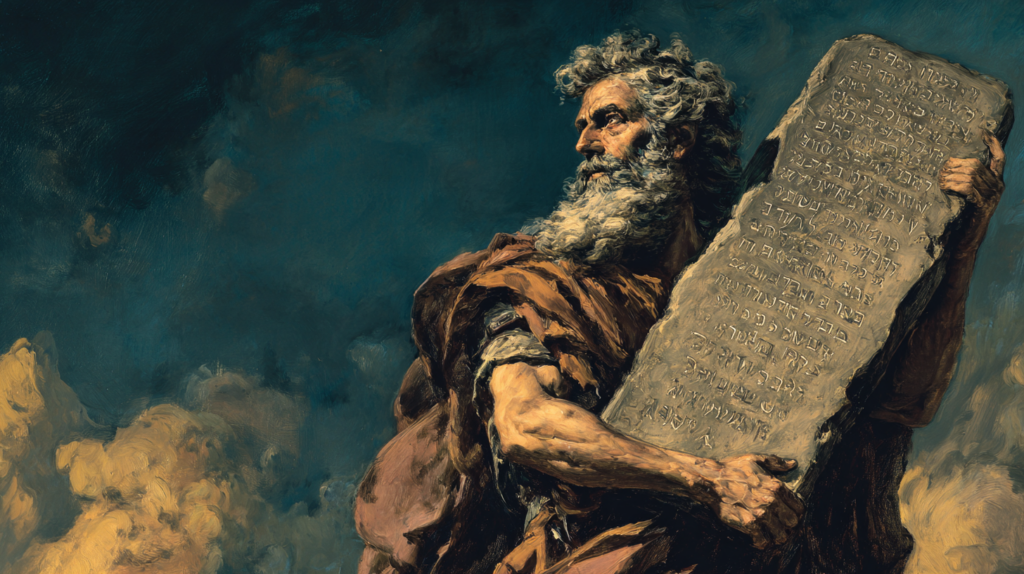
And Yahuah spoke unto Moshe, saying, Speak you also unto the children of Yashar’El, saying, Verily my Shabbats you shall keep: for it is a sign between me and you throughout your generations; that you may know that I am Yahuah that does set you apart. You shall keep the Shabbat therefore; for it is set-apart unto you: every one that defiles it shall surely be put to death: for whosoever does any work therein, that soul shall be cut off from among his people. Six days may work be done; but in the seventh is the Shabbat of rest, set-apart to Yahuah: whosoever does any work in the Shabbat day, he shall surely be put to death. Wherefore the children of Yashar’El shall keep the Shabbat, to observe the Shabbat throughout their generations, for a perpetual covenant. It is a sign between me and the children of Yashar’El forever: for in six days Yahuah made heaven and earth, and on the seventh day he rested, and was refreshed. And he gave unto Moshe, when he had made an end of communing with him upon Mount Sinai, two tables of testimony, tables of stone, written with the finger of Elohiym.
The Number 7
In the first seven days of Creation, the words representing the number of the days are actually memorials for the events that occurred on that day when examined in the ancient Hebrew pictographic language. In fact, our English word for “seven” was handed down from the Hebrew word for seven. Here they are illustrated:
SeVen
ShiVa
Based on this evidence, we can say that our own number seven in the English language is a memorial of events that occurred on the seventh day of Creation. We typically do not examine the words themselves to determine meaning behind the letters. However, this is possible using the ancient Hebrew pictographic language. It was likely the language used to write the original manuscript of the Torah written by Moshe.
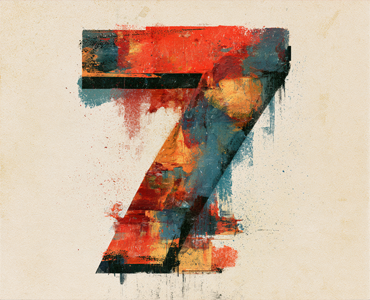
On the seventh day of Creation, our Father established the day of “rest” or Shabbat. He also set it apart from the other days of the week. He tells us to “work six days and rest on the seventh”. He made a distinction between them. This is the first detail to keep in mind when honoring our Father’s Shabbats. They need to be different than the other days of the week.
In the following passage, our Father mentions the “seventh day” three times and there is no text regarding an “evening and morning”. It gives us this idea that there is no end to the “seventh” day which is significant from a prophetic standpoint.
Thus the heavens and the earth were finished, and all the host of them. And on the seventh day Elohiym ended his work which he had made; and he rested on the seventh day from all his work which he had made. And Elohiym blessed the seventh day, and set it apart: because that in it he had rested from all his work which Elohiym created and made.
Our Father ended His work on the seventh day; He rested on the seventh day; and He blessed the seventh day. Here is the Hebrew word for “seventh” as it appears in the Hebrew text compared to the word for “seven”. The three-lettered root is highlighted in orange.:
Y[YBF
“Seventh” in Bereshith 2:2-3
[BF
Cardinal number “Seven”
The Hebrew word for the number seven has the same exact consonants in the word translated as “oath” as in the following passage:
And if the woman will not be willing to follow you, then you shall be clear from this my oath: only bring not my son there again.
Here is the exact phrase taken from the above passage. The letters in black are prefixes and suffixes. The Hebrew word for “oath” has the same consonants for the cardinal number seven and they occur in the same order.
YT[BFM
Based on this evidence, it is clear that the “seventh” day is a memorial for an “oath” our Father made with His Creation. The Ancient Hebrew Lexicon of the Bible defines the Hebrew word translated as “oath” the following way:
[BF (שבע) Definition: Literally to seven oneself. A common practice was to make seven declarations when making an oath. This declaration can be making the oath seven times or doing seven things to show the sincerity of the oath.
[BF ( common, שבע / sh.b.ah) Translation: SWEAR (V) Definition: To completely submit to a promise or oath with words and spoken seven times. KJV Translations: swear, charge, oath, straitly Strong’s Hebrew #: h.7650
“Oaths” involve the practice of making seven declarations; doing seven things to show the sincerity of the oath; or to speak the oath seven times. In the Creation account, Yahuah did “seven” actions. He was modeling the practice of making an “oath” which is an integral part of covenant agreements. Essentially, the Creation account is an “oath” given to mankind by our Father in Heaven. The condition of this “oath” involved the following requirement.
And Yahuah Elohiym commanded the man, saying, Of every tree of the Garden you may freely eat: But of the Tree of the Knowledge of Good and Evil, you shall not eat of it: for in the day that you eat thereof you shall surely die.
Typically, covenants are instituted by cutting animals in half and creating a path between the pieces. The parties would walk through the pieces and say, “Do unto me as what has been done to these animals if I fail to keep the conditions of this covenant agreement”. We do not have evidence that anything like this occurred but it is possible that it did, because of the outcome Adam and Chavah received for breaking the “oath”.
Testimony tells us that Adam did not keep this agreement with Yahuah and was sentenced to death. He was cut in two like the animals. His body was separated from his spirit or soul and he died. Based on this evidence, we can conclude that the Creation account is a covenant agreement with an “oath”. The “seventh day” is associated with the “oath” because this day was named in honor of the “oath”. The number expressed using a word is a memorial for the events that occurred on that day.
The Hebrew word for “week” involves a set of seven as well. We can see the Hebrew word for the number “seven” and “oath” in this word translated as “week”.
[WBF ( masc., שבוע / sha-vu-a) Translation: WEEK Definition: A period of time consisting of seven days or seven years.KJV Translations: week Strong’s Hebrew #: h.7620
An “oath” from the perspective of our Father is a set of sevens. It could be seven days, seven years, seven Shabbats, seven Yovel cycles, seven months or seven thousand years. It involves a cycle of seven. “Oaths” are complete after a “set of seven” has been accomplished.
The two-lettered root for this Hebrew word family is defined by The Ancient Hebrew Lexicon of the Bible as:
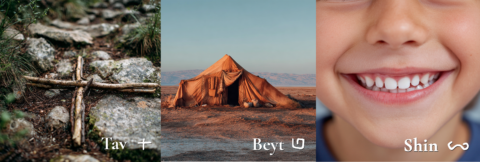
BF (שב) Action: Turn, Draw, Capture, Sit, Design, Weave Object: Seat, Well, Captive, Wreath, Net, Plate, Bed Abstract: Anguish, Copulation Definition: A place of dwelling as the place returned to. A turning back or away from someone or something. A captive is one turned away from a place of dwelling. Ancient Hebrew: The pictograph F is a picture of the two front teeth representing pressing, the B is a picture of tent. Combined these mean “Press to the tent”.
We can see the definition of this two-lettered root in the pictographic letters. It can mean “pressing to the tent” or “pressing to the house” as a place we go when finished working for the day. In the Creation account, Yahuah returned to His House after He had completed His work the previous six days and rested.
How does this “root” relate to an “oath”?
“Oaths” are binding agreements between two or more parties. In the Creation account, the “oath” was between Yahuah and His Creation, specifically mankind. The “oath” bound them together as a family. This is similar to a marriage covenant in which the husband is required to provide food, raiment and duty of marriage to his wife.
If he take him another wife; her food, her raiment, and her duty of marriage, shall he not diminish.
We can see that Yahuah provides food and coverings for all the creatures of the earth. Testimony also tells us that Adam and Chavah had a covering before the Fall. When they ate from the forbidden tree, they lost their covering and were naked. Our Father made coats of skins for them and was still providing for them after the Fall.
Unto Adam also and to his wife did Yahuah Elohiym make coats of skins, and clothed them.
However, they were removed from His House. He divorced them as a man divorces a wife.
When a man has taken a wife, and married her, and it come to pass that she find no favor in his eyes, because he has found some uncleanness in her: then let him write her a bill of divorcement, and give it in her hand, and send her out of his house.
Yahuah sent them out of His House.
Therefore, Yahuah Elohiym sent him forth from the Garden of Eden, to till the ground from where he was taken. So, he drove out the man; and he placed at the east of the Garden of Eden Kerubiym, and a flaming sword which turned every way, to guard the way to the Tree of Life.
This evidence also illustrates that the agreement between Yahuah and mankind was a covenant agreement that had been broken by Adam and Chavah. Because these are Words of Yahuah, they stand forever and cannot be changed or deleted. They are still active and applicable. The following statement is still true.
Anyone who eats from the Tree of Knowledge of Good and Evil will die and experience curses.
The Creation Covenant made with ALL of mankind applies to ALL of the sons and daughters of Adam. This is why the message of repentance is relevant to everyone and not just the House of Yashar’El. In fact, the Hebrew word for “repentance” is in this same word family and related to the Hebrew word for “oath”. The Ancient Hebrew Lexicon of the Bible defines “shub” the following way:
BWF ( common, שוב / sh.w.b) Translation: TURN.BACK (V) Definition: To return to a previous place or state. Alternate Translations: return (when written in the hiphil [causative] form) Edenics: shove KJV Translations: return, again, turn, back, away, restore, bring, render, answer, recompense, recover, deliver, put, withdraw, requite Strong’s Hebrew #: h.7725 Aramaic Spelling: תוב Strong’s Aramaic #: a.8421
When we “press to the house,” we are “returning to our house” and are “sitting in our house”. Repentance is the act of “returning to our Father’s House in the Garden of Eden” which was our original intended residence as illustrated in the following testimony.
And Yahuah Elohiym planted a Garden eastward in Eden; and there he put the man whom he had formed.
Adam and Chavah were removed from the Garden of Eden because they sinned. In order to return to the Garden of Eden, we must STOP sinning. “Sins” are violations of our Father’s Laws. When we sin, we are breaking the Laws of His Kingdom and are essentially labelled as “criminals” requiring justice. The disciple Yochanan (John) defines “sin” after the resurrection of Messiah Yahsuha as:
Whosoever commits sin transgresses also the Law: for sin is the transgression of the Law.
When we STOP committing sins, we are automatically obeying ALL of the Laws established by our Father by the Prophet Moshe. We are “returning” to our previous state of existence when man was created and “returning” to our original intended place in the Garden of Eden. We are “pressing back to our Father’s House” like the prodigal son in Luke 15:11-32.
Here are the pictures of the ancient Hebrew pictographic letters illustrated for the number “seven” and “oath”. The father in the story of the prodigal son was watching the road. He saw his son returning home and ran out to meet him. We can see this concept in our Messiah’s parable.

Our Father sees us “pressing back to His House”.
The Hebrew word for “Shabbat” or “Sabbath” is also in this same Hebrew word family. The Ancient Hebrew Lexicon of the Bible defines it as:
TBF (שבת) Definition: The ceasing of work or activity in order to rest. Relationship to Parent: sitting to rest
TBF ( fem., שבת) Translation: SEAT Relationship to Root: A returning to ones place of residence where one sits.KJV Translations: seat, place Strong’s Hebrew #: h.7675
TBF ( common, שבת / sh.b.t) Translation: CEASE (V) Definition: To come to an end; to die out; to stop an activity for the purpose of rest or celebration.KJV Translations: cease, rest, away, fail, celebrate Strong’s Hebrew #: h.7673
When we return to our home after working all day, we sit down and rest. We have “returned” to our house. The Hebrew letter “tav” means “sign” or “mark”. “Shabbat” is the “sign” of returning back to our Father’s House.
Typically, every covenant made by Yahuah has a “sign”. The rainbow is the “sign” of the covenant with Noach and all the inhabitants of the earth. The Shabbat is the “sign” of the Sinai Covenant but as we can see, it is also the “sign” of the covenant made with ALL of mankind in the very beginning. Words highlighted in orange are the Hebrew word “Shabbat”.
Thus, the heavens and the earth were finished, and all the host of them. And on the seventh day Elohiym ended his work which he had made; and he rested [Shabbat H7673] on the seventh day from all his work which he had made. And Elohiym blessed the seventh day, and set it apart: because that in it he had rested [Shabbat H7673] from all his work which Elohiym created and made.
“Shabbat” is the “sign” of returning to the House of our Father. It is the “sign” of the “oath” in both covenants.
Speak also unto the children of Yashar’El, saying, Verily my Shabbats you shall guard: for it is a sign between me and you throughout your generations; that you may know that I am Yahuah that does set you apart.
We see this in the ancient Hebrew pictographic language. Ancient people would have seen this Hebrew word and understood it to be the “sign” of the covenant made at Creation or the “sign of the oath”. They would have seen the relationship between all of these words and knew that it was a reference to the “oath” our Father made in the very beginning. The Hebrew word for “sign” did not have to be included in the text itself because it is already in the Hebrew word for “Shabbat”. Here are the words side-by-side for comparison.
TBF
“Shabbat”
[BF
“Oath” and “Seven”
BWF
“Return”
ALL of these Hebrew words are related to one another. The context of the following passage also illustrates the meaning of the two-lettered root word in this Hebrew word family.
And Yahuah said unto Moshe, How long do you refuse to keep my commandments and my Laws? See, for that Yahuah has given you the Shabbat, therefore he gives you on the sixth day the bread of two days; let every man abide in his place, let no man go out of his place on the seventh day. So, the people rested [Shabbat H7673] on the seventh day.
Our Father was telling them not to go out and gather manna on the seventh day. He was instructing them to stay in their house. When we are in our house, we are sitting and resting. This does not mean that we do not go outside of our house at all on Shabbat. Our Father tells us to have a Shabbat Miqra Qodesh in the following passage which requires us to leave our house and go to the Tabernacle of Appointment.
Six days shall work be done: but the seventh day is the Shabbat of rest, a set-apart gathering; you shall do no work therein: it is the Shabbat of Yahuah in all your dwellings.
The Tabernacle of Appointment is the House of Yahuah. The effort of going to the Tabernacle of Appointment for the Shabbat Miqra Qodesh IS “pressing to our Father’s House”. Shemoth (Exodus) 16:28-30 contained instructions for His people not to go out and gather manna on the seventh day but to stay in their houses which is a reflection of the two-lettered root in this word family. Our Father meets with us at the Tabernacle of Appointment which later became the Temple of Appointment.
This shall be a continual burnt offering throughout your generations at the door of the Tabernacle of the Appointment before Yahuah: where I will meet you, to speak there unto you. And there I will meet with the children of Yashar’El, and the Tabernacle shall be set-apart by my glory.
In the beginning, Yahuah was coming to meet Adam and Chavah when He was walking in the Garden.
And they heard the sound of Yahuah Elohiym walking in the Garden in the cool of the day: and Adam and his wife hid themselves from the presence of Yahuah Elohiym amongst the trees of the Garden. And Yahuah Elohiym called unto Adam, and said unto him, Where are you?
Our Father follows patterns. It is highly likely that He was meeting them for one of His Appointed Times like the weekly Shabbat or the first day of the seventh month, Yom Teruah also known as the Feast of Trumpets. We touched on this subject in the study titled, “Qol Shophar” and will expand upon it when we focus on this Appointed Time.
“Pressing back to the house” is also pictured in the context of the passage for the Year of Yovel (Jubilee) which is preceded by seven sets of seven-year land Shabbats which totals 49 years. The fiftieth year is the Yovel or Jubilee.
And you shall hallow the fiftieth year, and proclaim liberty throughout all the land unto all the inhabitants thereof: it shall be a Yovel unto you; and you shall return every man unto his possession, and you shall return every man unto his family.
Here is an illustration:
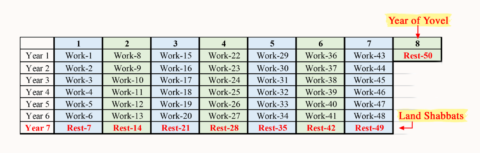
All of these counts of “seven” are “signs” of the “oath” Yahuah made with mankind and the House of Yashar’El. The patterns in our Father’s calendar system operate in 7000-year cycles that repeat. The seventh millennium is a Shabbat and the eighth day or eighth millennium is a Shabbat.
Honoring our Father’s Shabbats is a “sign” of returning to our Father’s House. However, honoring His Shabbats without keeping the conditions of the “oath” do not ensure that an individual will be restored to his or her previous position in the Garden of Eden. “Returning to our Father’s House” is fulfilling the conditions of the “oath” itself.
In the first Covenant agreement with mankind, we are told NOT to eat from the Tree of Knowledge of Good and Evil. This manifests itself as hearing and obeying the voice of someone else. Chavah heard and obeyed the voice of the serpent rather than the Voice of Yahuah. Adam heard and obeyed the voice of his wife rather than the Voice of Yahuah. They placed the authority of someone else ABOVE the Authority of Yahuah Elohiym. This is the root of all idolatry.
And unto Adam he said, Because you have heard and obeyed the voice of your wife, and have eaten of the tree, of which I commanded you, saying, you shall not eat of it: cursed is the ground for your sake; in sorrow shall you eat of it all the days of your life;
This commandment is still applicable to us today. In the Covenant given at Mount Sinai, one of the conditions of this agreement is to “hear and obey the Voice of Yahuah”. This is “Shema Qol Yahuah”. Here is one example.
And said, If you will diligently hear and obey the Voice of Yahuah your Elohiym, and will do that which is right in his sight, and will give ear to his commandments, and keep all his statutes, I will put none of these diseases upon you, which I have brought upon the Egyptians: for I am Yahuah that heals you.
If we are “hearing and obeying the Voice of Yahuah” then we are DOING ALL of His commandments written by the Prophet Moshe or in the process of doing so because those are the Words of our Father spoken by His mouth. This applies to ALL of mankind because ALL of us descended from Adam who was the recipient of this “oath”.
People who are fulfilling the conditions of the covenant agreement will be observing Shabbat on the seventh day because they have chosen to “hear and obey the Voice of Yahuah”. They have repented of their violations against our Father’s Laws which allows them to enter the Garden of Eden in the resurrection. They have effectively “returned to our Father’s House”. Therefore, “Shabbat” is more effectively interpreted as the “sign of one who keeps the conditions of the oath”. Observing Shabbat without keeping the conditions of the “oath” will NOT lead to favorable eternal outcomes. Our Father cannot allow anyone who practices sin to enter the Garden of Eden.
What does it mean to “work”?
The Creation account provides a guideline and pattern for us to follow. On the first day, Yahuah entered the world. He is the “Light” that entered the “Darkness”. This means He came out of His House to exert energy and effort to fill heaven and earth. He “worked” six days and “rested” on the seventh day. This is His custom. He follows this pattern in everything He does. It is His desire for us to follow His pattern which is why He tells His people to be set-apart as He is set-apart.
And Yahuah spoke unto Moshe, saying, Speak unto all the congregation of the children of Yashar’El, and say unto them, You shall be set-apart: for I Yahuah your Elohiym am set-apart. You shall fear every man his mother, and his father, and guard my Shabbats: I am Yahuah your Elohiym.
Our Father is telling us to emulate His behavior and do what He does. He “works” six days and “rests” on the seventh. It is His desire that we “work” six days and “rest” on the seventh. But what is “work” and “rest” from His perspective? We have highlighted some important words with their reference numbers in the following passage:
And on the seventh [H7637] day Elohiym ended his work [H4399] which he had made [H6213]; and he rested [H7673] on the seventh day from all his work [H4399] which he had made [H6213]. And Elohiym blessed the seventh [H7637] day, and set-it apart it: because that in it he had rested [H7673] from all his work [H4399] which Elohiym created and made [H6213].
The Hebrew word translated as “made” is defined by The Ancient Hebrew Lexicon of the Bible as:
HF[ ( common, עשה / ah.sh.h) Translation: DO (V) Definition: To bring to pass; to bring about; to act or make. Alternate Translations: make; use KJV Translations: do, make, wrought, deal, commit, offer, execute, keep, show, prepare, work, get, dress, maker, maintain Strong’s Hebrew #: h.6213
The “ayin” is a picture of the eye which involves “seeing”. The “shin” is a picture of two front teeth and means “exchange”. Baby teeth are exchanged for bigger, permanent teeth. The letter “hey” is a picture of a man with his arms raised trying to get the attention of someone.

When we observe the Shabbat on the seventh day, our Father sees our actions. It draws His attention. When someone weaves a rug, they have exerted energy to produce a beautiful tapestry which draws the attention of others. “Ashah” is essentially an exchange of energy that produces fruit. It is the fruit that draws our attention.
When the individual weaves the tapestry, they may sell or barter it with someone else. When we observe Shabbat on the seventh day, we cannot sell or barter our actions with someone else. When we take a walk with our family in the forest, we are “doing” something but the action cannot be sold or bartered. When we read and study the Torah, we are “doing” an action. We are exerting energy which produces fruit. However, the fruit of these actions cannot be sold or bartered.
Perhaps, this is a guideline we can use when evaluating particular activities. If I am knitting a sweater for myself, it is still an object that could be sold or bartered. We have six other days to knit a sweater. Spending time with Yahuah and family includes actions that cannot be bartered and sold.
The Hebrew word translated as “work” is defined by The Ancient Hebrew Lexicon of the Bible as:
HKALM ( fem., מלאכה / me-la-khah) Translation: BUSINESS Definition: The principal occupation of one’s life. A service. KJV Translations: work, business, workmanship, goods, cattle, stuff, thing Strong’s Hebrew #: h.4399
This is a specific type of action. This definition says it is our occupation or business. The two-lettered root of this word is defined the following way:
KL (לך) Action: Walk, Travel, Reign Object: Messenger, Journey, King, Stick Abstract: Kingdom Definition: A nomad traveled on foot with a staff in his hand to provide support in walking as well as a weapon to defend against predators or thief’s. Ancient Hebrew: The pictograph L is a picture of shepherd staff, the K is a picture of the palm of the hand. Combined these mean “staff in the palm”.
When a shepherd is getting ready to move his flock or go on a journey, he picks up his staff and begins walking. The Hebrew word for “walking” is in this word family as well. The letter “lamed” can also mean “yoke”. With the addition of the “kaph” it can mean “submitted to the yoke” which is a concept related to our occupation.
The Hebrew word translated as “angel” or “messenger” is also in this same word family and closely related to the Hebrew word translated as “work”. It is defined by The Ancient Hebrew Lexicon of the Bible as:
KALM ( masc., מלאך / mal-akh) Translation: MESSENGER Definition: One who bears a message or runs an errand. Walks for another. KJV Translations: angel, messenger, ambassador Strong’s Hebrew #: h.4397 Strong’s Aramaic #: a.4398
The letter “aleph” is a picture of an ox head which represents authority. Together they mean “walk for authority” or “in submission to authority”. The letter “mem” is a picture of waves which could represent air or the seas. This would indicate a heavy responsibility or speaking a message. When we “work” for someone else, we are bound to the job description they supply us. If we want to keep this job, we must submit to the requirements imposed upon us. Our Father is telling us that He does not want us to submit to the authority of someone else and walk for them on His Shabbat. He wants us to STOP doing this on the seventh day.
When we own a business, we are the “someone else”. He does not want us to fulfill the obligations of our own responsibilities in our businesses on Shabbat. In fact, He does not want anyone under our authority to “work” on Shabbat. This would include all employees in our modern-day world. Yahuah emphasizes this in the following passage:
Remember the Shabbat day, to keep it set-apart. Six days shall you labor, and do all your work: But the seventh day is the Shabbat of Yahuah your Elohiym: in it you shall not do any work, you, nor your son, nor your daughter, your manservant, nor your maidservant, nor your cattle, nor your stranger that is within your gates: For in six days Yahuah made heaven and earth, the sea, and all that in them is, and rested the seventh day: wherefore Yahuah blessed the Shabbat day, and set it apart.
Based on this evidence, any business that we own must be closed on Shabbat. No one under our authority is to “work” on our Father’s Shabbats. We must close our businesses on the weekly Shabbat as well as all of the Appointed Times that include Shabbats.
People often use the following passage to illustrate that Yahusha violated the commandment to rest on Shabbat.
At that time Yahusha went on the Shabbat day through the corn; and his disciples were hungry, and began to pluck the ears of corn, and to eat.
Yahusha and his disciples were not harvesting grain that could be bartered or sold. They were picking grain and eating it because they were hungry. They did not own a grain company, selling bread to people. It is permissible to eat on our Father’s Shabbats except Yom Kippur. Most of his disciples were fishermen. Their occupation involved fishing which was something they were NOT doing on Shabbat. Yahusha was a carpenter. His occupation involved building structures with stones which he was NOT doing on Shabbat. They were not harvesting grain to store in their barns which is something that could be bartered or sold. They were picking grain to eat because they were hungry.
The Hebrew word translated as “labor” in Shemoth (Exodus) 20:9 is “abad” and it is defined the following way by The Ancient Hebrew Lexicon of the Bible as:
DB[ ( common, עבד / ah.b.d) Translation: SERVE (V) Definition: To provide a service to another, as a servant or slave or to work at a profession. Edenics: obey, obedience KJV Translations: serve, do, till, servant, work, worshipper, service, dress, labour, ear, make, go, keep, move, wrought Strong’s Hebrew #: h.5647 Strong’s Aramaic #: a.5648
Yahuah says, “six days shall you do all your labor”. This encompasses providing a service to someone or working at a profession even it that someone else is ourselves. We are to serve Yahuah on the seventh day. When we transliterate the ancient Hebrew pictographic word, we can see part of the word “obedience”. Hebrew is read from right to left.
DB[
DBO
“Serving” others involves obedience to their authority. We can clearly see that our Father does not want us to serve anyone else but Him on Shabbat and He does not want anyone under our authority to serve anyone else even if that someone else is us.
Mowing lawns is fulfilling a responsibility to ourselves that can be done on any other day of the week. Planting a garden is fulfillment of a responsibility to ourselves and can also be done at other times. These involves an exchange of energy that produces results that can be seen aimed at serving someone else rather than our Father in Heaven.
What does it mean to “Rest”?
Our Father wants us to “rest” on the seventh day as He “rested” on the seventh day. He wants everyone under our authority to “rest” on the seventh day. We have defined the Hebrew word “Shabbat” as “returning to the house” where we sit and rest. We are not planting gardens, mowing lawns, harvesting grain, or doing our occupation. There is another Hebrew word translated as “rest” as well.
Remember the Shabbat day, to keep it set-apart. Six days shall you labor, and do all your work: But the seventh day is the Shabbat of Yahuah your Elohiym: in it you shall not do any work, you, nor your son, nor your daughter, your manservant, nor your maidservant, nor your cattle, nor your stranger that is within your gates: For in six days Yahuah made heaven and earth, the sea, and all that in them is, and rested [H5117] the seventh day: wherefore Yahuah blessed the Shabbat day, and set it apart.
This word is also translated as the name “Noach” or “Noah”. The two-lettered root of this word is defined the following way by The Ancient Hebrew Lexicon of the Bible as:
XN (נח) Action: Guide, Rest, Sigh, Deposit Object: Rest Abstract: Comfort Definition: The shepherd would guide his flock to a place of water. Here is water for drinking as well as green grass for pasturing. Once the flock arrives, they are free to rest after the long journey. A guided journey to a place of rest. A sigh of rest. Ancient Hebrew: The pictograph N is a picture of a seed representing continuance, the X is a picture of a wall that separates the inside from the outside. Combined these mean “continue outside”.
It is a guided journey to a place of “rest”. Our Father’s House on the other side of the wall in the Garden of Eden is a place of “rest”. The ground is not cursed in His Garden. There are no thorns or thistles. Our enemies and oppressors cannot enter here. It is a place of safety. The Hebrew word “Noach” is defined the following way by The Ancient Hebrew Lexicon of the Bible as:
XWN ( common, נוח / n.w.hh) Translation: REST (V) Definition: Freedom from activity or labor. To rest from trouble or labor. Alternate Translations: leave (when written in the hiphil [causative] form) Edenics: night – from the German nocht, as the time of rest KJV Translations: rest, cease, confederate, down, lay, quiet, remain Strong’s Hebrew #: h.5117
This definition encompasses freedom from labor and work. This is like “retirement” from our jobs! But it also includes rest from troubles as illustrated in the following passage:
But now Yahuah my Elohiym has given me rest [H5117] on every side, so that there is neither adversary nor evil occurs.
“Rest” also means our enemies will be subdued. When the flood event occurred, Noach and his family were freed from wickedness and strife that had encompassed the earth. Noach and his family were the seed that continued on the outside of the wall. They were secure and protected. They were given rest from their enemies. Here are the pictures associated with the ancient Hebrew pictographic language.
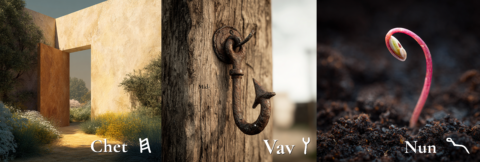
On Shabbat, we do not want to be an enemy to Yahuah or to others. We do not want to participate in wickedness. We want to do the opposite. We create peace with our enemies and we flee wickedness. This is why our Father said the following:
You shall kindle no fire throughout your habitations upon the Shabbat day.
This is a reference to creating strife and not a reference to building a fire on Shabbat to keep warm because the Priests were commanded to do burnt offerings on Shabbat which involve fire.
This is the burnt offering of every Shabbat, beside the continual burnt offering, and his drink offering.
This is also revealed in testimony regarding the Shabbat reign of our King.
The word that Yeshayahu the son of Amoz saw concerning Yahudah and Yerushalayim. And it shall come to pass in the last days, that the mountain of Yahuah’s house shall be established in the top of the mountains, and shall be exalted above the hills; and all nations shall flow unto it. And many people shall go and say, Come ye, and let us go up to the mountain of Yahuah, to the house of the Elohiym of Ya’aqob; and he will teach us of his ways, and we will walk in his paths: for out of Tziyon shall go forth the Law, and the Word of Yahuah from Yerushalayim. And he shall judge among the nations, and shall rebuke many people: and they shall beat their swords into plowshares, and their spears into pruninghooks: nation shall not lift up sword against nation, neither shall they learn war any more. O house of Ya’aqob, come ye, and let us walk in the light of Yahuah.
There shall be no more strife between nations. We will not be “kindling fires” during the Shabbat reign. When we meet on Shabbat, we are to be agents of shalom and not strife. The Hebrew word for “comfort” is also in this Hebrew word family which also tells us the right attitude to have on Shabbat. The Ancient Hebrew Lexicon of the Bible defines it as:
MXN ( common, נחם / n.hh.m) Translation: COMFORT (V) Definition: Consolation in time of trouble or worry; to give solace in time of difficulty or sorrow. Alternate Translations: repent (when written in the niphil [passive] form) KJV Translations: comfort, repent, comforter, ease Strong’s Hebrew #: h.5162
We are to provide “consolation” to one another.
During the Shabbat reign, we will not be working any occupation for someone else on any day of the week. We will be serving our Father in Heaven as His Judges. Here is an illustration of our current situation and what it will be like in the Kingdom of Yahuah.
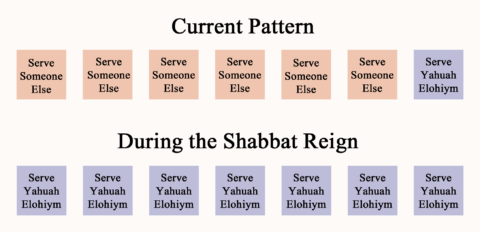
We will be serving our Father in Heaven all of the time. We will not be serving another authority. We will be ruling and reigning with our Messiah over all the kingdoms of the earth full-time. We will be the HEAD and not the TAIL. We will not be yoked to another authority and be required to fulfill their guidelines, rules and laws. This is prophesied in the following passage:
Alas! for that day is great, so that none is like it: it is even the time of Ya’aqob’s trouble; but he shall be saved out of it. For it shall come to pass in that day, says Yahuah of hosts, that I will break his yoke from off thy neck, and will burst your bonds, and strangers shall no more serve themselves of him: But they shall serve Yahuah their Elohiym, and David their king, whom I will raise up unto them.
This does not mean that we will not be following the pattern of “work” six days and “rest” on the seventh during the Shabbat Reign. We just won’t be “working” a job for someone else or serving them in any capacity. We will plant our fields and vineyards but it will be for ourselves.
People who are alive and remain from the nations have not observed the Shabbat on the seventh day. They will be required to “work” for the House of Yashar’El and “serve” them for the next thousand years. We see this in Tehillim (Psalms) 2.
Why do the heathen rage, and the people imagine a vain thing? The kings of the earth set themselves, and the rulers take counsel together, against Yahuah, and against his anointed, saying, Let us break their bands asunder, and cast away their cords from us. He that sits in the heavens shall laugh: Adonai shall have them in derision. Then shall he speak unto them in his wrath, and vex them in his sore displeasure. Yet have I set my king upon my set-apart hill of Tziyon. I will declare the decree: Yahuah has said unto me, You are my Son; this day have I begotten you. Ask of me, and I shall give you the heathen for your inheritance, and the uttermost parts of the earth for your possession. you shall break them with a rod of iron; you shall dash them in pieces like a potter’s vessel. Be wise now therefore, O you kings: be instructed, you judges of the earth. Serve Yahuah with fear, and rejoice with trembling. Kiss the Son, lest he be angry, and you perish from the way, when his wrath is kindled but a little. Blessed are all they that put their trust in him.
People who despise and disregard the Laws of Yahuah right now, will not like them when our Messiah comes because he will rule and reign according to the Laws of our Father written by the Prophet Moshe. There will a remnant that will remain after our Father’s judgement. However, they are not released from their requirement to “work” and “serve” another because they did not put their faith and trust in Yahuah or our Messiah. They refused the amazing covenant promises given to us by our Father. Therefore, anyone who has died in previous ages that made the same choice will not be in the first resurrection. They will be resurrected at the end of the age for the final judgement.
During the Shabbat Reign, the Tables will be flipped. For 6000 years the inhabitants of the earth have been subject to the Laws of mankind which are a mixture of our Father’s Laws and their own Laws. There will be a transition and our Messiah will rule and reign for a thousand years using only the Laws of our Father. The earth and its inhabitants will flourish and abound under our Father’s Laws.
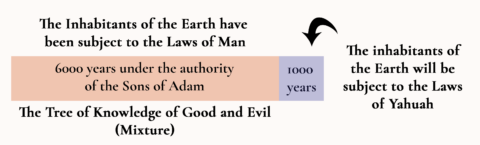
This is how our Father will set-apart the seventh day in this cycle. However, the leadership of the House of Yashar’El will not be cruel or unjust. They will be righteous and not oppressive. The nations will flourish under their authority. The following passage provides a glimpse into the heart of our Father which will be manifest in the people He has chosen to be a part of His government.
Is not this the fast that I have chosen? to loose the bands of wickedness, to undo the heavy burdens, and to let the oppressed go free, and that you break every yoke? Is it not to give your bread to the hungry, and that bring the poor that are cast out to your house? when you see the naked, that you cover him; and that you do not hide yourself from your own flesh?
The passage is specifically referring to the fast on Yom Kippur but these actions exactly describe what it means to “rest” from the perspective of our Father. It is not only a “rest” for ourselves but a “rest” for everyone who crosses our path. When we are hungry, we are stressed. However, when our belly is full, we are comforted and give a sigh of relief. When we are shivering in the cold, we are stressed. However, when we enter a warm house or given a coat, we are comforted and give a sigh of relief. We are to be agents who “comfort” one another and give them rest. This is shalom or the act of restoring wholeness to ourselves and others.
If we “comfort” others, Yahuah will “comfort” us. This is the Law of Sowing and Reaping. If we loosen the bands of wickedness, Yahuah will loosen the bands of wickedness that bind us. If we undo heavy burdens for others, He will undo our heavy burdens. If we let the oppressed go free, He will set us free from oppression. If we want to rule with our Messiah during the Shabbat Reign then we must practice living in the Shabbat Reign every week on the seventh day. Our actions must communicate that we want to live during this time period.
People who are not observing Shabbat on the seventh day, are not serving Yahuah. They will not be resurrected at the beginning of the Shabbat Reign. They will be resurrected at the end of the 7000 years for the judgement at the end of the age when the cycle has been completed. Our Father does not need people who disobey His Laws to be resurrected before that time. He needs people who know His Laws and have chosen to obey them ALL. When we know His Laws and obey them, we can teach others to do the same. How can we serve our Father and Messiah if we do not know the Laws they will use to govern eternity? Our Messiah said the following in this regard.
You are the salt of the earth: but if the salt has lost his savor, how shall it be salted? it is therefore good for nothing, but to be cast out, and to be trodden under foot of men.
Salt that has lost its ability to season things, has no purpose. It is thrown out and discarded. If He were to resurrect people that still choose to disobey His Laws, He would be placing an unnecessary burden upon our Messiah and the House of Yashar’El. After the judgement, there will be a few people left from the nations who will repopulate the earth. These are the people we will govern until the end of the age.
Download this Article here