231-3 The Judgement
That be far from you to do after this manner, to slay the righteous with the wicked: and that the righteous should be as the wicked, that be far from you: Shall not the Judge of all the earth do right?

Bereshith (Genesis) 3:14-24 is a judgement pronounced upon Adam and Chavah (Eve). They had violated our Father’s instructions. Our Father had said, “Do not eat from the Tree of Knowledge of Function and Dysfunction”. However, Chavah chose to hear and obey the voice of the serpent and Adam chose to hear and obey the voice of his wife. They did not “Shema” the Voice of Yahuah Elohiym.
They did not “hear and obey” Him. What acts of disobedience did they commit? We can determine the answer to this question by examining the “Judgement” pronounced upon them.
Our Father uses the Law of Sowing and Reaping to execute Judgement. Essentially, we reap what we sow in His Kingdom. Severe transgressions receive severe consequences in direct proportion to the transgression committed. Small transgressions receive smaller consequences and are still in direct proportion to the transgression as well. This is Justice which creates “balance” and “order” in the earth. It is a necessary part of our Father’s Law that cannot be avoided. ALL of us must pay the consequences for our sins whether we believe in Him or not. If we are experiencing trials and tribulations in our respective lives, it is likely due to the sins we have committed. This is a very fair system which does not treat the rich any different than the poor and vice versa.
Principle: The Law of Sowing and Reaping is a judgement equivalent to the transgression committed. It is also a reward equivalent to the sacrifice endured. This principle is based upon the following Law:
And if a man causes a blemish in his neighbor; as he has done, so shall it be done to him; Breach for breach, eye for eye, tooth for tooth: as he has caused a blemish in a man, so shall it be done to him again. And he that kills a beast, he shall restore it: and he that kills a man, he shall be put to death. (Vayiqra/Leviticus 24:19-21)
Link to Study: What is the Law of Sowing and Reaping?
Some religious belief systems call it “Karma”. It automatically finds people. It is like it knows our hearts. Thieves who are never caught by earthly authorities will pay for their crimes through the Law of Sowing and Reaping. The same is true of liars, adulterers and murderers. ALL of us will be held accountable for the sins we have committed against Yahuah. It is fair, just and equitable.
The Judgement pronounced upon Adam and Chavah (Eve) reflects the nature of the sins they committed in this event. For example, Adam and Chavah were removed from the Garden of Eden which exists in Yahuah’s Set-apart Mountain. They were “cast-down” from a higher position in his realm to a lower position in the earth. They are fallen ones or “nephilim”. This judgement tells us that they were attempting to elevate themselves above their current position in the Kingdom. Their sins dictated the curses that were pronounced upon them. It is this way for all of us. If we want to know the Judgement we will face in the end, we just need to determine which of our Father’s Laws we have broken.
Attempting to elevate one’s self is the sin of pride. People with pride think they deserve more than what they have been given and have an inflated view of themselves. Adam and Chavah (Eve) were King and Queen over all the earth and would have retained these positions for eternity had they made different choices. How much higher could they actually go than being King and Queen over all inhabitants of the earth for eternity? There is one position above them. The Throne of Yahuah Elohiym. Testimony confirms this and tells us that man was made just a little lower than Elohiym, Himself.
What is man, that you are mindful of him? and the son of man, that you visited him? For you have made him a little lower than Elohiym, and have crowned him with glory and honor. You made him to have dominion over the works of your hands; you have put all things under his feet:
Most Bible translations say that man was made a little lower than the angels. However, the underlying Hebrew word is “Elohiym” and not “Malak”. Adam and Chavah were second in command over all the earth. Yahuah Elohiym was in a higher position and exercised authority over them. Testimony says that they wanted to be like Elohiym. They wanted to be equal-to or above Yahuah, Himself. This is the sin of pride and discontent.
For Elohiym does know that in the day you eat thereof, then your eyes shall be opened, and you shall be as Elohiym, knowing good and evil.
They were not content with the roles they had been given and wanted more. Because they sought to elevate themselves, Adam and Chavah were cast-down from Yahuah’s Set-apart Mountain. They were lowered in elevation and lost their position as second-in-command over all of creation. The following testimony also provides another clue to the sin of pride:
And He said, Who told you that you were naked? Have you eaten of the Tree, that I commanded you that you should not eat? And the man said, The woman whom YOU gave to be with me, she gave me of the Tree, and I did eat.
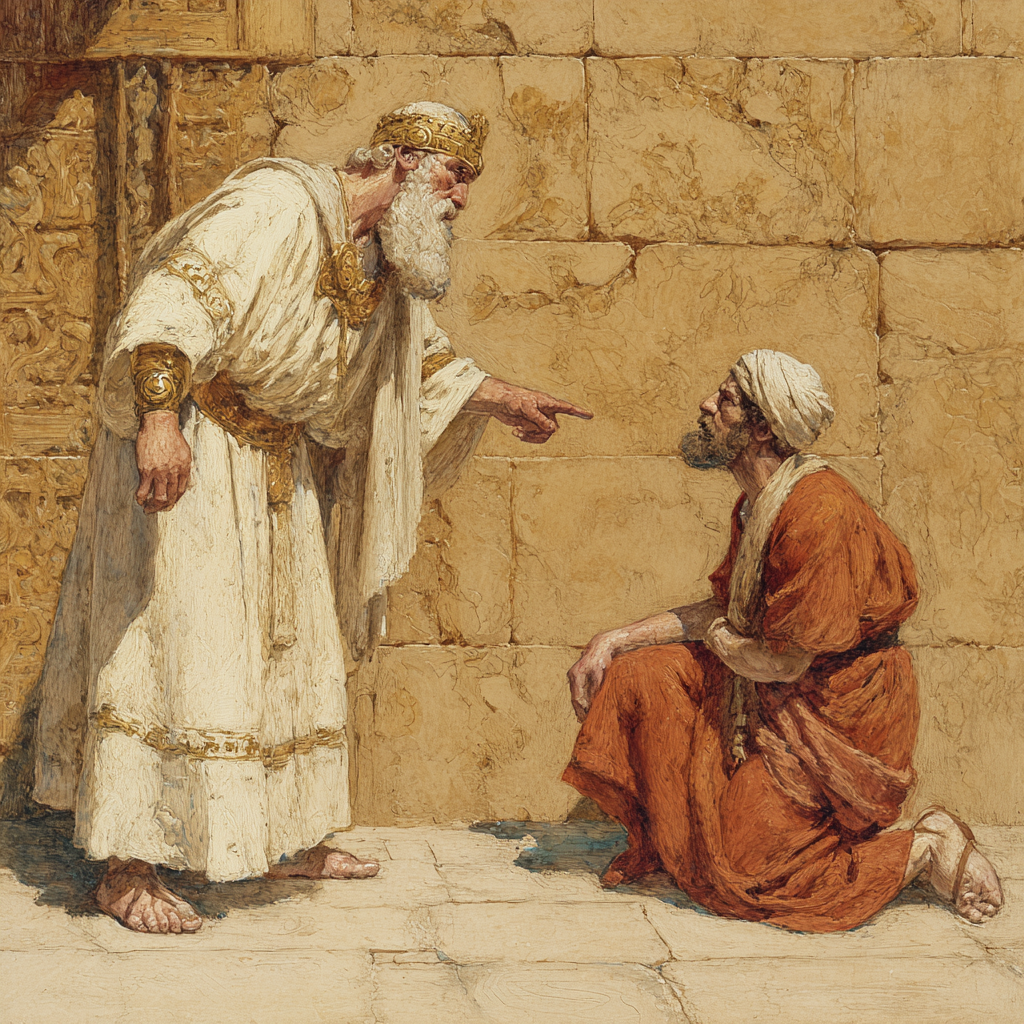
Adam attempted to cast blame upon Yahuah because it was Yahuah that had made woman and brought her to him. If Yahuah had not made woman, in Adam’s mind, he would never have eaten from the forbidden tree. It is clear that he did not take personal responsibility for his disobedience. In his view, he did nothing wrong. In his mind, it was Yahuah who committed the wrong.
If Adam was unwilling to admit error, then how could he ask Yahuah for forgiveness? In his mind he did not do anything wrong. This is a symptom of pride and presumptuous sin.
But the soul that does ought presumptuously, whether he be born in the land, or a stranger, the same reproaches Yahuah; and that soul shall be cut off from among his people. Because he has despised the word of Yahuah and has broken his commandment, that soul shall utterly be cut-off; his iniquity shall be upon him.
The Hebrew word translated as “presumptuously” is “rum” pronounced “room” and it is directly related to “pride”. The Ancient Hebrew Lexicon of the Bible written by Jeff A. Benner defines it the following way:
MWR ( common, רום / r.w.m) Translation: RAISE.UP (V) Definition: To lift something up. KJV Translations: lift, exalt, high, offer, give, heave, extol, lofty, take, tall Strong’s Hebrew #: h.7311 Aramaic Spelling: רון Strong’s Aramaic #: a.7313
HMWR ( fem., רומה) Translation: PROUDLY Definition: [To be verified] In the sense lifting oneself up. KJV Translations: haughtily Strong’s Hebrew #:h.7317
When people cast blame upon someone else, they are attempting to lower the other individual by making them look inferior to themselves. They are elevating themselves by lowering someone else. When someone calls another person “stupid,” they are lowering the self-image of the individual they are calling “stupid” and attempting to make them feel inferior to them. Because they are the ones calling this individual “stupid,” they are also calling themselves “not stupid”. They are communicating to this other individual that they are “intelligent,” lifting themselves up. Anyone who tears other people down are trying to elevate themselves. It is a symptom of pride.
Adam was attempting to lower our Father in Heaven by claiming that He was the one who did the wrong by creating woman. If someone cannot take responsibility and admit error, then they do not think they did anything wrong. If they do not think they did anything wrong, then, how can they ask for forgiveness? Asking for forgiveness requires us to admit our error. If these individuals do not ask for forgiveness, they cannot be forgiven. Therefore, the penalty for their sin remains upon their heads. They are “imperfect” in the eyes of Yahuah.
“Perfection” and “imperfection” are different in the eyes of Yahuah. “Perfection” does not mean that someone never makes a mistake. “Perfection” is a humble individual who is willing to admit his or her mistakes and ask for forgiveness. Because they have asked our Father for forgiveness, He can forgive them and remove the guilt from their heads. They are now “perfect” in the eyes of our Father. ALL of us make mistakes but not all are willing to admit error and take responsibility.
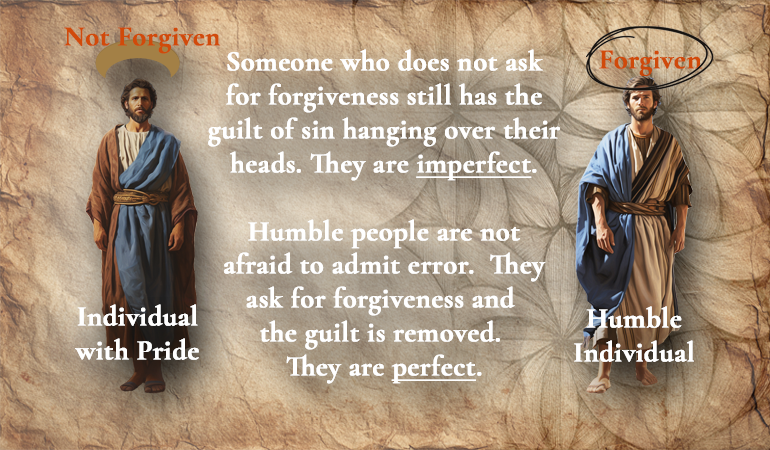
Adam did not think he did anything wrong. He passed the blame to our Father for creating woman. Because he did not think he did anything wrong, he did not ask for our Father’s forgiveness for what he had done. We do not see any humility in the actions of Adam or Chavah. Based on this evidence, we can conclude that Adam committed a “presumptuous” sin against Yahuah. Bemidbar (Numbers) 15:30-31 says that people who commit this sin are “cut-off” from their people. Adam and Chavah (Eve) were removed from the Garden of Eden. They were cut-off from their people and their original intended home with Yahuah and they were no longer “perfect” in the eyes of Yahuah.
Adam was also guilty of coveting the forbidden Tree. He was not content with the food from other Trees that Yahuah had provided for him. As a result of this sin, Adam was required to grow, harvest and prepare his own food brought forth from the earth. This is hard work which causes him to sweat. Yahuah made it difficult for Adam to grow food by cursing him with thorns and thistles. Adam did not appreciate the abundant food provided by Yahuah in the Garden of Eden. He lacked gratitude and took it for granted. Yahuah cursed the ground which was used to create all plants and animals. What sin did the animals commit? What sin did the plants commit? ALL living things fell under the curse as well because Yahuah cursed the ground because of Adam’s sin.
The woman was cursed with sorrow because she had caused Yahuah to experience great sorrow. She reaped what she sowed. Yahuah lost fellowship with Adam and Chavah (Eve). This tragic event separated them which caused our Father great pain. This event also caused Adam and all of his offspring to die. Yahuah had no choice but to honor His Word. Therefore, woman would experience this loss as well with her own children. She had brought this sorrow upon herself and every woman born after her.
Yahuah also knew that redemption would cause an innocent man to suffer extreme torture and a very painful death. This also caused our Father great sadness. The Law of Sowing and Reaping has brought great sorrow upon women throughout time. When we experience the consequences for our own sins and transgressions, we only have ourselves to blame.
These are the lessons to be gained from Adam and Chavah’s actions and decisions in this event.
If we cause sorrow… we experience sorrow.
If we cause pain… we experience pain.
If we lift-up ourselves… we will be brought low
If we lack contentment… we will experience hardship
We can deny our Father’s existence, but it will not change the consequences we face as a result of our sins. We can tell ourselves that His Laws are no longer binding while we pull up thorns and thistles growing in our gardens but it will not change the consequences we will face as a result of our sins. Yahuah Elohiym can clear our guilt if we simply humble ourselves and ask. It may not alleviate the consequences we must face for the wrong we have committed but it might. He says that He will show mercy upon those He will show mercy.
And he said, I will make all my goodness pass before you, and I will proclaim the Name of Yahuah before you; and will be gracious to whom I will be gracious, and will show mercy on whom I will show mercy.
Will He show mercy and grace to those who cannot admit error and ask for forgiveness? Will He show mercy and grace to those who show contempt for His Laws? Will He show mercy and grace to those who do not even try to live according to His Laws? I cannot personally speak on behalf of Yahuah in this matter, but I think it is highly likely that those who humble themselves and at least make an effort to abide by His Laws have a much greater chance of experiencing our Father’s grace and mercy. But it is up to Him. He is the Judge. King David knew of our Father’s great mercy in this example.
And Yahuah spoke unto Gad, David’s seer, saying, Go and tell David, saying, Thus says Yahuah, I offer you three things: choose one of them, that I may do it unto you. So, Gad came to David, and said unto him, Thus says Yahuah, Choose either three years’ famine; or three months to be destroyed before your foes, while that the sword of your enemies overtakes you; or else three days with the sword of Yahuah, even the pestilence, in the land, and the messenger of Yahuah destroying throughout all the coasts of Yashar’El. Now therefore advise yourself what word I shall bring again to him that sent me. And David said unto Gad, I am in a great strait: let me fall now into the hand of Yahuah; for very great are his mercies: but let me not fall into the hand of man.
Our Father shows much greater mercy than any man. Does a father whack his son who is just learning to walk? Fathers generally encourage their son or daughter when they are trying to walk. Why would our Father be any different when we are trying to learn how to walk with Him?
The Judgement against Adam and Chavah (Eve) occurred at the end of the first week of Creation. Yahuah had made a Covenant Agreement with them and then they were judged at the end of the first week of Creation.
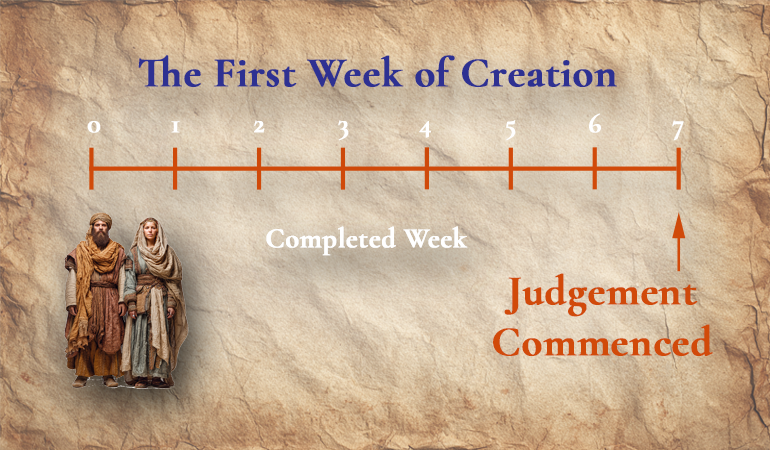
The entire Creation Account is a Covenant Agreement which includes oaths and vows within the Covenant. “Oaths” from an ancient Hebrew perspective are characterized by declaring an oath seven times or doing seven things to show the sincerity of the oath. The Ancient Hebrew Lexicon of the Bible defines the Hebrew word “shavua,” translated as “oath” the following way:
[BF (שבע) Definition: Literally to seven oneself. A common practice was to make seven declarations when making an oath. This declaration can be making the oath seven times or doing seven things to show the sincerity of the oath.
Yahuah did seven things in the Creation Account over seven days. This is clear evidence of an oath and Covenant Agreement. We discuss this in much greater detail in our series titled, Covenant. The first week of Creation was fulfilled. It ended when Yahuah judged Adam and Chavah (Eve). The week had been completed.
This concept of “completing a week” is conveyed in the situation with Leah and Rachel, Ya’aqob’s wives (Jacob).
And Laban gave unto his daughter Leah Zilpah his maid for a handmaid. And it came to pass, that in the morning, behold, it was Leah: and he said to Laban, What is this you have done unto me? did not I serve with you for Rachel? Why then have you beguiled me? And Laban said, It must not be so done in our country, to give the younger before the firstborn. Fulfill her week, and we will give you this also for the service which you shall serve with me yet seven other years. And Ya’aqob did so, and fulfilled her week: and he gave him Rachel his daughter to wife also.
Laban had deceived Ya’aqob (Jacob) and gave him Leah instead of Rachel after serving Laban for seven years. Laban told Ya’aqob to fulfill Leah’s week and then he would give Ya’aqob his daughter Rachel as well. In this situation, a “week” is a period of seven years and not seven days. This situation with Ya’aqob’s wives is a prophetic picture of the first two weeks of Creation.
- Yahuah established a Covenant with Adam. When He created Adam, He was expecting Adam to obey His Voice and live with Him for eternity in the Garden of Eden. Like Ya’aqob (Jacob), Yahuah was disappointed. Yahuah did not receive what He was expecting to receive just like Ya’aqob. This was experienced when Ya’aqob awakened and found Leah with him instead of Rachel.
- Yahuah established another series of Covenants for the second week of Creation. At the end of this week of seven, Yahuah will receive fulfillment of His expectations just like Ya’aqob who finally received Rachel his wife. Yahuah is fulfilling Adam’s “week” as King and then He will receive “Yahusha” as His Righteous King over all the earth which is what Yahuah desired in the very beginning.
Yahuah honors His established Patterns. At the end of the First Week, Yahuah passed Judgement. At the end of the Second Week of Creation, Yahuah WILL judge the inhabitants of the earth. The second week has not yet been completed. We are around the end of the 6000 years which means the Second Judgement has not occurred as yet.
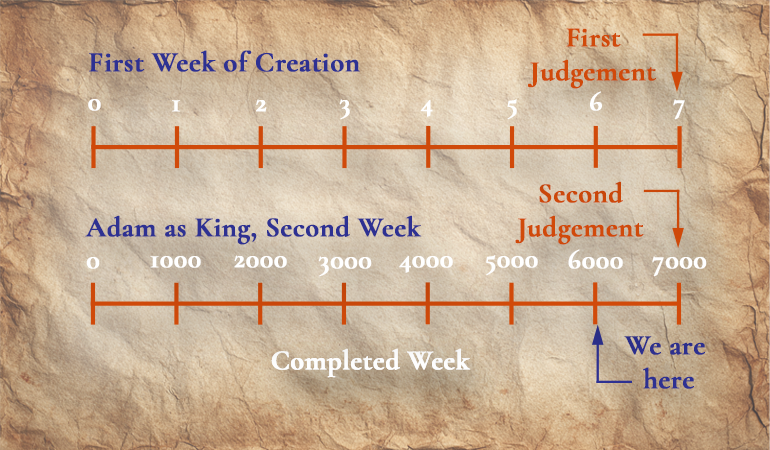
The Second Judgement occurs after the thousand-years of Shalom. This is recorded in Revelation.
And I saw a Great White Throne, and him that sat on it, from whose face the earth and the heaven fled away; and there was found no place for them. And I saw the dead, small and great, stand before Elohiym; and the books were opened: and another book was opened, which is the Book of Life: and the dead were judged out of those things which were written in the books, according to their works. And the sea gave up the dead which were in it; and death and hell delivered up the dead which were in them: and they were judged every man according to their works. (Revelation 20:11-13)
This passage confirms Yahuah’s pattern illustrated in the life of Ya’aqob (Jacob). Yahuah is obligated to “fulfill” Adam’s week which includes Adam and his offspring. It will be complete at the end of the second week which means we still have time to personally determine our eternal outcome.
If we repent from our sins, we will have a positive outcome because “repentance” requires us to humble ourselves to our Father in Heaven. We admit our mistakes in transgressing His Laws and we make every effort to abide by ALL of His Laws. Testimony says that He will forgive us. This means that He will remove the guilt from our heads. If there is no guilt hanging over our heads when the Second Judgement occurs then what sentence can Yahuah pronounce upon us? We are not guilty. We do not receive any penalties… no death and no curses. Because we do not have any penalties, we do not need redemption from the second death.
If we choose not to repent, we will have an unfavorable outcome because we have chosen NOT to admit our errors. Because we have not admitted error, we do not think we have done anything wrong. If we do not think we have done anything wrong, we will not ask for forgiveness. Because we have not asked for forgiveness, we cannot be forgiven.
If we do not see that we have done anything wrong, we do not change nor make any attempts to abide by His Laws. The guilt remains upon our heads and we are judged at the end of the Second Week of Creation. We will need redemption from the second death. However, no redemption will be available. People who do not take advantage of the first redemption offered through Messiah Yahusha will not take advantage of any redemption offered through another individual either. Yahuah will never supply another redeemer who will experience the torture and death experienced by Yahusha Ben David. We have once chance.
We avoid the Second Judgement by repenting from our sins and seeking our Father’s forgiveness with a humble contrite heart.
We must show genuine sorrow for the wrongs we have committed and make efforts not to continue in our sins against Him.
Messiah Yahusha paid the debt incurred by the First Judgement. He cannot redeem us from the Second Judgement because it has not happened as yet. Some of us will not need redemption from the Second Judgement because we took advantage of the first redemption offered through Yahusha.
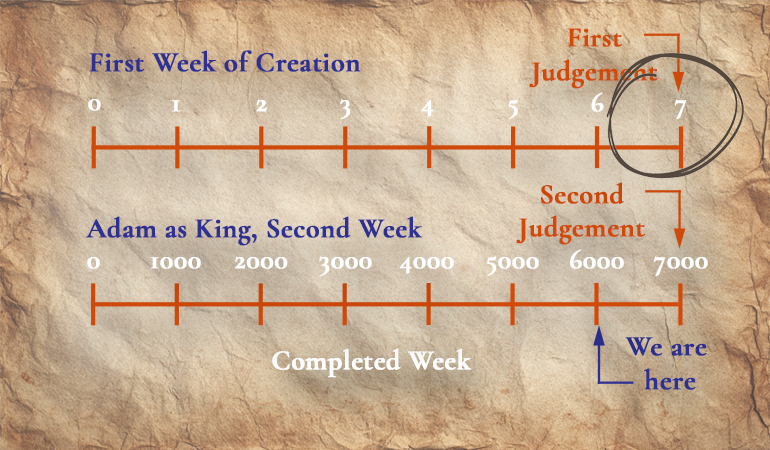
The First Judgement resulted in curses and the First Death. This is the first time our Father mentions a death sentence in His Testimonies.
And Yahuah Elohiym commanded the man, saying, Of every tree of the Garden you may freely eat: But of the Tree of the Knowledge of Function and Dysfunction, you shall not eat of it: for in the day that you eat from it, you shall surely die.
Adam and Chavah (Eve) were judged and sentenced. This is recorded in Bereshith (Genesis) 3:14-24. Sentencing for the Second Judgement has not occurred yet but we know what it will be based upon His Laws written by the Prophet Moshe because the second time “death” is mentioned in our Father’s Testimonies is in the following passage:
See, I have set before you this day Life and Function, and Death and Dysfunction;
Our Father is presenting another choice. In this passage, we can choose “Life and Good” or “Death and Evil”. Yahuah had given Adam a choice to eat from the Tree of Life and live forever or the Tree of Knowledge of Function and Dysfunction which represents death. Debarim (Deuteronomy) 30:15 is giving us the same choice.
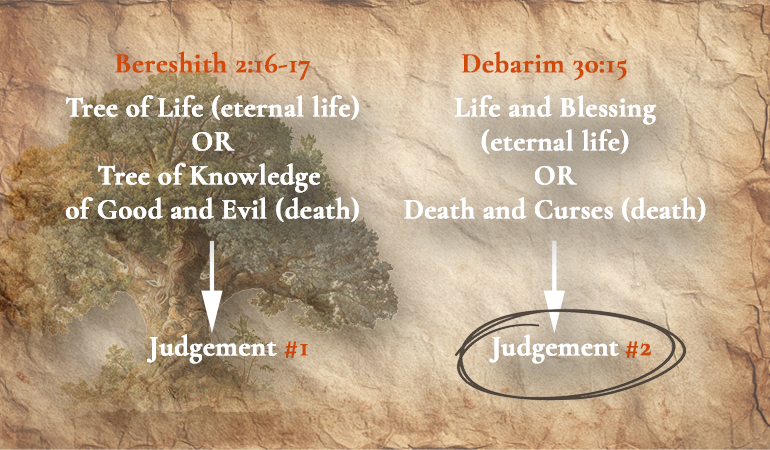
We know this has not happened as yet because the people who chose “Life and Blessing in a land of promise” have not received their promised reward. The Prophet Moshe had faith in this promise but he is not alive today living in a land of promise. King David had faith in this promise but he is not alive today and living in a land of promise today. Based on this evidence that we can see with our own eyes, the Covenant given at Mount Sinai has not been fulfilled as yet. It is the standard by which the Second Judgement will be based. We can read the Law of Moshe and see for ourselves how our Father is going to pass Judgement at the end of the Second Week. Messiah Yahusha also gives us a clue in the following testimony:
For verily I say unto you, until heaven and earth pass, one jot or one tittle shall in no wise pass from the Law, until all be fulfilled.
“Heaven” is a representation of “man” and “Earth” is a representation of “woman”. This is explained in further detail in our series titled, Family. “Heaven” is represented by the teacher or leader and “Earth” is represented by the student or follower. Here is a brief listing of this relationship seen in the Word of our Father and in our lives.
- Teacher: Disciple
- Husband: Wife
- King: Citizens
- Priests: Citizens
- Judge: Defendant
- Parent: Child
- Employer: Employee
- Man: Woman
- Adam: Chavah
- Heaven: Earth
“Heaven and Earth” could represent the physical “Heaven and Earth” but it could also be a representation of the earthly Kingdom ruled by the sons of Adam and their followers. They will cease to exist at the end of the second week of Creation once the Judgement and sentencing have been completed. Either way, the physical “Heaven and Earth” still exist and the Sons of Adam are still in power and control. These signs tell us the Second Week of Creation has not been completed as yet.
When the Sons of Adam and their followers are judged, The Sinai Covenant will be fulfilled. When everyone who has put faith in the promises as stated in the Covenant given at Mount Sinai, have received Life and Blessing in a Land of Promise, the Sinai Covenant will be completely fulfilled. His Word will be accomplished.
Principle: The Words of Yahuah must be fulfilled. Not one single Word spoken by our Father can be left unfulfilled.
For as the rain comes down, and the snow from heaven, and returns not there, but waters the earth, and makes it bring forth and bud, that it may give seed to the Sower, and bread to the eater: So shall My Word be that goes forth out of My Mouth: it shall not return unto me void, but it shall accomplish that which I please, and it shall prosper in the thing where I sent it. (Yeshayahu/Isaiah 55:10-11)
Link to Study: What does it mean to “fulfill”?
Messiah Yahusha cannot not redeem us from the curses mentioned in the Sinai Covenant, because the Second Judgement is still pending. Messiah Yahusha redeemed us from the First Judgement and sentencing pronounced upon Adam and Chavah in Bereshith (Genesis) 3:14-24. He has redeemed us from the First Death and its associated curses.
Yahusha cannot redeem us from something that has not happened yet and some of us will not require any redemption from the Second Judgement
Yahusha cannot pay a debt that has not been established as yet. This is like saying, “hey, I think you will owe me $100 at the end of the week.” At the end of the Second Week of Creation, some people will not owe our Father $100. If we don’t owe any money, then we don’t need our brother to pay anything on our behalf. We do not need redemption. If people repent from their sins, they do not incur a debt. They do not need a redeemer the second time around.
If people do not repent from their sins, they incur another debt. They will essentially owe Yahuah their $100 for the guilt of sin hanging above their heads. However, there will not be a brother available to pay their debt the second time around. They didn’t take advantage of their redemption from the first death; they will likely not value any redemption from the second death as well. This is an important distinction we need to make clear in our minds.
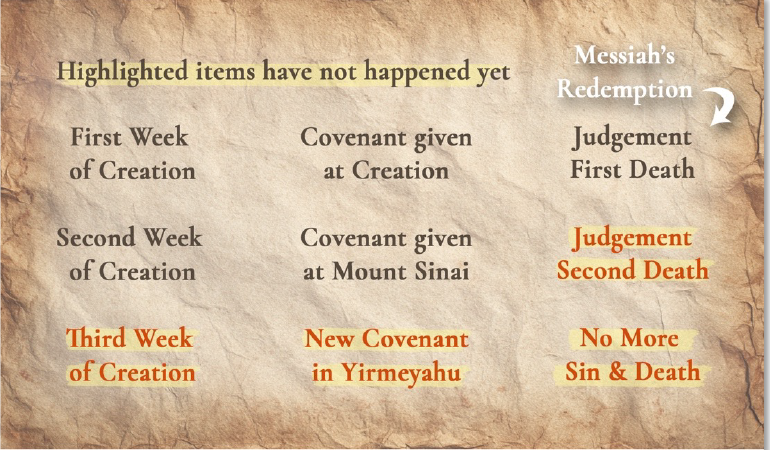
People cannot be redeemed from something that has not happened as yet. The Sinai Covenant is still active and will not be completely fulfilled until after the Second Judgement at the end of the Second week of Creation. The Sinai Covenant is the standard by which our Father will judge the inhabitants of the earth. ALL Laws are still active and applicable. For example, anyone who has kidnapped someone will be put to death in the Second Judgement. That is what the Law says in the following passage.
“And he who kidnaps a man and sells him, or if he is found in his hand, shall certainly be put to death.
Are kidnappers put to death now? No, they are not. Even murderers are not put to death in this society because mankind is not using the Laws of Yahuah to judge people. They are using their own system of Laws. However, in the Second Judgement, Yahuah is going to be using His Laws to make these determinations. If people want to know how they are going to be judged, all they need to do is read the Law of Moshe. These Laws will communicate our respective outcomes in the Second Judgement yet-to-come. People avoid the Second Judgement altogether if they repent from their sins and align their behaviors with the Laws of Yahuah written by the Prophet Moshe.
Messiah Yahusha has redeemed us from the curses and the First Death mentioned in Bereshith (Genesis) 3:14-24. He has not redeemed us from anything given in the Sinai Covenant. It has not been completed as yet.
Download this Article here