131-1 What is the Word of Yahuah?
For the Word of Yahuah is right; and all His works are done in Truth.
This is an important question to answer. The world is full of leaders who have provided definitions of our Father’s Word. Their definitions are different. Who is correct? Can they all be right? The Catholic canon is different than the Protestant canon. Rabbinic Judaism believes it is just the Hebrew writings. Mormons add the Book of Mormon. Muslims believe the Word of our Father is the Koran. Now, we have people claiming the Book of Enoch, Jasher and Jubilees is the Word of our Father. We are bombarded with all of these definitions but what is the truth? Is it possible to know the truth?
We are going to begin this study by reviewing some truths that will help lead us to the answer to this question. In our previous studies, we focused upon the Identity of our Intelligent Designer and used Language to reveal His identity. We provided evidence linking His Language to the ancient Hebrew pictographic letters as illustrated below, read from right to left.

These the letters found at Serabit El Khadim, an ancient Egyptian Turquoise mine. Here is an illustration of these ancient Hebrew pictographic letters engraved on the walls in this mine.
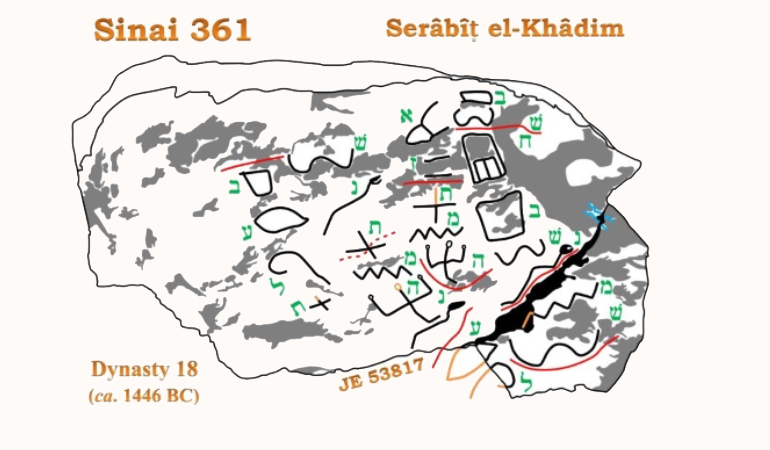
https://www.ancient-hebrew.org/alphabet/new-discoveries.htm#2
We can see the ancient Hebrew pictographic letters in this illustration. This inscription is dated around 1446 BC which proves that this language existed during the time of the Prophet Moshe (Moses). We know that this was the language Moshe used to write the Law because we can define a Hebrew word in a passage with the ancient Hebrew pictographic letters and it fits within the context of the passage itself. We would not be able to do this if this were not the original language used. For example, the Hebrew word “EL” is a picture of an ox-head, “A” and a shepherd’s staff, “L”. Here is an illustration:
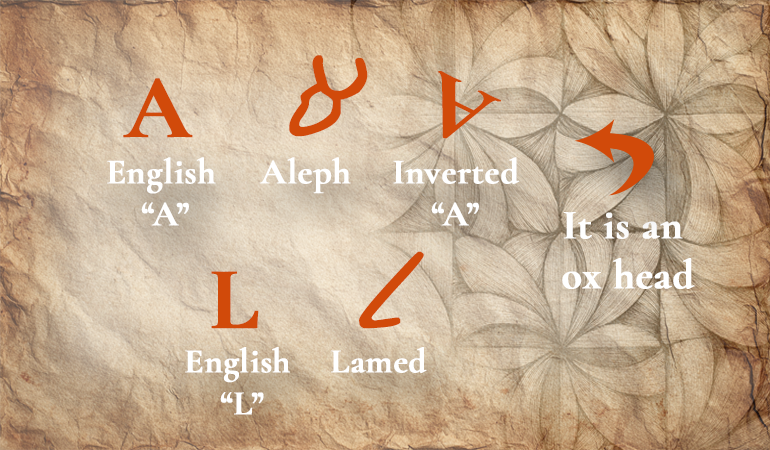
The horns on the ox-head represent the horns found on the crown of a king. The shepherd’s staff represents the scepter held in the hand of a king. These two implements are observed in the leadership of every culture on earth as illustrated below.
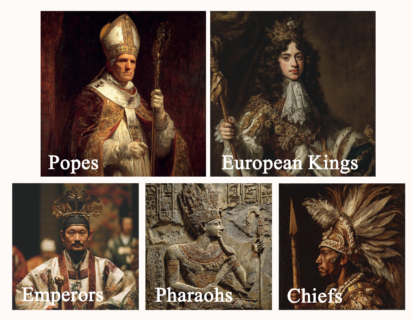
“EL” is a “King” or “Ruler” who exercises authority. We can see the definition of these letters in each picture of these rulers. ALL of them exercised great authority in their realms. This evidence illustrates that the ancient Hebrew pictographic language was the original language of man and our Father in Heaven.
The ox-head is a picture of a strong animal. When he is yoked together with a younger ox, he teaches the younger ox what to do. Followers in a kingdom submitted to the ruler are yoked together with him. He teaches people how to behave in his realm. It is their Law that yokes them together with their people. People in the United States follow the Laws established by the government. People in France follow the Laws established by the government of France. People in France do not follow Laws in the United States and vice versa. The people in each respective country are “yoked” together with the leaders in their government. We see this understanding in the words of our Messiah.
Come unto me, all you that labor and are heavy laden, and I will give you rest. Take my yoke upon you, and learn of me; for I am meek and lowly in heart: and you shall find rest unto your souls. For my yoke is easy, and my burden is light.
Yahusha is a King. He has a set of Laws. Those who “yoke” to him have a much lighter burden than they did with the Romans and the Pharisees. Based on this testimony, our Messiah viewed things from an ancient Hebrew perspective. He directly referenced the “yoke” of the oxen as illustrated in the letter “aleph: A”.
When we examine the context of the passages in the Law of Moshe (Moses), we can verify the meaning of the Hebrew word using the ancient Hebrew pictographic letters. Here is an example:
You shall have no other gods above Me.
The Hebrew word translated as “gods” is “elohiym”. It is the plural form of “EL”. We can replace “gods” with “kings” and it is an accurate statement.
“You shall have no other kings above Me”.
We can also replace “gods” with “strong authorities” and it is still an accurate statement:
“You shall have no other strong authorities above Me”.
Our Father is telling us that we are NOT to place the authority of any king ABOVE His Authority. Here is an example.
Then went the captain with the officers, and brought them without violence: for they feared the people, lest they should have been stoned. And when they had brought them, they set them before the council: and the high priest asked them, Saying, Did not we straitly command you that you should not teach in this name? and, behold, you have filled Yerushalayim with your doctrine, and intend to bring this man’s blood upon us. Then Kepha and the other apostles answered and said, We ought to obey Elohiym rather than men.
The leaders were telling the disciples of Messiah not to speak about him. There were faced with a contradiction. Do they obey their leaders or do they obey our Father and Messiah? The disciples did not place the authority of their leaders ABOVE the authority of Yahuah Elohiym. This evidence illustrates that the disciples understood Shemoth (Exodus) 20:3 as a reference to “strong authorities” and not mystical entities such as Zeus and Apollo. The correct interpretation of Shemoth 20:3 is the following:
You shall have no other strong authorities above Me.
We used the ancient Hebrew pictographic language to provide greater clarity to the original intended message from our Father to the Prophet Moshe (Moses). Our Father spoke and wrote using the ancient Hebrew pictographic language. It is His Language. We see evidence of His Language in the following passage:
Belshazzar the king made a great feast to a thousand of his lords, and drank wine before the thousand. Belshazzar, whiles he tasted the wine, commanded to bring the golden and silver vessels which his father Nebuchadnezzar had taken out of the temple which was in Yerushalayim; that the king, and his princes, his wives, and his concubines, might drink therein. Then they brought the golden vessels that were taken out of the temple of the house of Elohiym which was at Yerushalayim; and the king, and his princes, his wives, and his concubines, drank in them. They drank wine, and praised the elohiym of gold, and of silver, of brass, of iron, of wood, and of stone. In the same hour came forth fingers of a man’s hand, and wrote over against the candlestick upon the plaster of the wall of the king’s palace: and the king saw the part of the hand that wrote. Then the king’s countenance was changed, and his thoughts troubled him, so that the joints of his loins were loosed, and his knees smote one against another.
Our Father wrote on stone tablets in the Law and now we see Him writing on the wall of plaster in this situation. He wrote a message to King Belshazzar. However, the king nor his advisors could interpret the message.
The king cried aloud to bring in the astrologers, the Chaldeans, and the soothsayers. And the king spoke, and said to the wise men of Babylon, whosoever shall read this writing, and show me the interpretation thereof, shall be clothed with scarlet, and have a chain of gold about his neck, and shall be the third ruler in the kingdom. Then came in all the king’s wise men: but they could not read the writing, nor make known to the king the interpretation thereof.
Our Father wrote a message to the king of Babylon but did not write in the king’s own language. Our Father does not submit to earthly kings by writing in their language. He wrote the message in His language and it was up to King Belshazzar to find someone who could interpret the message. Dani’El knew the language of our Father and could interpret the message.
And you his son, O Belshazzar, has not humbled your heart, though you knew all this; But has lifted up yourself against the Adonai of heaven; and they have brought the vessels of his house before you, and you, and your lords, your wives, and your concubines, have drunk wine in them; and you have praised the elohiym of silver, and gold, of brass, iron, wood, and stone, which see not, nor hear, nor know: and the Elohiym in whose hand your breath is, and whose are all your ways, have you not glorified: Then was the part of the hand sent from him; and this writing was written. And this is the writing that was written, MENE, MENE, TEKEL, UPHARSIN. This is the interpretation of the thing: MENE; Elohiym has numbered your kingdom, and finished it. TEKEL; You are weighed in the balances, and are found wanting. PERES; your kingdom is divided, and given to the Medes and Persians.
These words etched into the wall of the king’s palace can be found in the Law written by the Prophet Moshe. “Mene, Mene” is an infinitive absolute because it is repeated twice. Our Father repeated these words to add emphasis to the message. Consider reading our explanation of this in our post titled, What is an Infinitive Absolute? This Hebrew word is translated as “number” in the following passage:
And I will make your seed as the dust of the earth: so that if a man can number [H4487]. the dust of the earth, then shall your seed also be numbered [H4487].
The Hebrew word “tekel” is related to the “shekel” and weighing silver and gold as illustrated in the following passage:
My adonai, hearken unto me: the land is worth four hundred shekels [H8255] of silver; what is that between me and you? bury therefore your dead. And Abraham hearkened unto Ephron; and Abraham weighed [H8254] to Ephron the silver, which he had named in the audience of the sons of Heth, four hundred shekels [H8255] of silver, current money with the merchant.
The Hebrew word “upharsin” is translated as “divide” in the following passage.
Nevertheless, these shall you not eat of them that chew the cud, or of them that divide [H6576] the hoof: as the camel, because he chews the cud, but divides [H6576] not the hoof; he is unclean unto you.
The context of each passage verifies and validates the meaning of the words written on the wall in the king’s palace. The Creator and Father of the Hebrews wrote that message to King Belshazzar. He wrote it in His language. We can evaluate each one of these words with the underlying Hebrew and confirm the meaning. The Hebrew word “mene” for “number” uses the letters “mem, nun and hey”.
HNM
The letter “mem” is a picture of the water or air. It is related to the massive and chaotic sea. The letter “nun” is a picture of a seed. Together, they mean “massive seed” or “numerous seed”. They letter “hey” is a man with his arms raised, drawing the attention of others to something. He is saying, “Behold! Look at that!” We can see a man counting the numerous seed of creatures.
In DaniEl’s interpretation, he said,
“Elohiym has numbered your kingdom”
.
We can see a messenger sent from Yahuah who is “numbering” the days of King Belshazzar’s kingdom. We can see this in the ancient Hebrew pictographic letters. We can see these definitions confirmed in the context of the passages themselves. This would not happen if the ancient Hebrew pictographic letters were NOT His Language.
Let’s consider the next Hebrew word in the message to King Belshazzar. The Hebrew word for “weigh” is “shekel” and includes the letters “shin, quph and lamed”. Here is the word in the ancient Hebrew pictographic language:
LQF
The “shin” is a picture of two front teeth and can be a reference to anything regarding the teeth. It can mean “two or again”. It can mean “pressure” as the teeth apply pressure to eat food. It can also mean “exchange”. When a child loses its baby teeth, they are exchanged for bigger more permanent teeth. The letter “quph” is a picture of the sun at sunrise and means “gather”. The “lamed” is a shepherd’s staff meaning “authority” or “yoke”.
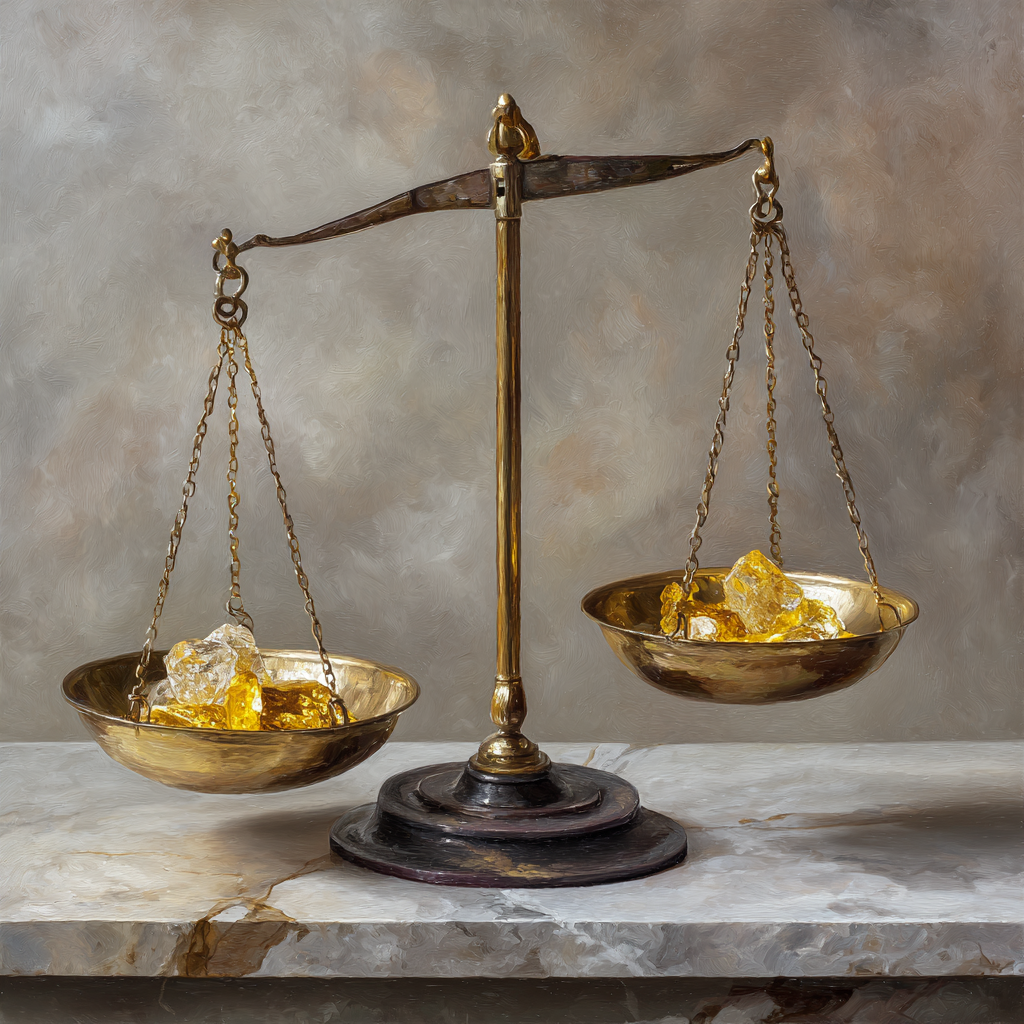
When gold and silver are weighed, an equal weight is placed on one side of the scale to accurately weigh the proper amount. Goods are “exchanged” for the amount agree upon by both parties. This was observed in Bereshith (Genesis) 3:15-16. Gold or silver is “gathered” and “exchanged” for goods.
In the message interpreted by Dani’El, he told the king that our Father had weighed him in the balance and was found wanting. The scale was out-of-balance. The Hebrew word used in Dani’El was “tekel”. The “shin” had been dropped to add the letter “tav” which is a prefix meaning “you”. This is commonly observed in the Hebrew language.
The evidence continues to illustrate that the ancient Hebrew pictographic language is the actual language of our Father and Creator. We would not be able to use the definitions of the individual Hebrew letters to define a word and have it fit within the context of the passage.
Let us consider an English word and use the ancient Hebrew pictographic letters to see if the sentence would actually agree with definition of the word. Here is our sentence.
The cat ran to the tree.
We are going to use the ancient Hebrew pictographic language to define the word “cat”. The ancient Hebrew letters that are used in the word “cat” are the “kaph and tav”. The letter “kaph” is a picture of an open hand. It is a cupped hand that feeds an animal food. It means “tame or cupped hand”. The letter “tav” is a picture of two crossed sticks and mean “sign or mark”. The word “cat” means the sign of the cupped hand or the sign of being tamed. We cannot use the ancient Hebrew pictographic language to define words and have them match the context of a sentence in the English language.
The last word written on the wall in the king’s palace was “Upharsin”. The “U” represents the letter “vav” and is a connector meaning “and”. It includes the letters, “pey, resh and samech”. Here is the word in the ancient Hebrew pictographic language:
SRP
The “pey” is a picture of a mouth which means “mouth, edge, or border”. The “resh” is a picture of a head of a man and means “first, leader, firstborn or beginning”. The “samech” is a picture of a thorn and means “turn, grab, pierce, hate or sharp”. The root of this word is the “pey and resh” and mean “open the head”. Animals would trample upon the newly harvested grain and break open the heads so the wheat could be separated from the chaff. This word has the idea of breaking, splitting or dividing.
The interpretation by Dani’El said that King Belshazzar’s kingdom would be divided and given to the Medes and the Persians. This agrees with the context of the passage in Vayiqra (Leviticus) 11:4 as well as the Hebrew word as defined by the ancient Hebrew pictographic language.
ALL three words written on the wall of the King’s palace agree with the context of the Law written by Moshe. ALL three words could be defined using the definitions of the ancient Hebrew pictographic letters. This evidence illustrates that our Father’s language is rooted heavily in the ancient Hebrew pictographic language.
In order for our Father to ensure that His message would be properly conveyed to the people, He needed to ensure that His messenger knew and understood His Language as well as His perspective and mindset. Our Father is not going to choose a Prophet that is unable to convey the message accurately. We provided evidence that our Messiah understood the ancient Hebrew language and mindset based on testimony from him recorded in Mattithyahu (Matthew).
The Word of our Father is His testimony as recorded by His true, verified prophets in His Language. Based on testimony in Dani’El, our Father does not write His Testimony in any other language than His own. He is a King of kings. He writes messages in His Language and it is up to us to find an interpreter to help us understand His original intended messages.
Translators are “interpreters” like Dani’El. They look at the underlying language and convey the meaning of the underlying language in our language so that we can understand the message. Translations are interpretations of the underlying Hebrew text. They are NOT the Words of our Father. His Words include the underlying Hebrew using the ancient Hebrew pictographic language.
The Greek writings we have today are not written in Hebrew. They are not written in the language of our Father. Therefore, they are not His specific Words. He does not use our languages to convey a message to us. He uses His Language and expects us to get an interpreter to convey the meaning of the message in our language.
Does a Chinese ambassador expect King Charles to communicate with him in Chinese or do they use interpreters to communicate?
They use interpreters. One of the functions of the Set-apart Spirit is to interpret the Words of our Father into all languages. This was witnessed here in the following passage.
And when the day of Pentecost was fully come, they were all with one accord in one place. And suddenly there came a sound from heaven as of a rushing mighty wind, and it filled all the house where they were sitting. And there appeared unto them cloven tongues like as of fire, and it sat upon each of them. And they were all filled with the Set-apart Spirit, and began to speak with other tongues, as the Spirit gave them utterance. And there were dwelling at Yerushalayim Jews, devout men, out of every nation under heaven. Now when this was noised abroad, the multitude came together, and were confounded, because that every man heard them speak in his own language. And they were all amazed and marveled, saying one to another, Behold, are not all these which speak Galileans? And how hear we every man in our own tongue, wherein we were born? Parthians, and Medes, and Elamites, and the dwellers in Mesopotamia, and in Judaea, and Cappadocia, in Pontus, and Asia, Phrygia, and Pamphylia, in Egypt, and in the parts of Libya about Cyrene, and strangers of Rome, Jews and proselytes, Cretes and Arabians, we do hear them speak in our tongues the wonderful works of Elohiym. And they were all amazed, and were in doubt, saying one to another, What does this mean?
People from all nations were able to hear the wonderful works of Yahuah in their own language through the Set-apart Spirit. People are able to understand our Father’s original intended messages through His Set-apart Spirit.
But the Comforter, which is the Set-apart Spirit, whom the Father will send in my name, he shall teach you all things, and bring all things to your remembrance, whatsoever I have said unto you.
The Set-apart Spirit teaches us all things and brings to remembrance the things Yahusha taught as well as the Words of our Father. The Set-apart Spirit teaches us Truth and dwells inside of us.
If you love me, keep my commandments. And I will pray to the Father, and He shall give you another Comforter, that he may abide with you forever; Even the Spirit of Truth; whom the world cannot receive, because it sees him not, neither knows him: but you know him; for he dwells with you, and shall be in you. I will not leave you comfortless: I will come to you.
He helps us understand the Words of our Father. He is our interpreter sent forth from our Father. In the following passage, Yahusha opened the eyes of his disciples so they could understand the Scriptures.
And he said unto them, These are the words which I spoke unto you, while I was yet with you, that all things must be fulfilled, which were written in the Law of Moshe, and in the Prophets, and in the Tehillim, concerning me. Then opened he their understanding, that they might understand the scriptures,
The “Scriptures” at this time included the Law of Moshe, the Prophets and the Tehillim. The Set-apart Spirit reveals the Truth found in the Words of our Father. He interprets the message originally given in our Father’s Language using our own language. What is the Word of our Father?
- The Word according to our Messiah in this passage includes the Law of Moshe, the Prophets and the Tehillim (Psalms). ALL of these were originally written in the language used by Hebrews which is the Language of our Father.
- The Set-apart Spirit interprets these writings and gives us understanding in our own language.
This is the first step to understanding the Word of our Father.
Download this Article here