
5-1 Genealogy of Melek-Tzedeq
Torah Portion 5-1 Bereshith (Genesis) 5:1-32
And Melek-Tzedeq king of Shalem brought forth bread and wine: and he was the priest of the Most High Elohiym.
The Word of our Father includes many genealogies and they usually relate to someone who holds a particular office in His Kingdom. For example, the role of “king” is an office which includes a certain set of responsibilities in the Kingdom of Yahuah. The role of “High Priest” has a certain set of responsibilities. The whole House of Yashar’El also occupies an office and has a certain set of responsibilities.
And you shall be unto me a kingdom of priests, and a set-apart nation. These are the words which you shall speak unto the children of Yashar’El.
The Hebrew word translated as “priest” is “kohen”. This term is not an exclusive reference to the Levitical Priesthood. In Shemoth 19:6, the whole House of Yashar’El are NOT replacing the Levitical or Melek-Tzedeq Priesthoods. The term “kohen” is a reference to a leadership position or office that has been given a certain set of responsibilities. Here are the responsibilities listed for the House of Yashar’El in the Torah along with their purpose:
Behold, I have taught you statutes and judgments, even as Yahuah my Elohiym commanded me, that you should do so in the land where you go to possess it. Keep therefore and do them; for this is your wisdom and your understanding in the sight of the nations, which shall hear all these statutes, and say, Surely, this great nation is a wise and understanding people. For what nation is there so great, who has Elohiym so near unto them, as Yahuah our Elohiym is in all things that we call upon him for? And what nation is there so great, that hath statutes and judgments so righteous as all this Law, which I set before you this day? Only take heed to thyself, and guard your soul diligently, lest you forget the things which your eyes have seen, and lest they depart from your heart all the days of your life: but teach them your sons, and your sons’ sons;
The responsibilities of the House of Yashar’El are to DO the Laws of our Father in the Torah written by Moshe and teach them to our children. When the whole House of Yashar’El hears and obeys the Laws of our Father, the Law says they will be abundantly blessed.
And it shall come to pass, if you shall hear and obey diligently unto the Voice of Yahuah your Elohiym, to observe and to DO all his commandments which I command you this day, that Yahuah your Elohiym will set you on high above all nations of the earth: And all these blessings shall come on you, and overtake you, if you shall hear and obey the Voice of Yahuah your Elohiym.
When the House of Yashar’El is abundantly blessed, people from the nations will take notice. They will desire the blessings experienced by the House of Yashar’El and make inquiries saying, “Why are you so blessed? What are you doing to cause your community to flourish with so much abundance?” This opens the door for people in the House of Yashar’El to tell them about our Father and His wonderful Laws. The House of Yashar’El is essentially a Light to the Nations that brings them salvation. Our Messiah confirms this responsibility in the following passage:
You are the light of the world. A city that is set on a hill cannot be hid. Neither do men light a candle, and put it under a bushel, but on a candlestick; and it gives light unto all that are in the house. Let your light so shine before men, that they may see your good works, and glorify your Father which is in heaven.
When we hear and obey the Voice of our Father which is His Word, our Father blesses us richly and abundantly. People see it and want to do the same things to obtain the blessings as well. When we do not hear and obey the Voice of our Father, we bring curses upon ourselves. The nations see the curses and do not want anything to do with us. In this situation, we are NOT a “light” to the nations.
When the House of Yashar’El chooses to fulfill the responsibilities of our office, we become a “light” that draws people to us. Our Father will not put His “light” under a bushel. He will put it on a candlestick so that it gives “light” to ALL. When we hear and obey His Voice, He will elevate the House of Yashar’El as the head, above ALL nations so they can give their “light” to the nations. This is will come to pass:
Arise, shine; for your light is come, and the glory of Yahuah is risen upon you. For, behold, the darkness shall cover the earth, and gross darkness the people: but Yahuah shall arise upon you, and his glory shall be seen upon you. And the Gentiles shall come to your light, and kings to the brightness of your rising.
THESE are the responsibilities given to the House of Yashar’El. They are not going to occupy roles given to the sons of Aahron in the Levitical Priesthood. This office belongs to Aahron and his sons forever. The Melek-Tzedeq Priesthood is another office established by our Father in the very beginning. Adam was told to do the following:
And Yahuah Elohiym took the man, and put him into the Garden of Eden to dress it and to keep it.
The role of Adam was “to dress and keep” the Garden in Eden. The Hebrew word translated as “dress” is “abad” and means “to serve”. This is the same responsibility given to the Levites and the House of Yashar’El. Here are two passages of many using the same Hebrew word, “abad”.
And I have given the Levites as a gift to Aahron and to his sons from among the children of Yashar’El, to do the service [H5647] of the children of Yashar’El in the tabernacle of the congregation, and to make an atonement for the children of Yashar’El: that there be no plague among the children of Yashar’El, when the children of Yashar’El come near unto the sanctuary.
You shall fear Yahuah your Elohiym, and serve [H5647] him, and shall swear by his name.
The Levites “serve” in the Tabernacle and the Temple. The House of Yashar’El “serves” Yahuah by obeying His Laws. Adam “served” in the Garden of Eden. The second responsibility of Adam was to “keep” the Garden of Eden which is the Hebrew word “shamar” which means “to guard”. This is also a responsibility for the Levitical Priesthood and the House of Yashar’El.
But the Levites shall pitch round about the tabernacle of testimony, that there be no wrath upon the congregation of the children of Yashar’El: and the Levites shall keep [H8104] the charge of the Tabernacle of Appointment.
Now therefore, if you will obey my voice indeed, and keep [H8104] my covenant, then you shall be a peculiar treasure unto me above all people: for all the earth is mine:
The nations were not given these responsibilities. These offices were given to specific people with a specific set of responsibilities. Adam was not given the responsibilities to take care of the Tabernacle or Temple. He was given the responsibilities to take care of the Garden of Eden where Yahuah dwells. This responsibility was also given to Chavah because she was a part of Adam when these instructions were given and both existed in the Garden of Eden. Essentially, they were a “Priest” and “Priestess” in the Garden of Eden. Testimony tells us that they were the only ones who were in the Garden in the beginning.
And they heard the sound of Yahuah Elohiym walking in the Garden in the cool of the day: and Adam and his wife hid themselves from the presence of Yahuah Elohiym amongst the trees of the Garden.
Adam and Chavah were the only ones in the Garden with Yahuah and they were removed before they had children. Based on this evidence, we know the following text is actually speaking about Adam who is the father of the Prince of Tyre.
And the word of Yahuah came to me, saying, Son of man, take up a lamentation for the prince of Tyre, and say to him, Thus, says Yahuah Elohiym; You are a seal of resemblance, and crown of beauty. You were in Eden of the Garden of Elohiym; you have bound upon you every precious stone, the sardius, and topaz, and emerald, and carbuncle, and sapphire, and jasper, and silver, and gold, and ligure, and agate, and amethyst, and chrysolite, and beryl, and onyx: and thou hast filled thy treasures and your stores in you with gold. You are the anointed Kerub that covers; and I have set you so: you were upon the set-apart mountain of Elohiym; you have walked up and down in the midst of the stones of fire. You were perfect in your ways from the day that you were created, till iniquity was found in you. By the multitude of thy merchandise, they have filled the midst of you with violence, and you have sinned: therefore, I will cast you as profane out of the mountain of Elohiym: and I will destroy you, O covering Kerub, from the midst of the stones of fire. Your heart was lifted up because of your beauty, you have corrupted your wisdom by reason of your brightness: I will cast you to the ground, I will lay you before kings, that they may behold you.
Adam and Chavah were created “perfect” in the beginning and they were “cast-out” of the Garden of Eden. The stones mentioned in this passage are identical to the stones in the breastplate worn by the Levitical Priesthood.
And you shall make the breastplate of judgment with cunning work; after the work of the ephod you shall make it; of gold, of blue, and of purple, and of scarlet, and of fine twined linen, shall you make it. Foursquare it shall be being doubled; a span shall be the length thereof, and a span shall be the breadth thereof. And you shall set in it settings of stones, even four rows of stones: the first row shall be a sardius, a topaz, and a carbuncle: this shall be the first row. And the second row shall be an emerald, a sapphire, and a diamond. And the third row a ligure, an agate, and an amethyst. And the fourth row a beryl, and an onyx, and a jasper: they shall be set in gold in their enclosures.
Adam had a breastplate similar to the breastplate worn by the Levitical priests. In this passage, the main responsibilities of Adam and Chavah were “covering Kerubiym”. The term “Kerub” is not related to “appearance” but a reference to “function”. The Hebrew word for “covering” in this passage is “sukak” and it is defined by The Ancient Hebrew Lexicon of the Bible written by Jeff A. Benner as:
KKS (סכך) Definition: The intertwining branches of thorn bushes for making a defensive wall.
KKF ( common, שכך / sh.k.k) Translation: FENCE.AROUND (V) Definition: To surround with a wall of protection or covering. To encompass completely. KJV Translations: cover, covering, defense, defend, hedge, join, set, shut Strong’s Hebrew #: h.5526
The responsibilities of Adam and Chavah were to protect the Garden of Eden and surround it. This word is in the same Hebrew word family as “sukkah” which is the Feast of Sukkot or Tabernacles.
HKWS ( fem., סוכה / su-kah) Translation: BOOTH Definition: A temporary shelter; a small enclosure; dwelling place. KJV Translations: tabernacle, booth, pavilion, cottage, covert, tent Strong’s Hebrew #: h.5521
We erect shelters in the wilderness for protection from the elements and predators. The two-lettered root of this word family is defined by The Ancient Hebrew Lexicon of the Bible as:
KS (סך) Action: Cover, Watch, Keep, Shut, Hire, Dwell Object: Booth, Hedge, Shrub, Chamber, Cage, Wage, Dwelling Definition: The watcher over the crops, flock or herd, would construct a covering (booth) as a shelter from the sun, wind or rain. These coverings were often constructed on an elevated position, and from materials readily available such as bushes, thorns and small trees. Ancient Hebrew: The pictograph S is a picture of a thorn representing protection, the K is a picture of the palm of the hand representing a covering. Combined these mean “protective covering”.
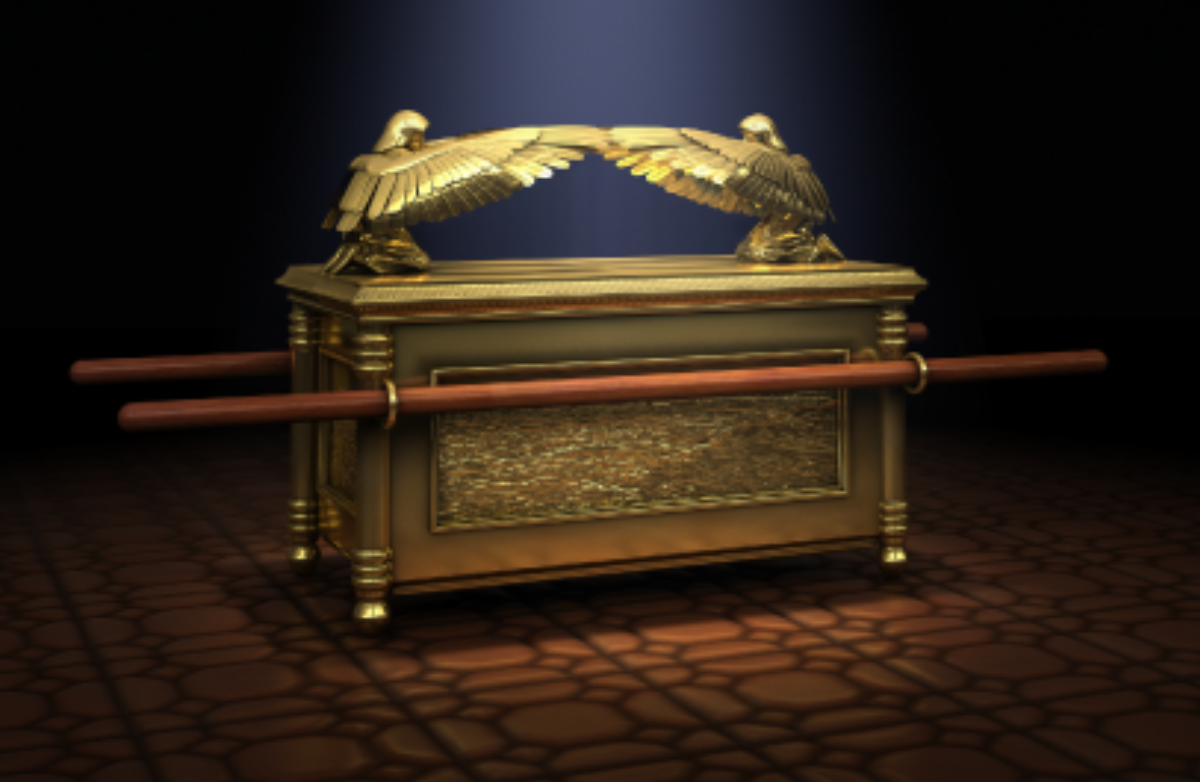
Adam and Chavah were the “protective covering” for the Garden of Eden. The Ark of the Covenant had two Kerubiym on the lid with their wings extended over the mercy seat. They look like they are “protecting” the mercy seat.
The Ancient Hebrew Lexicon of the Bible as defines the two-lettered root as:
BR (רב) Action: Rule, Spread, Ambush, Encourage, Strive Object: Master, Square, Sheet Abstract: Increase, Abundance, Pride Definition: Each family has a master that rules all cases, trials, conflicts and contests. This person was the representative for the whole tribe, one abundant in authority and wisdom. (see Exodus 18:25). Ancient Hebrew: The pictograph R is a picture of a head, the B is a picture of the tent representing the family. Combined these mean “head of the family”.
BR ( masc., רב / rav) רבה ( fem., רבה / ra-bah) Translation: ABUNDANT Definition: Great plenty or supply of numbers (many) or strength (great). One who is abundant in authority such as a master or teacher. Also, an archer as one abundant with arrows. Relationship to Root: An abundance of number, strength or authority. KJV Translations: many, great, much, captain, more, long, enough, multitude, mighty, greater, greatly, archer Strong’s Hebrew #: h.7227, h.7228 Strong’s Aramaic #: a.7229
Adam and Chavah were the first man and woman created by Yahuah. They were the “head” of mankind and the first parents. Some of their other responsibilities included the following:
So Elohiym created Adam in his own image, in the image of Elohiym created he him; male and female created he them. And Elohiym blessed them, and Elohiym said unto them, Be fruitful, and multiply, and replenish the earth, and subdue it: and have dominion over the fish of the sea, and over the fowl of the air, and over every living thing that moves upon the earth.
If Adam and Chavah had lived forever, they would have remained the King and Queen over all the earth for eternity. They were “the chiefs or firstborn, abundant in authority”.
The letter “kaph” is defined by The Ancient Hebrew Lexicon of the Bible as:
PK (כף) Action: Press, Bow, Tame, Bend, Dig Object: Palm, Grapevine, Mule, Famine, Shoulder-piece Abstract: Tame Definition: The curved shape of the open palm. Ancient Hebrew: The pictograph K is a picture of the palm of the hand, the P is a picture of an open mouth. Combined these mean “palm open”.
When we open our palms, we have nothing to hide. We are submitted or tamed. “Kerubiym” are leaders who are submitted to the Authority of Yahuah Elohiym. They have fully tamed their flesh so that they do not sin against our Father.
There are two Kerubiym on the lid of the ark, covering and protecting it. Therefore, the office of Melek-Tzedeq is occupied by two Kerubiym: one man and one woman appointed as leaders submitted to the will of Yahuah Elohiym who protect the Garden of Eden or the contents of the Ark.
Adam and Chavah were NOT submitted to the will of Yahuah and were removed from their positions in the Garden of Eden just like the House of Yashar’El was removed from the Presence of Yahuah and scattered among the nations. The House of Levi have been removed and no longer serve Yahuah in the Temple because no Temple currently exists and they have departed from their responsibilities of their office. But we still have the offspring of Adam and Chavah. The offspring from the House of Yashar’El and the House of Levi still exist. However, none of them are fulfilling the roles and responsibilities given to them by our Father.
Our Father cannot give these offices to someone else. He cannot replace the House of Yashar’El with another nation and He cannot replace the House of Levi with another tribe. The office of Melek-Tzedeq is the same. Inheritance for these offices pass to the firstborn sons. Here is an example:
And Moshe stripped Aahron of his garments, and put them upon Eleazar his son; and Aahron died there in the top of the mount: and Moshe and Eleazar came down from the mount.
The Melek-Tzedeq Priesthood transfers to the firstborn sons of Adam. This is documented in Bereshith 5. Qayin (Cain) forfeited his right to the Priesthood when he killed his brother Abel so this role was given to Seth. In the lineage in Bereshith 5, all the other sons are the firstborn sons. The firstborn son of Noach was Yapheth based on the following passage.
Unto Shem also, the father of all the children of Eber, the brother of Yapheth the elder, even to him were children born.
According to the Laws of Inheritance in the Torah, the office of Melek-Tzedeq would transfer to the firstborn son, Yapheth. This is why the lamentation in Yechezqel (Ezekiel) was spoken over the King of Tyre. He obtained the Melek-Tzedeq Priesthood through inheritance rights granted by our Father. This anointing has passed to the firstborn sons of Adam through-out the generations. The leaders of the earth have a lawful right to rule and reign according to the Laws of our Father. However, they are obviously NOT fulfilling the duties of the role of this office just like the Levitical Priesthood is NOT fulfilling their duties either. This is why Messiah Yahusha has not assumed the throne. He will not lift his hand against our Father’s anointed just like King David would not kill King Shaul who was the anointed King of Yashar’El.
And David answered and said, Behold the king’s spear! and let one of the young men come over and fetch it. Yahuah render to every man his righteousness and his faithfulness: for Yahuah delivered you into my hand to day, but I would not stretch forth my hand against Yahuah’s anointed.
King David had to wait until Yahuah removed King Shaul. Messiah Yahusha must also wait until our Father removes the individual who inherited the role as Melek-Tzedeq in the earth. The first Passover event is going to be repeated in a second greater exodus. There will be plagues again which terminate with the death of the firstborn. The leader of the earth who occupies the Melek-Tzedeq Priesthood will perish because he is a firstborn son, allowing Messiah Yahusha to assume the role as Priest and King over all the earth. Our Father essentially raised up a seed for his dead son, Adam like Boaz raised up a son for Naomi.
Yahusha also obtained the anointing for this position through redemption and not inheritance. He redeemed Adam by accepting his punishment in Bereshith 3:14-24. Because he accepted Adam’s punishment, he also obtains the office held by Adam as the Melek-Tzedeq Priest.
Yahusha IS the leader who is submitted to the will of our Father and always will be.
He will assume the role as Priest and King over all the earth according to the order of Melek-Tzedeq. In the following passage, it says that he inherits the earth as his possession.
Ask of me, and I shall give you the heathen for your inheritance, and the uttermost parts of the earth for your possession.
This is fulfillment of Bereshith 1:26-28 illustrating that Yahusha Ben David will be given ALL of the things bestowed upon Adam in the very beginning. It rightfully belongs to him according to the Law. He will be standing at the gate to the Garden of Eden and will determine those who will be allowed to enter and those who will not.
Not everyone that says to me, Adonai, Adonai, shall ENTER into the Kingdom of Heaven; but he that does the will of my Father which is in heaven. Many will say to me in that day, Adonai, Adonai, have we not prophesied in your name? and in your name have cast out devils? and in your name done many wonderful works? And then will I profess unto them, I never knew you: depart from me, you that work without Law.
He is the one chosen to determine who will ENTER through the gates to the Kingdom of Yahuah. Those who do not live according to our Father’s Laws will not be allowed entry. This is like the Kerubiym who guards the Way to the Tree of Life.
So, he drove out the man; and he placed at the east of the Garden of Eden Kerubyim, and a flaming sword which turned every way, to guard the way to the Tree of Life.
The Kerubiym was placed there so that Adam and Chavah could not return to the Garden of Eden. They had corrupted themselves with sin and were not allowed to re-enter in their current state. The Kerubiym will NOT allow anyone to re-enter the Garden of Eden who violate the Laws of Yahuah. This is in direct alignment with the words of Yahusha in Mattithyahu 7:21-22. He is like the Kerubiym who will not allow those who sin to enter into the Kingdom of Yahuah. Yahusha is the Priest of Melek-Tzedeq who is the anointed Kerub that covers.
Yahuah has sworn, and will not repent, You are a Priest forever after the order of Melek-Tzedeq. Adonai at your right hand shall strike through kings in the day of his wrath. He shall judge among the heathen, he shall fill the places with the dead bodies; he shall wound the heads over many countries.