512-1 Appointed Times of Yahuah
And Yahuah spoke unto Moshe, saying, Speak unto the children of Yashar’El, and say to them, these are the Appointed Times of Yahuah, which you shall proclaim as set-apart gatherings, these are My Appointed Times.
Moediym Yahuah Asher Tiqrau
Proclaim (Qara H7121) the Appointed Times (Moediym H4150) of Yahuah
וידבר יהוה אל־משׁה לאמר׃
דבר אל־בני ישׂראל ואמרת אלהם מועדי יהוה אשׁר־תקראו אתם מקראי קדשׁ אלה הם מועדי
Primary verses in the Torah and Prophets to consider:
And Yahuah spoke unto Moshe, saying, Speak unto the children of Yashar’El, and say to them, these are the Appointed Times of Yahuah, which you shall proclaim as set-apart gatherings; these are My Appointed Times [Moediym H4150].
And Elohiym said, Let there be lights in the firmament of the heaven to divide the day from the night; and let them be for signs, and for appointed times [Moediym H4150], and for days, and years:
He appointed the moon for appointed times [Moediym H4150]: the sun knows his going down.
Occurrences in the Torah (17):
These are references to the “appointed times” of Yahuah.
Shemoth (Exodus) 13:10, 23:15, 34:18
Vayiqra (Leviticus) 23:2-4, 23:37, 23:44
Bemidbar (Numbers) 9:2-3, 9:7, 9:13, 10:10, 15:3, 28:2, 29:39
Debarim (Deuteronomy) 16:6, 31:10
Occurrences in the Prophets (30):
These are references to the “appointed times” of Yahuah.
Yahusha (Joshua) 8:14 (1)
Yeshayahu (Isiah) 1:14, 33:20 (2)
Yirmeyahu (Jeremiah) 8:7 (1)
Eykah (Lamentations)1:4, 1:15, 2:6-7, 2:22 (5)
Yechezqel (Ezekiel) 36:38, 44:24, 45:17, 46:9, 46:11 (5)
Dani’El 8:19, 11:27, 11:29, 11:35, 12:7 (5)
Hoshea (Hosea) 2:11, 9:5, 12:9 (3)
Habaqquq (Habakkuk) 2:3 (1)
Tzephanyah (Zephaniah) 3:18 (1)
Zakaryah (Zechariah) 8:19 (1)
Tehillim (Psalms) 74:4, 74:8, 75:2, 102:13, 104:19 (5)
Interesting Observation:
The Tabernacle in the wilderness was called the “Tabernacle of the Appointment” 119 times and NOT the “Tabernacle of the Congregation” which is misleading. This leads us to believe that one of the purposes for the Tabernacle and later the Temple was for the “Appointed Times of Yahuah”. Here are those descriptions in the Torah.
Shemoth (Exodus) 27:21, 28:43, 29:4, 29:10-11, 29:30, 29:32, 29:42, 29:44, 30:16, 30:18, 30:20, 30:26, 30:36, 31:7, 33:7, 35:21, 38:8, 38:30, 39:40, 40:2, 40:7, 40:12, 40:24, 40:29-30, 40:32, 40:35.
Vayiqra (Leviticus) 1:1, 1:3, 1:5, 3:2, 3:8, 3:13, 4:4-5, 4:7, 4:14, 4:18, 6:16, 6:26, 8:3, 8:31, 8:33, 8:35, 9:5, 9:23, 10:7, 10:9, 12:6, 14:11, 14:23, 15:14, 15:29, 16:7, 16:16-17, 16:20, 16:23, 16:33, 17:4-9, 19:21, 24:3.
Bemidbar (Numbers) 1:1, 2:2, 2:17, 3:7-8, 3:25, 3:38, 4:3-4, 4:15, 4:23, 4:25, 4:28, 4:30-31, 4:33, 4:35, 4:37, 4:39, 4:41, 4:43, 4:47, 6:10, 6:13, 6:18, 7:5, 7:89, 8:9, 8:15, 8:19, 8:22, 8:24, 8:26, 10:3, 11:16, 12:4, 14:10, 16:2, 16:18-19, 16:42-43, 16:50, 17:4, 18:4, 18:6, 18:21-23, 18:31, 20:6, 25:6, 27:2, 31:54,
Debarim (Deuteronomy) 31:14
What does “Qara (Proclaim), Moediym (Appointed Times), Miqrah (gathering), Qodesh (Set-apart) mean in the underlying Hebrew?
Definition of ARQ (Proclaim H7121) and HRQM (Gathering H4744):
The Hebrew words “qara” and “miqrah” are in the same Hebrew word family and share the same two-lettered root word which is defined the following way by The Ancient Hebrew Lexicon of the Bible written by Jeff A. Benner as:
RQ קר Action: Call, Meet Object: Cold, Meeting, Event, Sit, Wall, Ice, Bald Abstract: Precious Definition: The meeting or bringing together of people or objects by arrangement, accident or purchase. Ancient Hebrew: The pictograph Q is a picture of the sun at the horizon and the gathering of the light, the R is a picture of the head of a man. Combined these mean “gather the men”.
The “quph” is the sun at sunrise and represents the “gathering light”. “Light” can represent the sun but it can also represent those who are in alignment with our Father’s Ways. They walk in the “light”. Our Messiah says that the House of Yashar’El are to be the “light” to the world.
You are the light of the world. A city that is set on a hill cannot be hid. Neither do men light a candle, and put it under a bushel, but on a candlestick; and it gives light unto all that are in the house. Let your light so shine before men, that they may see your good works, and glorify your Father which is in heaven.
It is our “good works” that are a “light” according to this testimony from our Messiah. He says that we are to be the “light of the world”. The “gathering light” from the perspective of our Father and Messiah are those who do “good works”. This is also observed in the following passage:
Behold, I have taught you statutes and judgments, even as Yahuah my Elohiym commanded me, that you should do so in the land where you go to possess it. Guard therefore and do them; for this is your wisdom and your understanding in the sight of the nations, which shall hear all these statutes, and say, “Surely this great nation is a wise and understanding people. For what nation is there so great, who has Elohiym so near to them, as Yahuah our Elohiym is in all things that we call upon him for? And what nation is there so great, that has statutes and judgments so righteous as all this Law, which I set before you this day?” Only take heed to yourself, and guard your soul diligently, lest you forget the things which your eyes have seen, and lest they depart from your heart all the days of your life: but teach them your sons, and your sons’ sons;
The House of Yashar’El would obey ALL of the Laws written in the Torah by the Prophet Moshe. According to the Law of Sowing and Reaping, when someone hears and obeys the Words of Yahuah, He hears and obeys the words we speak. This is why He is so near to them and answers ALL of their prayers. As a result, they are richly blessed according to Debarim (Deuteronomy) 28:1-14. Because of these great blessings, the surrounding nations see the blessings and are curious. They want to know what the House of Yashar’El is doing to obtain such great blessings. Then, the people of the Most High have an opportunity to share the greatness of our Father and His Ways. This is how the House of Yashar’El is a “Light” to the nations according to our Father.
Testimony also tells us that our Messiah is also a “light to the nations”.
And he said, Is it a light thing that you should be my servant to raise up the tribes of Ya’aqob, and to restore the preserved of Yashar’El: I will also give you for a light to the Gentiles, that you may be my salvation unto the ends of the earth.
Based on these testimonies, the “gathering light” is a reference to the House of Yashar’El in the Hebrew word “qara” and “miqrah”. In the beginning, Yahuah created mankind in His image and likeness. Our Father is a representation of the “Light” and He created us to be like Him.
The letter “resh” in the words “qara” and “miqrah” is a picture of a man’s head which represents the “firstborn, head or beginning”. It is the responsibility of the “firstborn” to take care of the community. The patriarch Yoseph (Joseph) is an example. Even though he was not the actual firstborn son of Ya’aqob (Jacob), he fulfilled the duties of a firstborn son.
And when Yoseph’s brethren saw that their father was dead, they said, Yoseph will peradventure hate us, and will certainly requite us all the evil which we did unto him. And they sent a messenger unto Yoseph, saying, your father did command before he died, saying, So shall you say unto Yoseph, Forgive, I pray you now, the trespass of your brethren, and their sin; for they did unto you evil: and now, we pray you, forgive the trespass of the servants of the Elohiym of your father. And Yoseph wept when they spoke unto him. And his brethren also went and fell down before his face; and they said, Behold, we be your servants. And Yoseph said unto them, Fear not: for am I in the place of Elohiym? But as for you, you thought evil against me; but Elohiym meant it unto good, to bring to pass, as it is this day, to save much people alive. Now therefore fear not: I will nourish you, and your little ones. And he comforted them, and spoke kindly unto them.
The House of Yashar’El is responsible for taking care of the earth and all of its inhabitants including all of the animals. Testimony says the House of Yashar’El is our Father’s firstborn son.
And you shall say unto Pharaoh, thus says Yahuah, Yashar’El is my son, even my firstborn:
The House of Yashar’El as a collective are the firstborn of the earth and will be ruling and reigning with our Messiah upon his return. Their responsibilities are like the responsibilities of the patriarch Yoseph (Joseph) when he ruled in the land of Egypt.
Based on this evidence, this two-lettered root of “qara” and “miqrah” is the “gathering of men who are light” or the “gathering of the firstborn who are light”.
Note: The phrase “take heed to yourself and guard your soul” in Debarim (Deuteronomy) 4:5-9 is an Infinitive Absolute using the Hebrew word “shamar” twice for emphasis. Consider our study on the Infinitive Absolute to learn more about what this means.
The Hebrew word translated as “qara” has the additional letter “aleph” also. Together, they mean the following:
ARQ ( common, קרא / q.r.a) Translation: CALL.OUT (V) Definition: To raise one’s voice or speak loudly and with urgency; to give, a name; to meet in the sense of being called to a meeting; to have an encounter by chance; to read in the sense of calling out words. Edenics: call – with the exchange of the l and r KJV Translations: call, cry, read, proclaim, name, guest, invite, gave, renown, bidden, preach, read, cry Strong’s Hebrew #: h.7121 Strong’s Aramaic #: a.7123
ARQ קרא Definition: A calling together for assembly. To call out a name as when a child is born its name is called out for all to here and come to the house.
The letter “aleph” is a picture of an oxen and means “strong” because oxen are very strong and powerful animals. The Hebrew word “qara” is the “strong gathering of men who are light”. We can see the gathering of the firstborn men but what makes this stronger is an announcement using a voice declaring it to be so. Here are the pictures associated with these ancient Hebrew pictographic letters.

When our Father tells us to “proclaim” His Appointed Times, He is telling the House of Yashar’El to announce it verbally with our voices and schedule it on the calendar. It is a declaration. We can also do this by blowing the shophar.
Blow up the shophar in the new moon, in the time appointed, on our solemn feast day. For this was a statute for Yashar’El, and a Law of the Elohiym of Ya’aqob.
Also, in the day of your gladness, and in your solemn days, and in the beginnings of your months, you shall blow with the trumpets over your burnt offerings, and over the sacrifices of your peace offerings; that they may be to you for a memorial before your Elohiym: I am Yahuah your Elohiym.
The shophar and the trumpet are strong voices that announce the initiation of the “Appointed Times” of our Father. It draws people’s attention to the events.
The Hebrew word “miqrah” has the addition of the letter “hey” instead of the letter “aleph”. It is a picture of a man with his arms raised trying to get people’s attention. Meetings which include large groups of people draw the attention of others. When the 4000 and the 5000 came to hear Yahusha speak, this large gathering of people drew the attention of the entire area as well as its leaders.
The Ancient Hebrew Lexicon of the Bible defines “miqrah” the following way:
HRQ קרה Definition:The meeting or bringing together of people or objects by arrangement, accident or purchase.
HRQM ( masc., מקרה / miq-rah) Translation: MEETING Definition: A planned or accidental coming together. An encounter. KJV Translations: convocation, assembly, befall, event, hap, chance, happen Strong’s Hebrew #: h.4744(x2), h.4745
“Miqrah” has the addition of the “mah” or “mem”. This is a picture of waves representing the sea or the air in the heavens.
M
The seas and the heavens are massive and can be chaotic as seen in large waves or hurricanes and tornadoes. They both have the same characteristics. Balloons filled with air and water have the same shape. One is just heavier than the other. We cannot take one water out of the sea and we cannot take one air out of the heavens. The letter “mah” represents the nature and character of both of these substances.
The “mah” can also represent a large group of people. The Prophet Yeshayahu (Isaiah) likens a multitude of people to the noise of the sea.
Woe to the multitude of many people, which make a noise like the noise of the seas; and to the rushing of nations, that make a rushing like the rushing of mighty waters!
The Hebrew word translated as “people” is “am” which contains the letter “mah” or “mem” and the letter “ayin” which is a picture of the “eye”.
M[
This word can be interpreted as “see masses of people that look and sound like the sea”. It represents a large gathering of people. The addition of the “mah” on “miqrah” indicates that this is a very large gathering of people. Here are the pictures associated with the Hebrew word “Qarah” which is the three-lettered root of “miqrah”.

Based on this evidence, “miqrah” is a “large gathering of men who represent light which draws the attention of others”. We can see this understanding in these pictures. This is how our Father defines this term because the ancient Hebrew pictographic language is His language. We discuss this in our series titled, Identity of our Intelligent Designer. It is the desire of our Father for His people to gather together for His Appointed Times.
Definition of מודימ (Appointed Times H4150):
“Moediym” is the plural word for “moed” which represents an “Appointment”. Our Father has a calendar and He has written the dates for all of these appointments in His Book. His dates are scheduled according to His method of reckoning time. The text clearly states that these are His Feasts. Here is the phrase in Hebrew and English taken from Vayiqra (Leviticus) 23:2.
HWHY YD[WM
Yahuah Moediym of
The Hebrew letter highlighted in orange is a “yod” and it indicates that this word is attached to the next word which happens to be the Name of our Creator. This phrase means, “The Appointed Times of Yahuah”. We also see this possession in the last word of Vayiqra (Leviticus) 23:2. The letter “yod” is also highlighted orange in this word and means “my”.
YD[WM
My Moediym
Our Father is the “Owner” of these “Appointed Times” which are described in the whole chapter in Vayiqra (Leviticus) 23. These are NOT “Jewish Feasts”. These are NOT the Feasts of the House of Yashar’El. These are the “Appointed Times of Yahuah” and they are established based upon His Calendar System.
In Vayiqra (Leviticus) 23:2, our Father is instructing the House of Yashar’El to “proclaim” His Appointed Times and to arrange Set-apart gatherings upon these days. Our Father makes a distinction between the “Jewish appointed times” and His in the following passage.
Your new moons and your appointed times [Moediym H4150) my soul hates: they are a trouble unto me; I am weary to bear them.
From His perspective, the House of Yahudah was NOT celebrating His Appointed Times and observing His New Moons. They had established their own calendar and appointed times. He hates them and they cause Him trouble. This is His perspective. When people use calendar systems that are not His, they have created their own “appointed times” even if they bear a similitude to His Appointed Times.
People fall into this trap when they choose to hear and obey the voice of someone else rather than His Voice.
The two-lettered root of “moed” is defined the following way by The Ancient Hebrew Lexicon of the Bible written by Jeff A. Benner as:
D[ עד Action: Adorn, Meet Object: Trappings Abstract: Witness, Appointment Definition: As coming to a tent of meeting and entering in. A place, time or event that is repeated again and again. Ancient Hebrew: The pictograph [ is a picture of the eye, the D is a picture of the door. Combined these mean “see the door”.
How is “seeing the door” related to the “Appointed Times” of our Father? We have to look at things from His perspective. The “door” can represent the “gates” of a city or the “gates” of the Temple as illustrated in the following passage:
And David prepared iron in abundance for the nails for the doors of the gates, and for the joinings; and brass in abundance without weight;
Judges sit in the gates of a city which are the “doors” to a city.
Judges and officers shall you make you in all your gates, which Yahuah your Elohiym gives you, throughout your tribes: and they shall judge the people with just judgment.
The House of Yashar’El will be the eternal leaders over all the earth with Messiah Yahusha Ben David. They will sit in the Gates of the cities judging cases brought before them.
In the wilderness, the people would gather at the “door” to the Tent of Appointment.
And gather all the congregation together unto the door of the Tabernacle of the Appointment (Moed H4150].
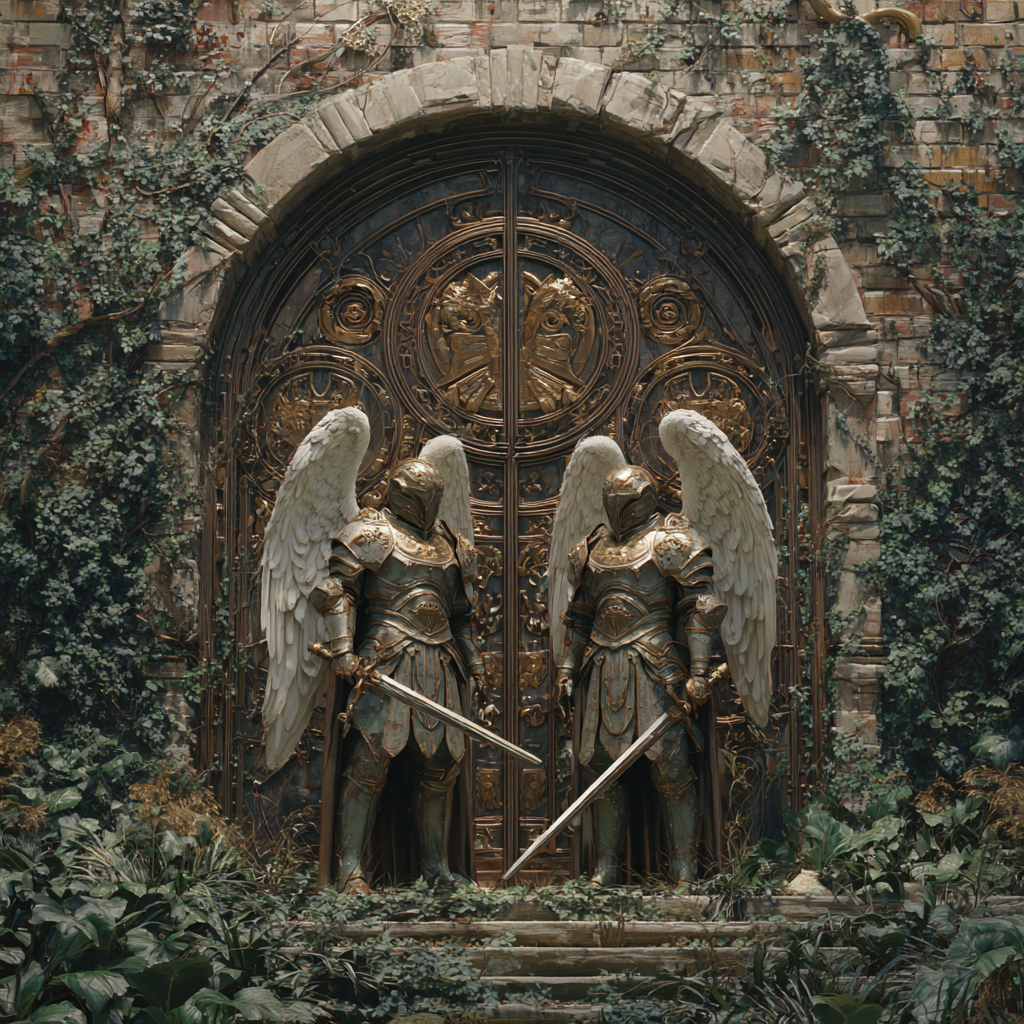
When people gathered at the door of the Tabernacle, they could see the door. When people gather at the gate to a city, they see the door to the city where judges sit. The Garden of Eden is surrounded by a wall and there is a gate to our Father’s fortress also. It is like a gate to a city in the ancient days. It is currently guarded by Kerubiym.
So, He drove out the man; and He placed at the east of the Garden of Eden Kerubiym, and a flaming sword which turned every way, to guard the way to the Tree of Life.
In many of our videos and studies, we refer to the letter “tzade” which illustrates the Way to our Father’s fortress or house. It is like the fortress “Masada” in the land of Israel built by King Herod. The word “masada” actually comes from “maTZada” which contains the letter “tzade”. The letter has a zigzag trail leading to the gates of the fortress. Here is an illustration:
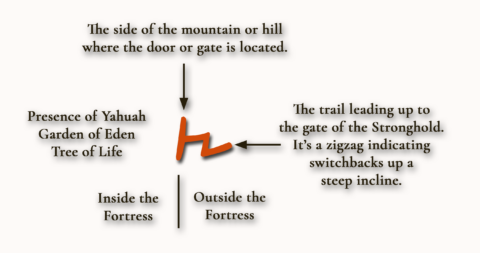
Consider our word study on Matzadah for a deeper explanation on this subject.
Yahusha Ben David is sitting in the Gate of our Father’s fortress. He is a Judge representing our Father. He will decide who ENTERS and who does not. He is the “door” to our Father’s city.
I am the door: by me if any man ENTER in, he shall be saved, and shall go in and out, and find pasture.
Yahusha says that anyone who ENTERS the gates will be saved. People who enter into the Garden of Eden will have access to the Tree of Life. They will live forever and never die. This is confirmed in the following passage:
Blessed are they that do his commandments, that they may have right to the Tree of Life, and may ENTER in through the gates into the city. For outside are dogs, and sorcerers, and whoremongers, and murderers, and idolaters, and whosoever loves and makes a lie.
Those who are on the outside are “idolaters” who are people who hear and obey the voice of someone else and NOT Yahuah. We see the same situation in the following passage:
Not everyone that says to me, Adonai, Adonai, shall ENTER into the Kingdom of Heaven; but he that does the will of my Father which is in heaven. Many will say to me in that day, Adonai, Adonai, have we not prophesied in your name? and in your name have cast out devils? and in your name done many wonderful works? And then will I profess unto them, I never knew you: depart from me, you that work without Law.
People who are “without Law” will not ENTER the Gates of our Father’s fortress. They are people who do not do the commandments of our Father. Yahusha is a Judge sitting in the Gates of the city of our Father. The righteous will “gather” at the “door” to the city where the Judges sit for our Father’s Appointed Times.
The Tabernacle was called the “Tent of Appointment” and was later replaced by a beautiful Temple. The purpose of the Temple is a gathering place for our Father’s Appointed Times or “moediym”. Our Messiah will rebuild a Temple to our Father following the pattern established by the Prophet Yechezqel (Ezekiel). It will be a gathering place for our Father’s Appointed Times in the world-to-come. When people gather there, they will see the door. The Ancient Hebrew Lexicon of the Bible defines it as:
D[WM ( masc., מועד / mo-eyd) Translation: APPOINTED Definition: A person, place, thing or time that is fixed or officially set. KJV Translations: congregation, feast, season, appointed, time, assembly, solemnity, solemn, days, sign, synagogue Strong’s Hebrew #: h.4150, h.4151
D[Y יעד Definition: An appointed place, time or event that is repeated such as the monthly and yearly feasts.
This Hebrew word also has the addition of the letter “mah” which represents something massive like the sea or a large gathering of people who see the door. They are gathering at the gates of the Temple and see the door. Here are the pictures associated with this word.

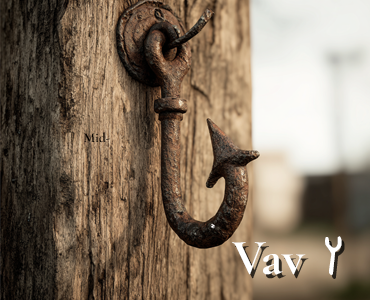
“Moed” also has the addition of the letter “vav” which is a picture of a hook that connects things together. It “adds” or “secures” something. The “Appointed Times” of our Father are secure and a settled matter. They are firm and unchanging.
D[WM
The Moediym of Yahuah are His scheduled appointments with His people who will be the leaders of the earth for eternity. It is important to align with His reckoning of time so that we are celebrating His Appointed Times on the same day that He is celebrating them.
Definition of FDWQ (Qodesh H6944):
The “miqrah” or “meetings” are to be “qodesh”. The Hebrew word “qodesh” contains the “quph, dalet and shin”. The two-lettered root using the “dalet and shin” is defined the following way by The Ancient Hebrew Lexicon of the Bible written by Jeff A. Benner as:
FD דש Action: Thresh, Sprout Object: Grass Definition: The grains were placed on the threshing floor where they were trampled on and beaten in order to separate the hulls from the grain.Ancient Hebrew: The pictograph D is a door representing the idea of moving back and forth. The F is a picture of teeth meaning to press. Combined these pictures mean “the back-and-forth movement of pressure”.
Freshly harvested grain would be placed upon the threshing floor and beaten. This would cause the chaff to be loosened from the valuable grain. The chaff is inedible and typically covers the outside of the grain. It is much lighter in weight than the wheat berries. The grain is heavier and falls to the ground while the wind carries the chaff away. This process separates the grain from the chaff so that it could be eaten. In the following testimony, Yochanan the Immerser (John the Baptist) likens people who repent from their sins to wheat and those that do not as chaff.
I indeed baptize you with water unto repentance: but he that comes after me is mightier than I, whose shoes I am not worthy to bear: he shall baptize you with the Set-apart Spirit, and with fire: Whose fan is in his hand, and he will thoroughly purge his floor, and gather his wheat into the garner; but he will burn up the chaff with unquenchable fire.
The chaff serves no purpose. It is to be discarded and burned. Wheat feeds people and serves a purpose. The chaff does not. “Qodesh” is the process of separating the wheat from the chaff. The Ancient Hebrew Lexicon of the Bible defines it the following way:
FDWQ ( masc., קודש / qo-desh) Translation: SPECIAL Definition: A person, item, time or place that has the quality of being unique; Separated from the rest for a special purpose. KJV Translations: holy, sanctuary, hallowed, holiness, dedicated, consecrated Strong’s Hebrew #: h.6944
FDQ ( common, קדש / q.d.sh) Translation: SET.APART (V) Definition: To move or place someone or something separate from the whole for a special purpose. KJV Translations: sanctify, hallow, dedicate, holy, prepare, consecrate, appoint, bid, purify Strong’s Hebrew #: h.6942
FDQ קדש Definition: Set apart from the rest for a special function. Relationship to Parent: separating and joining to something
The Appointed Times of our Father serve a purpose. They are not vain and empty. They are prophetic describing future events to be fulfilled and are memorials for important events to remind us of the greatness of our Elohiym. The “miqrah qodesh” is to be a “set-apart gathering” for His people fulfilling a specific purpose or function. The focus of these gatherings is designed to be upon Him and serves as memorial for events associated with the various appointed times.
For example, Pesach (Passover) and the Feast of Matzah (Unleavened Bread) are memorials for the exodus from Egypt but they are also prophecies of a greater exodus to come.
The “dalet” in this word is a door that swings back-and-forth. The “shin” is two front teeth and in this situation represents the pressure exerted by the teeth. Oxen trample on the grain moving back-and-forth which releases it from the chaff. The grain is then “gathered” and stored for eating. It is separated from the chaff. Here are the pictures representing “qodesh”.

The House of Yashar’El represents the wheat because they “hear and obey the Voice of Yahuah”. It is the desire of our Father to gather His wheat together on His Appointed Times. Wheat is valuable and provides nutrition for people. People who “hear and obey the Voice of Yahuah” have something to offer the nations. They “feed” the people His Truth because they “know” the Truth. They “hear and obey His Voice”.
This word also has the addition of the letter “vav” which is a picture of a hook that secures things together as previously discussed.
If people are going to be appointed as a leader for eternity, then they must be tried and tested to ensure they are qualified to fulfill this role in His government. One of the most important qualities that an individual can acquire in His Kingdom is “hearing and obeying His Voice”. If we do this one thing then we essentially obey ALL of His commandments, judgements and ordinances. If we are “hearing and obeying His Voice” then we will learn and understand His method for reckoning time.
Our Father is testing us in this season of our life to see who will obey and who will not. His “Appointed Times” are determined by using His calendar system. People who are hearing and obeying the voice of someone else are going to honor His Appointed Times on the wrong days or they will celebrate entirely different holidays established by another belief system. His Appointed Times distinguish between those who belong to Him and those who do not. It separates the wheat from the chaff.
What use can a leader provide if they do not hear and obey His Voice?
They are like chaff. They cannot serve in any capacity in His government. He cannot use someone who chooses to hear and obey the voice of others instead of our Father. This is the most important skill to master and acquire if it is our desire to be a useful vessel in His Kingdom. We discuss this Law in our study titled, Hear and Obey the Voice of Yahuah. It serves as the foundation for all other Laws. We begin our journey with Him by hearing and obeying His Voice as recorded in the Law, the Prophets and the Tehillim (Psalms). We have chosen to “hear and obey the voice of our Messiah” in this matter and define the Word of our Father the same way he did.
And he [Yahusha] said unto them, These are the words which I spoke to you, while I was yet with you, that all things must be fulfilled, which were written in the Law of Moshe, and in the Prophets, and in the Tehillim, concerning me. Then opened he their understanding, that they might understand the scriptures,
Messiah Yahusha is sitting on the right hand of our Father in His Kingdom. Yahusha has access to the Tree of Life and lives forever. He knows the Way to our Father’s House. We can trust him to guide us there using the same exact writings that he believes is “scripture”. Yahusha did not use Galatians or Romans to reach his current destination. They were not written. From my perspective, the writings attributed to Shaul of Tarsus create confusion. This does not mean they do not serve any value. However, we should NOT allow them to take precedence over the Words actually spoken by our Father in Heaven. Let’s first rebuild a foundation of hearing and obeying the Words of our Father like our Messiah.
When people hear and obey the voice of someone else, they are following Adam’s example.
And unto Adam he said, Because you have heard and obeyed the voice of your wife, and have eaten of the tree, of which I commanded you, saying, You shall not eat of it: cursed is the ground for your sake; in sorrow shall you eat of it all the days of your life;
This is idolatry. Adam placed the authority of his wife ABOVE the authority of Yahuah Elohiym. When we follow the calendar system of someone else, we are placing their authority ABOVE the authority of Yahuah Elohiym. These people have disqualified themselves from holding a position of leadership in the Kingdom of our Father and may find themselves on the outside of the gates to our Father’s city.
Our Father’s “Appointed Times” actually separates those who hear and obey His Voice from those who don’t. They separate the wheat from the chaff. Those who are hearing and obeying the Voice of our Father are following His method of reckoning time and are meeting Him on the same days that He is celebrating His Appointed Times.
The Establishment of the Appointed Times:
In the following passage, the Hebrew word “moediym” is often translated as “seasons” which is misleading. Our Father created the luminaries to be for signs, appointed times, days and years.
And Elohiym said, Let there be lights in the firmament of the heaven to divide the day from the night; and let them be for signs, and for appointed times [Moediym H4150], and for days, and years:
Testimony says the “moon” establishes the “month” and designates the “appointed times” of our Father.
He established the moon for appointed times [Moediym H4150]: the sun knows his going down.
This evidence illustrates that the “moediym” were created at the foundation of Creation. For example, the Shabbat was created on the 4th day which is why Yahusha said the following words.
And he said unto them, The Shabbat was made for man, and not man for the Shabbat: Therefore, the Son of man is Adonai also of the Shabbat.
Everything created prior to the 6th day was made FOR mankind. The plants, animals, birds, seas and land. Shabbat is an “Appointed Time” of our Father and He created it FOR man as well as the rest of the “Appointed Times”. They were ALL created at the foundation of Creation.
Insights from the Greek writings:
These are passages which illustrate behaviors on the “appointed times” of our Father and provide insights to the actions done by our Messiah and his followers on a “Miqrah qodesh” or a “set-apart gathering”. It was the custom for our Messiah to a synagogue on the Shabbat day and read from the Law and the Prophets which places focus upon our Father.
And he came to Natzareth, where he had been brought up: and, as his custom was, he went into the synagogue on the Shabbat day, and stood up for to read. And there was delivered unto him the book of the prophet Yeshayahu (Isaiah). And when he had opened the book, he found the place where it was written, The Spirit of Yahuah is upon me, because he has anointed me to preach the good news to the poor; he has sent me to heal the brokenhearted, to preach deliverance to the captives, and recovering of sight to the blind, to set at liberty them that are bruised, To preach the acceptable year of Yahuah. And he closed the book, and he gave it again to the minister, and sat down. And the eyes of all them that were in the synagogue were fastened on him. And he began to say unto them, This day is this scripture fulfilled in your ears.
Yahusha did a teaching based on the text that he read so this is another example of an action done during a “miqrah-qodesh”. Shaul of Tarsus also attended a synagogue on the Shabbat day to hear the reading of the Law and the Prophets.
But when they departed from Perga, they came to Antioch in Pisidia, and went into the synagogue on the Shabbat day, and sat down. And after the reading of the Law and the prophets the rulers of the synagogue sent unto them, saying, You men and brethren, if you have any word of exhortation for the people, say on. Then Shaul stood up, and beckoning with his hand said, Men of Yashar’El, and you that fear Elohiym, give audience.
He also shared a message to the attendees just like our Messiah.
In Acts, new converts were encouraged to attend synagogues on Shabbat to hear the reading of the Law written by Moshe.
Wherefore, my sentence is, that we trouble not them, which from among the Gentiles are turned to Elohiym: But that we write unto them, that they abstain from pollutions of idols, and from fornication, and from things strangled, and from blood. For Moshe of old time has in every city them that preach him, being read in the synagogues every Shabbat day.
The purpose for “hearing” the reading of the Law is based on the following Law in the Torah.
When all Yashar’El is come to appear before Yahuah your Elohiym in the place which he shall choose, you shall read this Law before all Yashar’El in their hearing. Gather the people together, men, and women, and children, and thy stranger that is within your gates, that they may hear, and that they may learn, and fear Yahuah your Elohiym, and observe to do all the words of this Law:
In this situation, the Law would be read every seven years during the Feast of Sukkot (Tabernacles). People would “hear” the Law being read and learn how to observe ALL of the words of this Law. This would teach them to “Fear Yahuah” and obey Him. There is no prohibition for reading the Law more often. In fact, the King is instructed to meditate upon the Law every day.
And it shall be, when he sits upon the throne of his kingdom, that he shall write him a copy of this Law in a book out of that which is before the priests the Levites: And it shall be with him, and he shall read therein all the days of his life: that he may learn to fear Yahuah his Elohiym, to guard all the words of this Law and these statutes, to do them:
The House of Yashar’El will be the leaders of the earth. They will be the kings and queens over the nations. It is wise for them to write a copy of the Law for themselves and meditate upon it daily just like the King in this passage.
Based on this evidence, the “miqrah-qodesh” on Shabbat specifically includes the following:
- Gathering together with those who have the same faith
- Reading of the Law of Moshe
- Reading of the Hebrew Prophets
- Messages or Exhortations on the content that was read at the meeting.
We can assume that ALL of our Father’s Appointed Times would include these actions as well.
What principles are based on this Law?
Our Father establishes His Appointed Times using His method of reckoning time. This does not mean that we cannot establish memorials throughout the year to help us remember certain events. However, they ought to place focus upon Him and be set-apart for a special purpose. Our Father acknowledges “fasts” that have been established by the House of Yahudah in the following passage.
Thus says Yahuah of hosts; The fast of the fourth month, and the fast of the fifth, and the fast of the seventh, and the fast of the tenth, shall be to the house of Yahudah joy and gladness, and cheerful appointed times; therefore, love the truth and peace.
Yahuah says that He is going to turn these “fasts” into cheerful “appointed times” full of joy and gladness. These “appointed times” established by the House of Yahudah do not contradict or conflict with our Father’s Appointed Times. Their focus is upon Him and hope for restoration.
The modern-day concept of “principle” is defined the following way by Wikipedia and BibleHub:
A principle may relate to a fundamental truth or proposition that serves as the foundation for a system of beliefs or behavior or a chain of reasoning.[2] They provide a guide for behavior or evaluation.[2] A principle can make values explicit, so they are expressed in the form of rules and standards. https://en.wikipedia.org/wiki/Principle
In the context of the Bible, the term “principle” refers to fundamental truths or doctrines that guide behavior and belief. These principles are derived from the teachings and commandments found in Scripture and serve as the foundation for Christian living and moral decision-making. https://biblehub.com/topical/p/principle.htm
What character attribute is associated with this Law?
When everyone is using the calendar system established by our Father, ALL of us will be celebrating His Appointed Times on the same day as Him. We will have unity because we will all be together. This is why idolatry is a serious offense. It creates division among those who are trying to serve Yahuah Elohiym. For example, the Enoch, Jubilees and Zadok calendar systems only use the sun to establish appointed times. But the Word clearly says that the “moon” establishes our Father’s appointed times:
He established the moon for appointed times [Moediym H4150]: the sun knows his going down.
People who use the Enoch, Jubilees and Zadok calendar systems are not celebrating the Appointed Times of our Father on the same day that He is celebrating them. They are hearing and obeying the voice of these authors and NOT the Voice of Yahuah. This is idolatry and has created division between them and our Father. They have separated themselves from Him as well as from those who are united with our Father. Yahuah clearly establishes Himself as One who is “united”.
Hear, O Yashar’El: Yahuah our Elohiym is one [Echad H259] Yahuah:
The Ancient Hebrew Lexicon of the Bible defines “echad” the following way:
DXA ( masc., אחד / e-hhad) אחת ( fem., אחת / e-hhat) Translation: UNIT Definition: A unit within the whole, a unified group. A single quantity. Alternate Translations: first; one; other; few (when in the plural form) KJV Translations: one, first, another, other, any, once, every, certain, an, some Strong’s Hebrew #: h.0259
Yahuah is a “unified group”. Those who celebrate a Sabbath on Sunday are unified with the Pope and the Roman Catholic Church. However, they are separated from Yahuah Elohiym and our Messiah. Those who celebrate the Shabbat on the 7th day are celebrating on the same day as Yahuah. They are unified with Him. They are one with Him. This is the prayer of our Messiah as well.
Neither pray I for these alone, but for them also which shall believe on me through their word; That they all may be one; as you, Father, are in me, and I in you, that they also may be one in us: that the world may believe that you have sent me. And the glory which you gave me I have given them; that they may be one, even as we are one:
The desire of our Messiah is for us to be united with Yahuah as he is united with Yahuah. His desire is for us to celebrate Shabbat with him and his Father on the 7th day. It is his desire for us to align ourselves with our Father’s method of reckoning time so that we are united with them on ALL of our Father’s Appointed Times. Messiah Yahusha is with our Father right now and they are celebrating together on the same exact days. There is no division between them in this matter. Our Messiah will never encourage anyone to follow a calendar system that has been instituted by someone else. Yahusha follows his Father’s reckoning of time and celebrates our Father’s Appointed Times on the same exact days as Yahuah. We achieve unity by “hearing and obeying the Voice of our Father” which is His Word: The Law of Moshe, the Hebrew Prophets and the Tehillim (Psalms).
Our Father desires unity in His House and will destroy ALL idolatry and those who teach it.
How can we apply this Law to our lives?
Identify our Father’s method of reckoning time found in His Word which is the Law, the Prophets and the Tehillim according to our Messiah. Consider reading our series describing our Father’s reckoning of time in our section titled, Celebrate.
Identify the Appointed Times of our Father and learn how to honor them using His Word which is the Law, the Prophets and the Tehillim according to our Messiah. Consider reading our series describing our Father’s Moediym in our section titled, Celebrate.
Gather together with other believers on Yahuah’s Appointed Times and read the Law and the Prophets. Listen to a message based on the portion read during that service. Consider reading our series regarding the Septennial Torah Portion Cycle in our section titled, Study.
Download this Article here