141-7 What is Credibility?
And he said, hear now my words: If there be a prophet among you, I, Yahuah, will make myself known unto him in a vision, and will speak unto him in a dream. My servant Moshe is not so, who is faithful in all my house. With him will I speak mouth to mouth, even apparently, and not in dark speeches; and the similitude of Yahuah shall he behold: why then were you not afraid to speak against my servant Moshe?
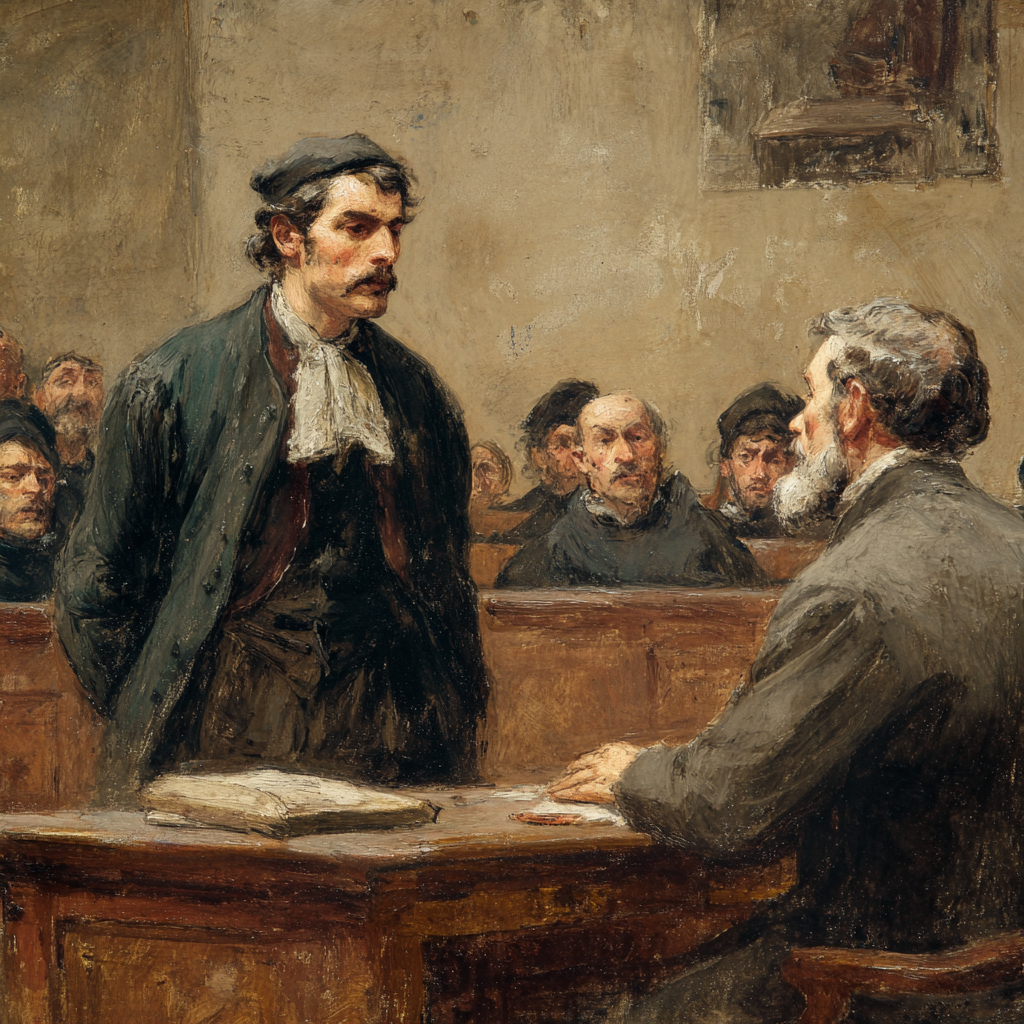
“Witnesses” who offer testimony in legal cases are evaluated for “credibility” which strengthens or weakens their testimony used in the case. For example, people who are family members or have something to gain from their testimony may produce an eyewitness account that favors one party over another.
They are less credible. People who have nothing to gain and have strong character will produce testimony with less bias and be more credible. This is why lawyers interview witnesses and jurors in major trials. Judges in the Kingdom of Yahuah are also instructed to make “diligent inquisition” to determine if an individual is a true or false “witness”:
And the judges shall make diligent inquisition: and, behold, if the witness be a false witness, and has testified falsely against his brother;
This passage is talking about ascertaining “credibility” of the witnesses. The Hebrew word translated as “false” is defined by The Ancient Hebrew Lexicon of the Bible written by Jeff A. Benner as:
RQF ( masc., שקר / she-qer ) Translation: FALSE Definition: A deliberate lie. An expression of a non-truth. KJV Translations: lie, lying, false, falsehood, falsely, vain, wrongfully, deceitful, deceit, liar Strong’s Hebrew #: h.8267
False witnesses deliberately lie which leads to unjust accusations against a brother or sister which leads to unjust punishment for an act they did not commit. This is wrong so it is important for judges to make “diligent inquisition” to determine the “credibility” of the witnesses.
In the Kingdom of Yahuah, the Torah is a witness used to determine credibility of witnesses. The Word of Yahuah stands forever. It cannot be changed or deleted. People who obey the commandments of Yahuah written in the Torah of Moshe will experience the blessings as described in the following passage:
And it shall come to pass, if you shall hear and obey diligently unto the voice of Yahuah your Elohiym, to observe and to do all his commandments which I command you this day, that Yahuah your Elohiym will set you on high above all nations of the earth: And all these blessings shall come on you, and overtake you, if you shall hear and obey the voice of Yahuah your Elohiym.
The blessings will overtake them. Judges in the Kingdom of Yahuah can examine the life of this person and see the blessings upon them. They can see they are hearing and obeying the commandments of Yahuah. If they are hearing and obeying the commandments of Yahuah, they are doing the following commandment:
You shall not steal, neither deal falsely, neither lie one to another.
The individual experiencing the blessings listed in Debarim (Deuteronomy) 28:1-14 does not lie or deal falsely with their neighbor. The Torah validates the credibility of the witness. People who disobey some or all of the commandments written in the Torah are under the curses listed in Debarim 28:15-68 as described in the following passage:
But it shall come to pass, if you will not hear and obey the voice of Yahuah your Elohiym, to observe to do all his commandments and his statutes which I command you this day; that all these curses shall come upon you, and overtake you:
The presence of curses in an individual’s life is an indicator that there is some part of their life that is not in alignment with the Word of Yahuah. They may or may not abide by the commandment in Vayikra (Leviticus) 19:11. Judges would not be able to discern the area out of alignment. The presence of curses invalidates their testimony or weakens it significantly. You would not want to rely on their testimony to sentence someone to death. In the case brought against Messiah Yahusha, they used “false” witnesses… people who were under the curse of the Torah.
Now the chief priests, and elders, and all the council, sought false witness against Yahusha, to put him to death; But found none: yea, though many false witnesses came, yet found they none. At the last came two false witnesses,
They lied. “False” witnesses were used to condemn Stephen to death in the book of Acts. They lied and said he spoke against the written Law of Moshe.
And set up false witnesses, which said, This man ceases not to speak blasphemous words against this set-apart place, and the Law [Torah]: For we have heard him say, that this Yahusha of Nazareth shall destroy this place, and shall change the customs which Moshe delivered us.
These witnesses were under the curses of the written Torah and lied. Stephen did not teach people to disobey the written Law of Moshe. We can use the Torah today to make these distinctions. People who are experiencing the curses listed in Debarim (Deuteronomy) 28:15-68 have some areas in their life not in alignment with the Word of Yahuah. Their testimony is less credible than someone who is under the blessings of the Torah listed in Debarim 28:1-14. They do not lie or deal falsely with their neighbor.
- Witnesses are defined as “credible” if they are experiencing the blessings outlined in Debarim (Deuteronomy) 28:1-14. The Torah verifies their credibility.
Moshe (Moses) says the Torah stands as a witness for and against us.
Take this book of the Law [Torah], and put it in the side of the ark of the beriyth [covenant] of Yahuah your Elohiym, that it may be there for a witness against you.
Evidence of the blessings and the curses is the witness that the Torah provides the Judges. If we were to examine the curses of Debarim (Deuteronomy) 28:15-68, we would see that our country and world are experiencing the curses of the Law… the Torah. This means there are areas in our collective governments that are not in alignment with the Laws of Yahuah. The curses are a way to determine our fate. If we do not repent, we will be destroyed. If we repent, it is possible we will be spared. The Torah does not lie but men and women do.
In the world courts today, those who receive financial gain are not very credible witnesses. For example, a scientist receives funding from a wealthy donor. The scientist is heavily motivated to produce and publish results that benefits or aligns with their donor. If the scientist produces and publishes results that offends their donor, then they run the risk of losing their funding and losing their job. The scientist could no longer provide for their family and may have difficulty finding employment anywhere in the scientific community. The financial gain in this situation potentially skews the results produced by the scientist making their testimony unreliable. Yahuah says the following about financial gain and our testimony:
You shall not wrestle judgment; you shall not respect persons, neither take a gift: for a gift does blind the eyes of the wise, and perverts the words of the righteous.
“Receiving money and gifts blinds the eyes of the wise and perverts the words of the righteous”. Religious leaders who receive tithes and offerings from their congregations are in the same position as the scientist in our example. If they share a message that potentially offends their congregation, they could lose attendees and the associated tithes and offerings. Their denomination would see the decline and replace these religious leaders. They would no longer have a job and are unable to put food on the table for their families.
Religious leaders are highly motivated to teach messages that increase attendance which increases the associated tithes and offerings. Unfortunately, their testimony has been compromised and is unreliable because truth is sometimes an unpleasant message with the potential to decrease attendance of their followers… and their associated tithes and offerings. Religious leaders who earn a living from the tithes and offerings of their followers have too much to lose to share the truth. This is unfortunate. Shaul (Paul) says the following about religious leaders in our day and age:
Preach the word; be instant in season, out of season; reprove, rebuke, exhort with all longsuffering and doctrine. For the time will come when they will not endure sound doctrine; but after their own lusts shall they heap to themselves teachers, having itching ears; And they shall turn away their ears from the truth, and shall be turned unto fables.
We have a famine of truth in the earth today because the message has been compromised by financial gain. It is up to us… the followers… to search for the truth ourselves by verifying the truth with at least two to three credible witnesses. The Bereans in the eyewitness account of Acts verified the teachings of Shaul (Paul) and Silas with the Scriptures.
These were more noble than those in Thessalonica, in that they received the word with all readiness of mind, and searched the scriptures daily, whether those things were so.
The only Scriptures available to the Bereans in their day were the Law and Prophets. This means everything Shaul (Paul) wrote in his letters can be verified by the Law and Prophets even today. By using a second witness, misunderstandings and misinterpretations are diminished… especially if the second witness is the Law and Prophets. If the Bereans can do it, so can we.
When we study the Scriptures, we do not make the Word conform to our beliefs.
We conform our beliefs to the Word.
We cannot change or delete the Word but we can change and delete beliefs in our hearts not founded upon truth. Beliefs not based upon truth are fables… fictional stories… not real. For example, consider the following statement:
- People go to heaven if they eat rice every day.
Just because this statement was spoken into existence does not make it real and true. Statements need to be verified with credible and reliable witnesses. Let us consider an example and test the credibility of leaders in Christianity. Shaul (Paul) makes a statement in Romans:
That if you shall confess with your mouth Adonai Yahusha, and shall believe in your heart that Elohiym has raised him from the dead, you shall be saved.
Just because this statement was spoken into existence does not make it real and true. However, it is widely publicized as the pathway to salvation by leaders in Christianity. Shaul (Paul) is a witness and we need to verify his statements with credible witnesses to determine if they are true or misinterpreted. The Bereans verified everything Shaul (Paul) spoke with the Law and Prophets. So… let’s ask the following questions:
- Can this statement in Romans 10:9 be verified in the Law and Prophets by the Bereans?
- What is the salvation message in the Law and the Prophets and does this statement align with them?
Yechezqel (Ezekiel) is a verified true prophet of Yahuah. He defines the message of salvation in the following passage:
But if the wicked will turn from all his sins that he has committed, and keep all my statutes, and do that which is lawful and right, he shall surely live, he shall not die. All his transgressions that he has committed, they shall not be mentioned unto him: in his righteousness that he has done he shall live.
According to this testimony, if a person turns away from sin, they will live and not die. There is no statement requiring a confession in Jesus Christ or Adonai Yahusha. This seems to contradict the statement made by Shaul (Paul).
- Is salvation confessing a faith in Yahusha or repenting from sins?
At the end of Shaul’s life, he presented the following statement to King Agrippa:
Whereupon, O king Agrippa, I was not disobedient unto the heavenly vision: But showed first unto them of Damascus, and at Yerushalayim, and throughout all the coasts of Judaea, and then to the Gentiles, that they should repent and turn to Elohiym, and do works meet for repentance.
Based on the testimony of Shaul, he taught people everywhere to repent from their sins, which agrees with testimony from Yechezqel (Ezekiel) which also agrees with Messiah Yahusha:
And Yahusha answering said unto them, Suppose you that these Galileans were sinners above all the Galileans, because they suffered such things? I tell you, Nay: but, except you repent, you shall all likewise perish.
Messiah Yahusha says, unless people repent, they will die. We have three credible, reliable witnesses saying the same thing. The statement in Romans 10:9 appears to be a lie. However, could it be misinterpreted? We expect our leaders to research and study the Word of Yahuah. We expect them to verify all this information for us. But why are they teaching a doctrine that is contrary to the words of Yechezqel (Ezekiel)… a known, verified true prophet of Yahuah? Why are they teaching doctrines contrary to the words of Messiah Yahusha and Shaul? Who is going to rise up and tell us the truth?
“Confessing faith in Messiah Yahusha and believing Yahuah Elohiym raised him from the dead” must be associated with repentance from sin or it is not true. Yahusha Ben David is our Messiah and he said “unless you repent, you will die” which is a message supported by ALL of the true prophets of Yahuah.
- Does “believing in Yahusha” mean we exercise “belief” in the words he spoke?
The evidence supports this conclusion. In the following passage, Shaul (Paul) says the wages of sin is death meaning people who practice sin inherit death. The opposite of sinning is not sinning which would lead to life which is described as the “gift of Elohiym”:
For the wages of sin is death; but the gift of Elohiym is eternal life through Messiah Yahusha our Adonai.
“Eternal life through Messiah Yahusha” is synonymous with a person who does not practice sin. “Believing in him” means we exercise “belief” in the words he spoke. Messiah Yahusha says, “unless you repent, you will all likewise perish” so exercising “belief” in him is manifested by repenting from sin.
The Christian doctrine is designed to encompass a much larger group of people who are willing to confess a belief in Jesus Christ but not necessarily willing to repent from their sins. Larger groups of people produce larger amounts of money through tithes and offerings which produces job security for religious leaders. It puts gas in their private jets. The message to “repent from sin” is unpopular because it involves obedience to the Torah because sin is defined as transgression of the Torah or Law. When a person stops sinning they are obeying the Torah.
Whosoever commits sin transgresses the Law [Torah]: for sin is the transgression of the Law [Torah].
In essence, Messiah Yahusha is saying, “Unless you hear and obey the Torah, you will die”. Yechezqel (Ezekiel) says, “turning from sins” is equivalent to “keeping the statutes of Yahuah and doing that which is lawful and right in His eyes”. Shaul (Paul) says, “people should do works of repentance”, which means he was telling them they ought to hear and obey the Torah. These three credible witnesses agree and are saying the following to us:
- If people fail to hear and obey the Torah, they will die.
This is extremely disturbing! This means people who confess a faith in Jesus Christ but choose not to obey the Torah are going to die. They are going to experience unexpected unfavorable eternal outcomes! They are being deceived by the leaders they trust to speak the truth. People think they are going to go to heaven and be with Jesus but the truth says they are going to die an eternal death unless they obey the Torah. Ignorance is not an excuse. Messiah Yahusha says, “the blind lead the blind and both will fall into the ditch”.
But he answered and said, Every plant, which my heavenly Father has not planted, shall be rooted up. Let them alone: they be blind leaders of the blind. And if the blind lead the blind, both shall fall into the ditch.
Religious leaders are blind to the truth because their focus is on numbers and monetary gain. People who choose to follow the messages of these leaders will experience the same unfavorable eternal outcome as these leaders.
Our desire is to experience favorable eternal outcomes and to help others do the same. We hear the truth and do what it says because we believe what it says. Two to three reliable and credible witnesses establish the truth and this is a practice we follow in everything we present on this website because we care about you and are concerned with your welfare as well as the welfare of your precious family. The truth hurts but unfavorable eternal outcomes hurt far worse.
One may ask… if the message of salvation is to repent from sin, then why did Messiah Yahusha come? Why did he have to die a painful death? These are the same questions that came to my mind when I discovered these truths. It is not an easy subject to address briefly because we have to unlearn false beliefs that have taken root in our hearts and minds. However, the truth reveals that Yahusha Ben David is the promised Messiah… the son of Yahuah Elohiym… and this is supported by evidence from the Torah as well as the Prophets. This will be addressed so you can evaluate the evidence for yourselves. Without him, we would truly be lost forever but this does not absolve us of our responsibility to live according to the Laws in the Kingdom of Yahuah. Our actions illustrate our faith and belief in his words as well as the Word of Yahuah Elohiym.
As we can see in this lesson, the credibility of religious leaders and scholars has been compromised. This does not mean every leader is speaking falsehood. However, those who gain financially from their testimony have compromised themselves and it is difficult to rely on their testimony as a credible witness especially in matters of life and death. It is better to find and rely upon those who have nothing to lose or gain… and it is even better to find witnesses who are experiencing the blessings outlined in the Torah.
Download this Article here