
141-2 What is Perspective?
And there shall cleave nought of the cursed thing to your hand: that Yahuah may turn from the fierceness of his anger, and shew you mercy, and have compassion upon you, and multiply you, as he has sworn unto your fathers; When you shall hear and obey the Voice of Yahuah your Elohiym, to guard all his commandments which I command you this day, to do that which is RIGHT in the eyes of Yahuah your Elohiym.
The next brick in our foundation is about “perspective”. Every individual ever born has a point-of-view which is influenced by a variety of factors. The factors that influenced the point-of-view of the disciples in the time of Messiah Yahusha are different than the factors that influence us today. In order to fully grasp the messages of ALL the prophets of Yahuah and the authors of eyewitness accounts also known as the New Testament, we must attempt to reconstruct the factors that influenced their point-of-view so that we can see their messages through their eyes. We cannot project our point-of-view on these ancient texts written thousands of years ago and expect to fully grasp the original message they desired to convey.
For example, what does the word “good” mean to Yahuah Elohiym? How does Messiah Yahusha define “good”? Is his definition the same as his Father’s definition? How did Shaul of Tarsus (Paul) define the word “good”? Is their definition of “good” the same as ours? After a careful review of the evidence, their definition of “good” is very different than our definitions of “good” in this day and age. We have devoted an entire lesson defining “good” and “evil” from the perspective of Yahuah Elohiym and his prophets. This brings us to another crossroad in our life journey.
- We can continue to interpret and understand these ancient texts, projecting our modern-day perspectives upon them… and we can continue to listen to those who choose to do the same… OR…
- We can choose to interpret and understand the perspective of these authors so that we can restore a correct interpretation and understanding of the original intended message. We attempt to do this in every single lesson we publish. We say “attempt” because it really is impossible to fully grasp all of the nuances of each individual who wrote these accounts. We do our best and that is all we can do.
This is another freewill decision. What are you going to do? From our vantage point, this is an extremely important transition to make because Yahuah is not going to base His decisions upon our perspective and our definitions. He is going to use His perspective and His definitions. Choosing to examine evidence based on His perspective will assure us that we are on the right path or it will expose the areas in our lives that are not in alignment with Him.
Secondly, we have been influenced by Babylonian ideology our entire lives throughout the world. Understanding how our perspectives are formed will help us pinpoint the areas in our own lives that need to be purged. I have personally undergone this transition and am still purging old junk from my heart and mind. This is why this lesson is so foundational and important in our walk with Yahuah Elohiym and His Son. I would not teach something that I did not feel was truly important to apply to our lives.
Principle: It is wise for us to reconstruct the perspectives of these ancient men who wrote the Scriptures so we can understand the original intended messages Yahuah Elohiym wanted them to convey. We need to understand the factors that influence our perspectives as well as theirs so we can see through their eyes. This will help us distinguish between the perspective of our current world system and the perspective of Yahuah Elohiym. They are drastically different. This is based on the following passage:
When you shall hear and obey the Voice of Yahuah Elohiym, to guard all his commandments which I command you this day, to do that which is RIGHT in the eyes of Yahuah Elohiym. (Debarim/Deuteronomy 13:18)
Experiences Influence Perspective:
Crash! Three cars collide at a busy intersection downtown Los Angeles. Police cars arrive on the scene in minutes. An ambulance rushes to the accident ready to provide emergency care to the injured.

People clamor together to watch events unfold. Once the injured parties had been rushed to the hospital for medical intervention, police start gathering information from eyewitnesses who saw the collision. There were three main witnesses who observed the entire event from different angle
Each witness observed the accident from a different vantage point providing a different “perspective”. In each testimony, the details were different because each person viewed the event from a different angle. In a car accident, testimony was gathered to determine fault. Even though details in their testimonies were different, each person could determine fault and agree. These individuals observed the accident from a different “perspective” or point of view which is why the details in their testimonies have some differences.
Matthew, Mark, Luke and John are “biblical” examples of eyewitnesses. Each author recorded firsthand eyewitness testimony of the life of Messiah Yahusha and recorded these events as a testimony for all future generations. The details in each account are different but they all agree that Yahusha is the Messiah, the son of Yahuah Elohiym who led a sinless life, died and was resurrected. The book of Acts is also an eyewitness account of the ascension of Messiah Yahusha and the acts of his disciples. Each eyewitness documented their testimony from a different angle or “perspective”. We expect them to be different because they are eyewitness accounts from the vantage point of four different people just like our example with the car accident.
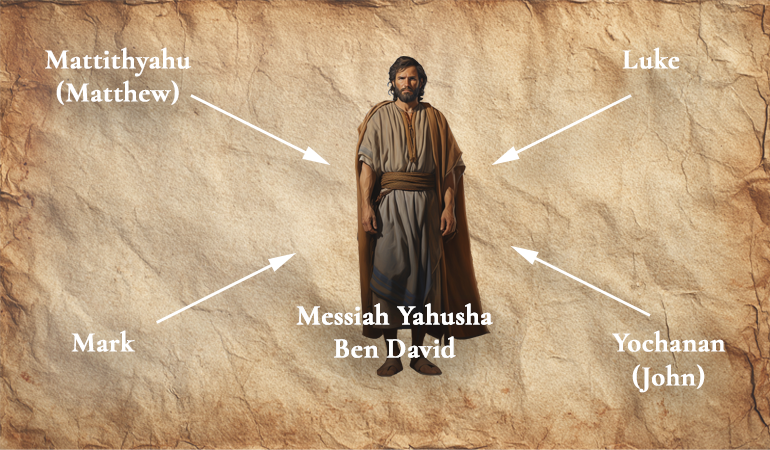
“Perspectives” are influenced by many factors such as past experiences, education, culture, mindset, upbringing, religion, values and language. The testimonies of Matthew, Mark, Luke and John were influenced by these factors as well.
Another great example is the Indian parable of the six blind men who met an elephant for the first time. It illustrates how our personal experiences influence our own “perspectives”. This excerpt was taken from the article The Blind Men and the Elephant written by James Baldwin.
There were once six blind men who stood by the road-side every day, and begged from the people who passed. They had often heard of elephants, but they had never seen one; for, being blind, how could they? It so happened one morning that an elephant was driven down the road where they stood. When they were told that the great beast was before them, they asked the driver to let him stop so that they might see him.
Of course, they could not see him with their eyes; but they thought that by touching him they could learn just what kind of animal he was. The first one happened to put his hand on the elephant’s side. “Well, well!” he said, “now I know all about this beast. He is exactly like a wall. The second felt only of the elephant’s tusk. “My brother,” he said, “you are mistaken. He is not at all like a wall. He is round and smooth and sharp. He is more like a spear than anything else.” The third happened to take hold of the elephant’s trunk. “Both of you are wrong,” he said. “Anybody who knows anything can see that this elephant is like a snake.” The fourth reached out his arms, and grasped one of the elephant’s legs. “Oh, how blind you are!” he said. “It is very plain to me that he is round and tall like a tree.” The fifth was a very tall man, and he chanced to take hold of the elephant’s ear. “The blindest man ought to know that this beast is not like any of the things that you name,” he said. “He is exactly like a huge fan.” The sixth was very blind indeed, and it was some time before he could find the elephant at all. At last he seized the animal’s tail. “O foolish fellows!” he cried. “You surely have lost your senses. This elephant is not like a wall, or a spear, or a snake, or a tree; neither is he like a fan. But any man with a par-ti-cle of sense can see that he is exactly like a rope.” https://americanliterature.com/author/james-baldwin/short-story/the-blind-men-and-the-elephant
Each blind man perceived the animal differently which formed their “perspective” of the entire elephant. Their personal experiences led to different conclusions. Likewise, all people have a “perspective” influenced by such factors as past experiences, education, culture, mindset, upbringing, religion, values and language that lead us to different conclusions also. Factors influencing the testimony of Matthew, Mark, Luke and John are very different than factors influencing our “perspectives” today. Can we fully understand the messages conveyed without considering the factors that influenced their “perspective”? “Perspective” really matters when studying the Word of the Most High.

Failing to understand the “perspective” of the original authors can cause us to be lead astray from the truth. If we choose to perceive the original intended message from our own point-of-view, we may misinterpret the original intended meaning of the message.
Misunderstanding and misinterpretation can cause us to veer from the trail that leads to life. Failing to acknowledge “perspective” can place us on the trail that leads to eternal death as illustrated on our map.
Definition of “Perspective”:
Fully comprehending complicated concepts such as “perspective” can be very difficult without first establishing a foundation. Most people might wonder why “perspective” even matters as it relates to the Word of the Most High. In fact, it really is one of the most significant errors people commit when interpreting His original intended messages written in His Word. Let us begin with simple examples and definitions and build upon this foundation in order to illustrate these errors in our interpretations. The APA Dictionary of Psychology defines “perspective” the following way:
The capacity of an individual to take into account and potentially understand the perceptions, attitudes, or behaviors of himself or herself and of other individuals.
A particular way of looking at events or situations: a stance or philosophical position. https://dictionary.apa.org/perspective
“Perspective” is a particular way of looking at events or situations. It is the capacity of an individual to understand the perceptions, attitudes or behaviors of themselves and others. The Cambridge Dictionary defines “perspective” the following way:
A particular way of viewing things that depends on one’s experience and personality https://dictionary.cambridge.org/us/dictionary/english/perspective
In the parable of the six blind men, their “perspectives” were influenced by their firsthand experiences touching the different parts of the elephant. Our “perspectives” are also significantly influenced by personal experiences. The prophets of Yahuah view the world and life differently than we do in our day and age.
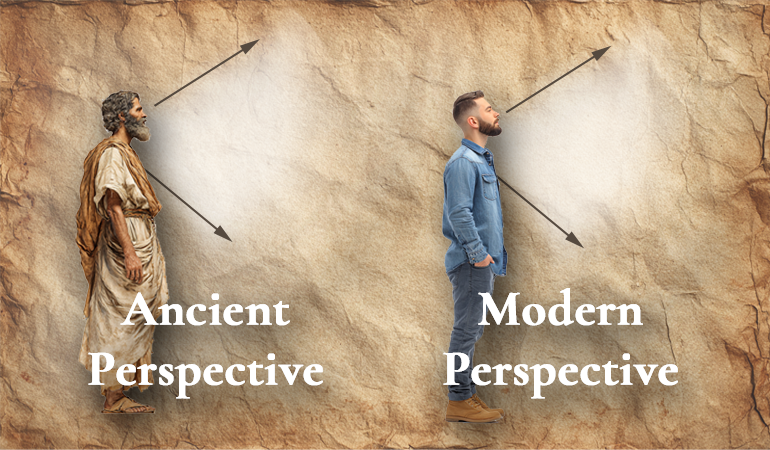
Anatomy of an Experience:
Experiences are personal encounters as an observer or participant. The car accident was observed by witnesses who were observers. The people who provided the testimony in Matthew, Mark, Luke and John participated in the life of Messiah Yahusha AND observed the events occurring in his life. Information collected during experiences are gathered using our five senses:
Our firsthand experiences are the events we see, hear, smell, taste and touch Conversations with others involve seeing and hearing. Reading a book involves seeing. Listening to a podcast involves hearing. Dancing with someone involves seeing, hearing, and touching. Eating food involves seeing, smelling and tasting. We “perceive” our environment, events and circumstances through our five senses which forms our “perceptions”. The APA Dictionary of Psychology defines “perception” the following way which is closely related to “perspective”:

Our firsthand experiences are the events we see, hear, smell, taste and touch Conversations with others involve seeing and hearing. Reading a book involves seeing. Listening to a podcast involves hearing. Dancing with someone involves seeing, hearing, and touching. Eating food involves seeing, smelling and tasting.
We “perceive” our environment, events and circumstances through our five senses which forms our “perceptions”. The APA Dictionary of Psychology defines “perception” the following way which is closely related to “perspective”:
n. the process or result of becoming aware of objects, relationships, and events by means of the senses, which includes such activities as recognizing, observing, and discriminating. These activities enable organisms to organize and interpret the stimuli received into meaningful knowledge and to act in a coordinated manner. https://dictionary.apa.org/perception
Essentially, people use their five senses to gather information from their environment which enters into their mind for processing. The blind men in the parable did not have their sense of sight so they used their sense of touch to absorb the information about the elephant. This is called “input”. Our senses record the interaction in the event in our minds. These events are recorded as memories. The Hebrew word “dah” often translated as “know” provides insight into an “experience” from a Hebraic mindset. Language is one the main factors that influence our perspective. By consulting resources that help us define the language they spoke, we can begin to see how they defined words and viewed the world. The Ancient Hebrew Lexicon of the Bible written by Jeff A. Benner defines the root word of “dah” the following way:
[D דע Action: See, know Object: Eye Abstract: Knowledge, why Definition: The eye is the window into the man’s very being. Experience is gained through visual observation. Knowledge is achieved through these experiences. Ancient Hebrew: The pictograph D is a picture of a door. The [ is a picture of the eye. Through the eyes one experiences his world and learns from it. Combined these pictures mean “the door of the eye”.
Experiences are gained through visual observation as well as the sense of hearing, smelling, tasting and touching but the sense of sight is the main one people use in almost every experience except those who are blind. Knowledge is achieved through these experiences which is true. Our personal experiences are our firsthand eyewitness testimonies. We experienced the event firsthand either as an observer or a participant. Matthew, Mark, Luke and John are records of firsthand eyewitnesses of the events in the life of Messiah Yahusha because they were there… they experienced the events themselves. Their testimony is extremely valuable and we are grateful they have been preserved.
Processing Experiences:
Information experienced by our senses is organized into some meaningful way in our minds. This is “input”. Our minds process the input using the factors that exist in our hearts and minds. Once information is processed, we draw conclusions or beliefs about what we experienced which dictates our thoughts, words and actions. Here is a simplified diagram of this mechanism.
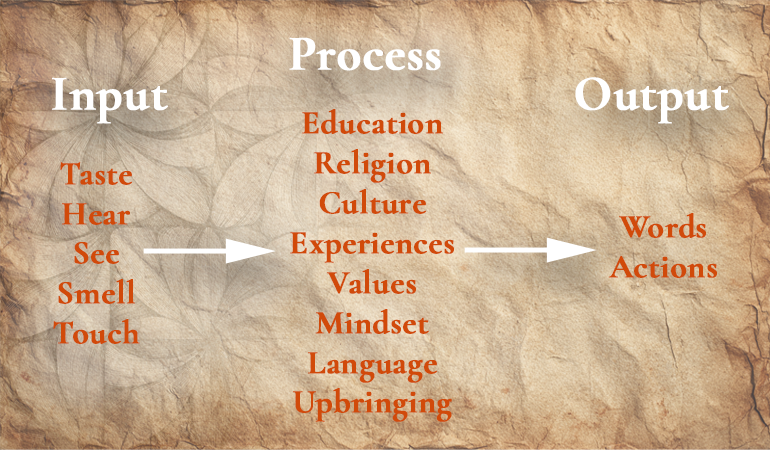
For example, I take a walk in my garden and notice a ripe red tomato on one of my plants. This is my “input”. This information enters into my brain through my senses and I say to myself, “this tomato is ripe and ready to eat”. This is my conclusion and belief. My hand picks the tomato and I eat it. This is my “output’.
As my mind was processing the input, my conclusions were reached based on my past experiences growing and eating tomatoes, watching my parents grow tomatoes as a youngster, reading and studying gardening books and a Master Gardener class from the OSU Extension Agency. If I had never seen a ripe red tomato or have never eaten one, I may not have come to the same conclusions which would have produced different actions. My previous experiences, upbringing and education influenced my “perspective” in this situation. Dictionary.com defines “influence” the following way:
The capacity or power of persons or things to be a compelling force on or produce effects on the actions, behavior, opinions, etc., of others: https://www.dictionary.com/browse/influence
Cambridge Dictionary defines “influence” as:
To affect or change how someone or something develops, behaves, or thinks: https://dictionary.cambridge.org/us/dictionary/english/influence
When I see a ripe red tomato, I do not consciously go through a reasoning process each time. My conclusion has become a solidified fact in my subconscious and has become automatic. It has become a firmly established belief in my mind. The strongest factor influencing my decision was my past experiences. Eating ripe, red tomatoes from my previous harvest was an enjoyable experience and they tasted so good. I had an intimate firsthand experience eating ripe tomatoes. These factors are a compelling force which solidified my conclusions. No one could convince me otherwise by saying, “Ripe, red tomatoes are gross and we shouldn’t eat them”. I would laugh at them as I popped a ripe cherry tomato in my mouth! The factors that influence our conclusions are fortified especially those that are firsthand experiences.
This was an extremely simple example illustrating how we process information. The “beliefs” we have adopted about our respective faiths are influenced by all of these factors. This is why ten translators can view the same text and produce ten different translations. Two people can experience the same event but end up with different conclusions. It is automatic and we are completely unaware of these influences until we have been made aware. Let us consider an example in the Word of Yahuah Elohiym.
And Elohiym said, Let the earth bring forth grass, the herb yielding seed, and the fruit tree yielding fruit after his kind, whose seed is in itself, upon the earth: and it was so. And the earth brought forth grass, and herb yielding seed after his kind, and the tree yielding fruit, whose seed was in itself, after his kind: and Elohiym saw that it was good.
Reading His Word is a personal experience through the sense of sight. Words are written in a particular order to convey a message. The message enters our mind for processing. Conclusions are reached which dictate thoughts, words and actions. This particular passage was translated from Hebrew to the English language which is my native tongue. This allows me to fully comprehend what Yahuah is saying. After reading this message, I thought… if I save seeds from my favorite tomato plant then I can enjoy the same delicious tomatoes next season…because like kind produces like kind.
My seed saving book provided instructions for saving seeds from tomatoes. I planted them in my garden the following season. I nurtured the plants and they produced red ripe tomatoes identical to the tomatoes harvested the previous year. These were my observations and experiences growing tomatoes from my own seeds. The input entered my mind for processing. I compared my personal experiences with the Word of Yahuah Elohiym in Bereshith (Genesis) 1:11-12. I personally witnessed seeds from a tomato produce another tomato plant of the same kind and variety. Like kind produced like kind.
This one event has been recorded as eyewitness testimony that states this part of His Word is true. I experienced this for myself. With the theory of evolution, I do not personally see living things in different transitions as this theory suggests. I see like kind producing like kind. My potatoes produce potatoes. My carrots produce carrots. My roses produce roses. My cat produces kittens that look like her. My dog produces puppies that look like her. Each one of these events is an eyewitness proving that the Word of Yahuah is true in my mind.
Based on my own individual experiences, I have concluded that Yahuah Elohiym is our Creator… His Word is true… His Word is a Law of Nature that cannot be changed or deleted. My conclusions led to a set of actions. If Yahuah Elohiym is our Creator and His Words are true and a Law of Nature that cannot be changed or deleted, then I need to read and study His Word and align my life with His.
These conclusions are my beliefs which dictate my thoughts, words and actions. The strongest factors influencing my conclusions are my firsthand experiences. No one can come along and say, “The seeds from a tomato produce oranges”. No one can convince me by saying, “Like kind does not produce like kind”. I have no personal experiences that convince me that the theory of evolution is true.
Our beliefs form the foundation of everything a person thinks, says and does and our beliefs are influenced by such factors as past experiences, education, culture, mindset, upbringing, religion, values and language. All of these factors influence our “perspective”.
Processing Beliefs:
Processing beliefs is not a conscious action. It is automatic. However, we can become more aware of how our beliefs are formed and choose to be more cognizant of the way we make decisions. We can also start evaluating our beliefs and determining the factors that have established those beliefs. Perhaps, we have beliefs that produce undesirable behaviors. If we change the factors influencing those beliefs, we can change the undesirable behavior.
“Belief” is acceptance of the truth, reality or validity of something. Based upon my upbringing, past experiences and education, I believe red tomatoes on a plant are ripe and ready to eat. Based on my language, religion, upbringing, past experiences and education, I believe like kind produces like kind. I believe Yahuah Elohiym is our Creator. I believe the Word of Yahuah Elohiym is true and embodies the Laws of Nature which cannot be changed or deleted. I believe these statements as truth and reality. I do not question them. They are settled in my mind. My thoughts, words and actions based on these beliefs become automatic.

Our beliefs act as the filter that processes the input we receive from our experiences. Our beliefs organize and interpret input into a meaningful way which then dictates our thoughts, words and actions. People have different experiences, education, cultures, mindsets, religions, values and languages which means that we have different beliefs which produce different thoughts, words and actions. Let us consider some hypothetical examples:
Example 1: Some liberal women in the United States of America hold the belief that every woman has a right to choose whatever happens to her body. From their “perspective”, an unborn child is part of their body and they have a right to destroy their unborn child through abortion. This belief, “my body, my choice”, formed the basis for their thoughts… “I can destroy this fetus” …their words… “my body, my choice…and their actions… they destroy their unborn child.
Example 2: Some atheists believe mankind evolved from apes and do not acknowledge the existence of our Creator. Based on this belief, mankind is constantly evolving from their “perspective”. They accept the idea individuals who are born female are “evolving” into males and vice versa. Surgeries aiding people going through this transition are accepted and encouraged. Now, men can get pregnant and females can produce sperm. Their beliefs influence their thoughts, words and actions.
Example 3: Some Christians believe they were formed from the dust of the earth by a Creator. From their “perspective”, unborn children are created in the womb by the Almighty Creator of heaven and earth. The child in the womb is a life and to destroy that life through the act of abortion is murder. People did not evolve from apes but were created male and female in the image and likeness of their Creator. For this reason, people who have surgeries to change from male to female and vice versa are mutilating their bodies and operating outside the scope for which they were created. Their beliefs influence their thoughts, words and actions.
All three individuals in these examples have different beliefs which influences their thoughts, words and actions. These beliefs act as a filter influencing their “perceptions” of reality. These three types of people groups exist in the United States. We live in the same time period; exposed to technology and propaganda; speak the same language; attend similar education systems and live in the same culture. But, yet, we have extremely different points-of-view and beliefs. How many differences could we expect between the prophets of Yahuah and people in our day and age? A LOT!
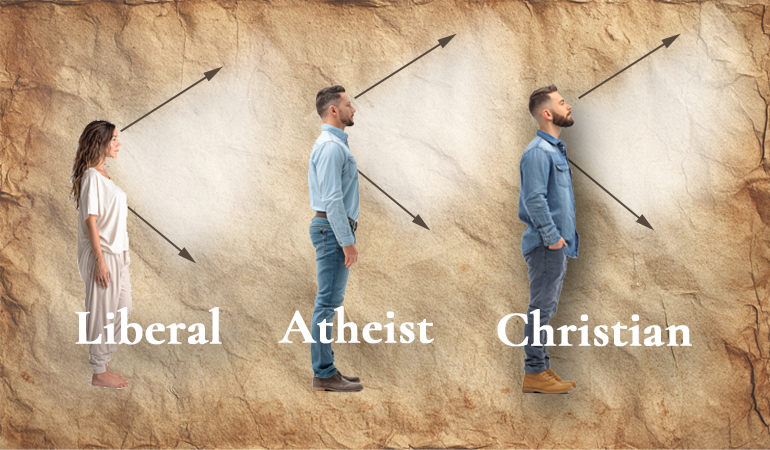
In each of these examples, they had different factors that influenced the formation of their beliefs. Following are some possible scenarios which could have influenced their respective beliefs in these hypothetical situations.
Example 1: The liberal woman
Upbringing: She may have been raised by liberal parents.
Mindset: Parents may have had a liberal mindset. She may align with the democratic party.
Education: She may have gone to a college that emphasized women’s rights in this way.
Religion: She may have grown up in a house with people who practice Satanism which has a philosophy of “Do what thou wilt” or she may have grown up in a Christian household in which they claim Jesus never mentioned anything about abortion.
Culture: She lives in a society which has legalized abortion and has accepted it as a form of birth control.
Values: She values her body and her right to choose.
Example 2: The Atheist
Upbringing/Past Experiences: He may have been raised in a religious family who were hypocrites.
Education: Perhaps he took a class on the history of world religions which opened his eyes to the origins of all religious belief systems. He was taught evolution in his public-school education and television programs.
Past Experiences: He may have been hurt by religious people or by his own parents.
Culture: He lives in a society that believes in the theory of evolution.
Example 3: Christian who believes in a Creator
Upbringing/Religion: He may have been raised in a religious household.
Mindset: Parents may have had a conservative mindset.
Religion/Past Experiences: He may have gone to church all his life.
Education: He may have been homeschooled or attended Christian private school. He may have gone to a Christian University as a young adult.
Values: He values a relationship with our Creator and values life.
Culture: He was raised in a society founded upon Christian principles.
All of these factors influence the formation of our beliefs which influences our “perspectives” which then dictates our thoughts, words and actions expressed. The same is true for those who wrote Matthew, Mark, Luke and John. The same is true for the prophet Moshe (Moses). Can we really base our eternal outcomes on “perceptions” of these testimonies rooted in our modern-day beliefs and practices?
Our “perspectives” are different than the eyewitnesses who wrote the biblical accounts of Messiah Yahusha Ben David’s life in Matthew, Mark, Luke and John. They lived in a completely different time, had different past experiences, education, culture, mindset, upbringing, religion, values and language. The same is true of all the authors who wrote the Hebrew testimonies in our Bibles, Tanakhs and Cephers.
Our Father in heaven spoke to His true prophets who conveyed His message to the people. Yahuah chose these people to be His prophets and prophetesses because He knew they would convey the message the way He wanted it conveyed to the people. This means that we can identify the “perspective” of our Creator by considering the influences upon the authors of their respective accounts.
We accomplish this in part by using The Ancient Hebrew Lexicon of the Bible written by Jeff A. Benner. The Ancient Hebrew pictographic language was the language used by ancient Hebrews. Each letter carries a specific definition based upon the picture of the item it represents. For example, the following letter is an “alef” in the ancient Hebrew. It is a picture of an ox head. Our letter “A” is an upside-down ox head showing us that our own language is derived from these letters.

The “alef” represents the strength of an ox. The “lamed” is a picture of shepherd’s staff upside down which aligns with our letter “L”. Here they are together:

The “lamed” is a symbol of the shepherd’s authority. We see both of these symbols represented in a “king”. The horns on the letter “alef” represent the points on a crown and the shepherd’s staff represent the scepter of authority. Together, these letters spell “EL” or “AL” which is translated as “God” in our modern-day translations.
Does this align with our “perceptions” of a “God” in our day and age? People debate whether Messiah Yahusha is a “God” or not because they are perceiving these concepts from their point-of-view.

Is Messiah
Yahusha
Ben David
a King?
Of course, he is. Before, I understood the ancient Hebrew language, I thought a “god” was a Zeus-like figure with lightning bolts in his hands. Based on the ancient Hebrew understanding, a man can be an “EL” or a “God” which is supported by testimony in the Hebrew writings as well as definitions from multiple resources.
Correcting our point-of-view has an incredible ripple effect through the entirety of Scripture and this is just one of many examples.
Our thoughts, words and actions reflect our beliefs which are based upon the information we receive through our senses filtered by past experiences, education, culture, mindset, upbringing, religion, values and language. Our beliefs are interwoven together into a belief system which is not just a religion. It is the foundation, which we have adopted to interpret and process all sensory input. These are the mechanisms that form our “perspective”. When we study the Word of our Father in heaven, it is important for us to consider the perspectives of the authors and people in the ancient past and not project our own “perspectives” upon the text we are reading and interpreting.
Download this Article here