541-3 Yom Teruah Defined
Speak unto the children of Yashar’El, saying, In the seventh month, in the first day of the month, you shall have a Shabbat, a memorial of blowing of Teruah, a set-apart gathering.
In the first study in this series, we presented the evidence used to determine “when” Yom Teruah is observed. Our Father and Messiah use the first light of the waxing sliver of the moon to determine the “head” or beginning of the month. Because Yom Teruah is the first day of the seventh month, it occurs the moment witnesses observe the first light of the waxing crescent which looks like the crowning head of a baby being born from its mother’s womb by natural means.
In this study, we are going to determine “why” we are instructed to observe Yom Teruah. It is our desire to understand the perspective of our Father and the significance of this Day from His vantage point. We can attempt to draw these conclusions by examining the Hebrew word “teruah” from an ancient Hebrew perspective using the ancient Hebrew pictographic language.
The ancient Hebrew pictographic language IS the language of our Father. We discuss the evidence that leads us to these conclusions in our series titled, The Identity of our Intelligent Designer. Definitions derived from the pictographic letters actually fit the context of the passages themselves. This would not be possible unless the pictographic language was the original language used to write the Torah.
Can we piece together the mystery behind “Teruah” by using the ancient Hebrew pictographic language?
We are going to “define” the Hebrew word “teruah” from this point-of-view in this study. The Ancient Hebrew Lexicon of the Bible written by Jeff A. Benner uses the definitions of the ancient Hebrew pictographic letters and he translates “teruah” as:
H[WRT ( fem., תרועה ) Translation: SHOUT Definition: A great shout of alarm of war or for rejoicing. KJV Translations: shout, shouting, alarm, sound, blowing, joy Strong’s Hebrew #: h.8643
Based on this definition, “Teruah” can be seen as something positive or negative. It can be an alarm for war or a time of rejoicing. The context of the following passage tells us that the “Teruah” is an alarm used to communicate to the tribes of Yashar’El to prepare for a journey or when an enemy is oppressing them. It is a different sound than what is used to gather the people.
Make you two trumpets of silver; of a whole piece shall you make them: that you may use them for the calling of the assembly, and for the journeying of the camps. And when they shall blow with them, all the assembly shall assemble themselves to thee at the door of the Tabernacle of the Appointment. And if they blow but with one trumpet, then the princes, which are heads of the thousands of Yashar’El, shall gather themselves unto you. When you blow an alarm [Teruah H8643], then the camps that lie on the east parts shall go forward. When you blow an alarm [Teruah H8643], the second time, then the camps that lie on the south side shall take their journey: they shall blow an alarm [Teruah H8643], for their journeys. But when the congregation is to be gathered together, you shall blow, but you shall NOT sound an alarm [Teruah H8643]. And the sons of Aahron, the priests, shall blow with the trumpets; and they shall be to you for an ordinance forever throughout your generations. And if you go to war in your land against the enemy that oppresses you, then you shall blow an alarm [Ruah H7321]. with the trumpets; and you shall be remembered before Yahuah your Elohiym, and you shall be saved from your enemies. Also, in the day of your gladness, and in your solemn days, and in the beginnings of your months, you shall blow with the trumpets over your burnt offerings, and over the sacrifices of your peace offerings; that they may be to you for a memorial before your Elohiym: I am Yahuah your Elohiym
The context of this passage indicates a “teruah” is an alarm however the definition says it can be translated as rejoicing as well. Here is a passage implying the concept of “rejoicing”.
Blessed is the people that know the joyful sound [H8643]: they shall walk, O Yahuah, in the light of your countenance.
The Hebrew word translated as “joyful sound” in this passage is “teruah”. The return of our Messiah on Yom Teruah would fill some people with “joy” most certainly, but it would also cause people who hate him to be “dismayed”.
We can gain more insight into this word by examining its roots. The two-lettered root of this Hebrew word can be defined by The Ancient Hebrew Lexicon of the Bible as:
[R ( רע ) Action: Grieve, Shout Abstract: Bad
[R ( common, רע / ra ) Translation: DYSFUNCTIONAL Definition: Impaired or abnormal action other than that for which a person or thing is intended. Something that does not function within its intended purpose. KJV Translations: evil, wickedness, wicked, mischief, hurt, bad, trouble, sore, affliction, ill, adversity, favoured, harm, naught, noisesome, grievous, sad Strong’s Hebrew #: h.7451, h.7455
This definition leans toward a more negative understanding rather than positive. It is described as something that does not function within its intended purpose. The “ayin” which is the picture of the eye, has also been associated with the letter “ghah” or “ghayin” in the ancient Hebrew pictographic language. It does not exist in modern Hebrew. Jeff A. Benner provides the following explanation for this letter.
While this letter existed in ancient Semitic languages and some modern Semitic languages, it no longer exists in the modern Hebrew. Instead, it has been absorbed into the letter ע (ayin). While the evidence exists showing that this is in fact a separate letter, there is very little evidence for reconstructing its original pictograph. The Ugarit and Arabic languages wrote this letter the same as the ayin but with an additional line or dot. The closest candidate for this letter is the , a twisted rope, which is found in some ancient Semitic inscriptions.
In the Arabic language this letter is called the ghayin and is probably related to the Hebrew word ghah meaning “twisted.”
Because the Greek language transliterates this letter with a gamma (“g” sound) we know that this letter originally had a type of “g” sound, possibly a “ng” as in the word “ring.” https://www.ancient-hebrew.org/ancient-alphabet/ghayin.htm
The letter does not exist in the modern Hebrew. However, the “G” sound is retained in “Gomorrah,” one of the cities on the plain that was destroyed by Yahuah during the time of Abraham. In the underlying Hebrew, the letter is an “ayin” in the Masoretic Text and not a “ghayin”.
If we replace the “ayin” with a “ghah” or “ghayin” in this word, we can also see an Edenics connection to the English language with the word “Wrong”. We can hear the letter “R” and the letter “G” or “NG” in the word “wrong”. Here is the way the Word would appear using the “ghayin”.
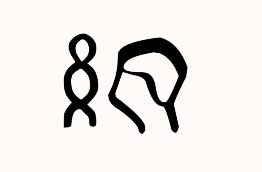
GNR
Hebrew is read right to left. We can see an association with the English word “wrong” read right to left. What are the probabilities that the English word “wrong” would be associated with this Hebrew word and actually retain same definition? “Evil” behavior is “wrong” in the eyes of our Father. “Wickedness” is “wrong” from His perspective. “Dysfunction” is “wrong”. It is highly likely, that the “ayin” in “Ra” used to be the “ghayin” based on this evidence in the English language. This is just another piece of evidence that the English language descended from the ancient Hebrew pictographic language.
The “resh” is a picture of a man’s head representing man. If we use the “ghayin” in this Hebrew word, it could mean “man twisted” or “twisted man”. Based on the context of the Word of our Father, Sodom and Gomorrah were “twisted” from our Father’s vantage point and were destroyed because they were “twisted”.
What would the Hebrew word “teruah” mean if we replaced the “ayin” with a “ghayin”?
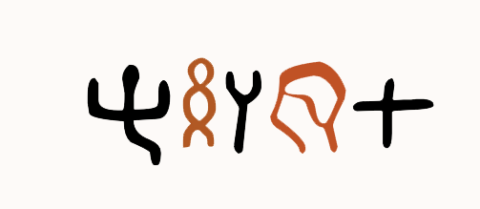
Teruah or Terung
The pictographic letter “tav” means “sign or mark”. The “vav” means “hook” and the “hey” is a man with his arms raised trying to get our attention or it is a great sigh. Together with the letter “ghayin”, “terung” could mean the “sign of a man hooked by twisted actions which causes great sighing”. We can see this action in people being oppressed by their enemies. Enemies do bad things to people which causes the people to cry out or sigh in anguish. Perhaps this is why the Hebrew word can also be translated as “shouting”. This definition of “teruah” can be seen in the following taken from Bemidbar (Numbers) 10:9 quoted previously.
And if you go to war in your land against the enemy that oppresses you, then you shall blow an alarm [Ruah H7321] with the trumpets; and you shall be remembered before Yahuah your Elohiym, and you shall be saved from your enemies.
The context of the passage confirms the definition obtained from an ancient Hebrew perspective. Enemies do bad things to people. Enemies cause people to cry in anguish. Enemies are aggressors when they attempt to invade land which belongs to someone else. In ancient Yashar’El, the watchmen would sound an “alarm” or a “teruah” when an enemy was approaching. Our Father heard cries when He judged Sodom and Gomorrah.
And Yahuah said, Because the cry of Sodom and Gomorrah is great, and because their sin is very grievous; I will go down now, and see whether they have done altogether according to the cry of it, which is come unto me; and if not, I will know.
People were crying over the sins being committed in Sodom and Gomorrah. As a result of their cries, Yahuah passed judgement upon the cities of the plain and utterly destroyed them with fire. Nothing was left. The House of Yashar’El were crying out to Yahuah in Egypt as well.
And Yahuah said, I have surely seen the affliction of my people which are in Egypt, and have heard their cry by reason of their taskmasters; for I know their sorrows; And I am come down to deliver them out of the hand of the Egyptians, and to bring them up out of that land unto a good land and a large, unto a land flowing with milk and honey; unto the place of the Canaanites, and the Hittites, and the Amorites, and the Perizzites, and the Hivites, and the Yebusites.
As a result of their cries, Yahuah passed judgement upon the Egyptians and delivered His people. In both situations, those who were judged were doing bad things to others. Yahuah did not invade Sodom and Gomorrah and Egypt. He judged them for what the wrongs they were doing and defended those who were helpless. The people who were judged were destroyed which is what we would do in a war or a battle. Even though the Hebrew word “teruah” does not appear in these passages, we can see the actions involving “teruah”.
- An aggressor attacks and does bad things (the enemy)
- The oppressed people cry-out to our Father (teruah or alarm)
- Our Father intervenes and passes judgement (battle or war)
- The enemy is defeated and the oppression stops (salvation)
This is the pattern observed in the situation with Sodom and Gomorrah as well as the situation with Egypt in the first exodus. This will be the pattern when our Messiah returns.
Sometimes insight can be obtained by looking at the entire Hebrew word family because they are all related in meaning. Following is the entry for this entire word family in The Ancient Hebrew Lexicon of the Bible:
[[R ( רעע ) Definition: Something dysfunctional, wrong, evil or wicked.
[[R ( common, רעע / r.ah.ah ) Translation: BE.DYSFUNCTIONAL (V) Definition: Impaired or abnormal filling of purpose; to act wrongly by injuring or doing an evil action. KJV Translations: evil, evildoer, hurt, wickedly, worse, afflict, wicked, break, doer, ill, harm, displease, mischief Strong’s Hebrew #: h.4827, h.7489
[WR ( רוע ) Definition: Something dysfunctional, wrong, evil or wicked.
[WR ( common, רוע / r.w.ah ) Translation: SHOUT (V) Definition: To shout an alarm of war or for great rejoicing. KJV Translations: shout, noise, alarm, cry, triumph, smart Strong’s Hebrew #: h.7321
[WR ( masc., רוע / rey-a ) Translation: LOUD.NOISE Definition: A loud, confused, constant noise or sound KJV Translations: shout, noise, aloud Strong’s Hebrew #: h.7452
H[WRT ( fem., תרועה ) Translation: SHOUT Definition: A great shout of alarm of war or for rejoicing. KJV Translations: shout, shouting, alarm, sound, blowing, joy Strong’s Hebrew #: h.8643
[RY ( ירע ) Definition: A feeling from bad circumstances.
[RY ( common, ירע ) Translation: GRIEVE (V) KJV Translations: displease, grieve, grievous, evil, ill, harm, sad Strong’s Hebrew #: h.3415
[RC ( צרע ) Definition: An infection of the skin, usually leprosy, that causes welts. Also an infection of mildew or mold, as welts, on clothing or a building.
[RC ( common, צרע / ts.r.ah ) Translation: INFECT (V) Definition: To taint or contaminate with something that affects quality, character, or condition unfavorably. To be infected with leprosy, mildew or mold. KJV Translations: leper, leprous Strong’s Hebrew #: h.6879
H[RC ( fem., צרעת ) Translation: INFECTION Definition: A contaminated substance, such as a disease, mold or mildew, on the skin, cloth or a building. KJV Translations: leprosy Strong’s Hebrew #: h.6883
H[RYC ( fem., צירעה / tsir-ah ) Translation: HORNET Definition: A flying insect with a stinger that is capable of causing serious injury or death to one that is stung. KJV Translations: hornet Strong’s Hebrew #: h.6880
B[R ( common, רעב / r.ah.b ) Translation: BE.HUNGRY (V) Definition: To have an urgent craving for food; famished. KJV Translations: hunger, hungry, famish Strong’s Hebrew #: h.7456
B[R ( masc., רעב / ra-eyv ) Translation: HUNGER Definition: A craving or urgent need for food. KJV Translations: famine, hunger, dearth, famished, hungry Strong’s Hebrew #: h.7457, h.7458
NWB[R ( masc., רעבון / ra-a-von ) Translation: FAMINE Definition: An extreme scarcity of food. KJV Translations: famine Strong’s Hebrew #: h.7459
None of these words seem very positive in nature. We can also see how they could be related to the “ghayin” represented by the “twisted rope”. Below is a list of all the basic definitions of these words. All of them are related to one another except for a “time of rejoicing”. It stands out like a sore thumb.
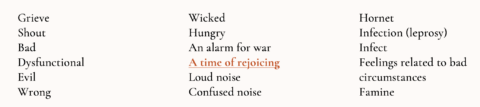
Overall, the entire word family represents negative events such as evil and dysfunction, infection, grieving and hunger. Based on the evidence, it would appear that Yom Teruah represents a Day when something bad happened from the perspective of our Creator.
What event has occurred in the past that would be considered very negative in the eyes of Yahuah Elohiym that He would want to be remembered?
Something that caused Him significant grief? We have testimony that says Yahuah experienced great sadness and sorrow for the condition of mankind prior to the flood.
And it repented Yahuah that he had made man on the earth, and it grieved him at his heart.
The Hebrew word for “grieved” in this passage is not in this Hebrew word family. However, the same feeling is conveyed. It says that Yahuah was grieved in His heart. He was sorry that He had made man. The following passage reflects what He witnessed that caused Him to grieve:
And Yahuah saw that the wickedness [H7451] of man was great in the earth, and that every imagination of the thoughts of his heart was only evil [H7451] continually.
The Hebrew words translated as “wickedness” and “evil” are “ra” and it is related to “teruah”. It means something that is dysfunctional or man twisted. People were not operating the way they were originally intended to function. He saw that ALL men were dysfunctional. They were “twisted” just like they were in Sodom and Gomorrah. These Appointed Times belong to Yahuah, so the event memorialized on Yom Teruah would be something negative from His perspective.
In Debarim (Deuteronomy) 30:15-20, Yahuah Elohiym makes a distinction between “good” and “evil” from His perspective. The Hebrew word translated as “evil” is “ra” which means “man twisted” from the perspective of Yahuah. It is the same Hebrew word used to describe men before the flood. Yahuah Elohiym defines the actions that are “ra” or “evil” in the context of this passage:
See, I have set before you this day life and good, and death and evil [H7451]; In that I command you this day to love Yahuah your Elohiym, to walk in his ways, and to keep his commandments and his statutes and his judgments, that you may live and multiply: and Yahuah your Elohiym shall bless you in the land where you go to possess it. But if your heart turns away, so that you will not hear, but shall be drawn away, and worship other mighty ones, and serve them; I denounce unto you this day, that you shall surely perish, and that you shall not prolong your days upon the land, where you pass over Yarden to go to possess it. I call heaven and earth to record this day against you, that I have set before you life and death, blessing and cursing: therefore choose life, that both you and your seed may live: That you may love Yahuah your Elohiym, and that you may obey his voice, and that you may cleave unto him: for he is your life, and the length of your days: that you may dwell in the land which Yahuah swore unto your fathers, to Abraham, to Yitzhak, and to Ya’akov, to give them.
The Hebrew word translated as “evil” is “ra” which means “dysfunctional” or “something that does not function within its intended purpose”. They are men who are twisted. From the perspective of Yahuah Elohiym, “dysfunctional” behavior includes:
- Not loving Yahuah Elohiym
- Not walking in His ways
- Not guarding his commandments, statutes and judgements
- Not hearing and obeying His Voice
- Not cleaving to Him
Yahuah Elohiym did not create mankind to function this way in the very beginning. Why would He create mankind to do “evil”? For example, an engineer designs items to function in a particular way. If people choose to operate the item in a way for which it was not designed, then it may not function properly. Yahuah Elohiym is our Engineer. He created us and He created us to function a particular way. People are dynamic and not static. People are moving, thinking, breathing and doing… all of the time. Yahuah Elohiym created us to move, think, breathe and do things in a particular way. This is the definition of “good” in Debarim (Deuteronomy) 30:15. The Ancient Hebrew Lexicon of the Bible defines the Hebrew word “tov” translated as “good” in this passage as:
BWT ( masc., טוב / tov ) טובה ( fem., טובה / to-vah )
Translation: FUNCTIONAL Definition: Fulfilling the action for which a person or thing is specially fitted or used, or for which a thing exists. A functioning within its intended purpose. KJV Translations: good, better, well, goodness, goodly, best, merry, fair, prosperity, precious, fine, wealth, beautiful, fairer, favour, glad Strong’s Hebrew #: h.2896, h.2898 Aramaic Spelling: טב
According to Debarim (Deuteronomy) 30:15-20, “functional” behaviors in the eyes of Yahuah Elohiym include:
- Loving Him
- Walking in His ways
- Guarding His commandments, statutes and judgements,
- Hearing and obeying His Voice
- Cleaving to Him.
Typically, everywhere Yahuah calls something “good” and the underlying word is “tov” or “tovah”, He is referring to His definition mentioned in Debarim (Deuteronomy) 30 and everywhere Yahuah calls something “evil” and the underlying Hebrew word is “ra” or “ra’ah”, He is referring to His definition not ours. We can insert these definitions in the following passage and gain a clearer view of the condition of man that brought the flood upon them.
And Yahuah saw that the dysfunction [H7451] of man was great in the earth, and that every imagination of the thoughts of his heart was only dysfunctional [H7451] continually.
When He observed mankind before the flood, they were “dysfunctional” in His eyes. He saw their actions as “twisted”. They were not loving Him; they were not walking in His Ways or guarding His commandments, statutes and judgements; they were not hearing and obeying His Voice and they were not cleaving to Him. This is what He saw and it is these actions that caused Him to grieve as documented in Bereshith (Genesis) 6:6.
Is Yom Teruah a Day to remember the flood event?
Testimony illustrates that the flood did not begin on the first day of the seventh month. In the King James Version, it occurred in the second month on the seventeenth day.
In the six hundredth year of Noach’s life, in the second month, the seventeenth day of the month, the same day were all the fountains of the great deep broken up, and the windows of heaven were opened.
In the Brenton Septuagint, the flood occurred in the second month on the twenty-seventh day of the month.
In the six hundredth year of the life of Noach, in the second month, on the twenty-seventh day of the month, on this day all the fountains of the abyss were broken up, and the flood-gates of heaven were opened.
This evidence suggest that Yom Teruah is NOT a memorial to remember the great flood during the time of Noach (Noah). It began on a different day than Yom Teruah. Is there another event that caused our Father great anguish? Perhaps it was the Fall of mankind in the very beginning.
Download this Article here
