
121-4 Exalt His Name!
And in that day, you shall say, O Yahuah, I will praise you: though you were angry with me, your anger is turned away, and you comforted me. Behold, Elohiym is my salvation; I will trust, and not be afraid: for Yah Yahuah is my strength and my song; he also is become my salvation. Therefore, with joy shall you draw water out of the wells of salvation. And in that day shall you say, Praise Yahuah, call upon His Name, declare his doings among the people, make mention that His Name is exalted. Sing unto Yahuah; for he has done excellent things: this is known in all the earth.
Our Father in Heaven is merciful, gracious, compassionate and forgiving. He has done many wonderful things for us, individually and collectively. How can we exalt His Name if we do not know it? How can we sing songs declaring His deeds if we do not know His Name? Can we truly given Him the honor, reverence and glory He deserves if we continue to use manmade substitutions and labels for His Name? King David praised the Name of Yahuah and gave thanks to Him. Here is the testimony:
I will freely sacrifice unto you: I will praise [H3034] Your Name, O Yahuah; for it is good.
A Tehillah or Song for the Shabbat day. It is a good thing to give Thanks [H3034] unto Yahuah, and to Sing Praises [H3034] unto Your Name, O Most High: To show forth your loving-kindness in the morning, and your faithfulness every night,
Where the tribes go up, the tribes of Yahuah, unto the testimony of Yashar’El, to Give Thanks [H3034] unto the Name of Yahuah.
All of the Hebrew words in these passages are the same. This particular word is in the same word family as the name, “Yahudah” which also means “praise”. The Ancient Hebrew Lexicon of the Bible written by Jeff A. Benner defines it as:
HDY ( common, ידה / y.d.h) Translation: THROW.THE.HAND (V) Definition: To stretch out the hand to grab; to show praise or confession. Alternate Translations: thank (when written in the hiphil [causative] form); confess (when written in the hitpa’el [reflexive] form) Alternate Spellings: הדה KJV Translations: praise, thank, confess, thanksgiving, cast, shoot, put Strong’s Hebrew #: h.1911, h.3034 Aramaic Spelling: ידא Strong’s Aramaic #: a.3029
HDY ידה Definition: The throwing out of the hand for throwing, praising, or confessing.

This is the action of raising one’s hands, praising and confessing the Name of Yahuah. The two-lettered root of this word uses the “yod” and the “dalet”. It is defined by The Ancient Hebrew Lexicon of the Bible as:
DY יד Action: Throw Object: Hand Abstract: Thanks, Praise Definition: The hand is the part of the body that enables man to perform many works. Ancient Hebrew: The pictograph Y is a picture of a hand, the D is a picture of door that allows movement in and out of the tent. Combined these mean “hand moves”.
“Yadah” involves movement of hands and arms when praising and giving thanks to the Name of Yahuah.
Sing Praises to His Name:
King David would create music that exalted the Name of Yahuah. This is a different Hebrew word in this passage.
Therefore, will I give thanks [H3034] unto you, O Yahuah, among the heathen, and sing praises [H2167] unto Your Name.
The first word is “Yadah” and the second word is “zamar”. It is defined by The Ancient Hebrew Lexicon of the Bible as:
RMZ ( common, זמר / z.m.r) Translation: PLUCK (V) Definition: To make music by plucking an instrument. To pick fruit. KJV Translations: praise, sing, prune Strong’s Hebrew #: h.2167, h.2168
RMZ זמר Definition: The sound from a musical instrument where the string is plucked or the singing that accompanies it. Also, the plucking of fruit from a vine or branch. Relationship to Parent: music as bright.

King David had a stringed instrument that he used to play music. He would often sing songs glorifying our Father in Heaven. King David would sing songs to the Name of Yahuah.
RZ זר Action: Spread, Sneeze, Bind, Warn, Scatter, Squeeze, Gush, Sprinkle, Sow Object: Span, Vomit, Pitchfork, Semen, Basin, Arm Abstract: Force Definition: After the grain has been harvested and the heads of grain have been broken open, the heads are thrown into the wind where the chaff is blown away and the seed falls to the ground where they can be gathered. Ancient Hebrew: The pictograph Z represents the harvest. The R is the picture of the head of a man. Combined these mean “harvest of heads”.
This two-lettered root gives us this mental picture of “spreading the breath of man or woman as one sings a song”. The song is carried by the wind and heard by others.
Exalt His Name:
King David and the Prophet Yeshayahu (Isaiah) “exalted” the Name of Yahuah. Our Father in Heaven is humble. He does not boast about Himself. He leaves it up to us to edify Him and talk about His greatness. “Exalting” Him and “edifying” Him involves lifting Him up high and giving Him glory and honor. It is an expression of gratitude for His goodness to us. In the following testimony, King David “exalts” Yahuah and calls upon His Name (qara).
Exalt [H7311] you Yahuah our Elohiym, and worship at his footstool; for he is set-apart. Moshe and Aahron among his priests, and Shemuel among them that call [H7121] upon his name; they called [H7121] upon Yahuah, and he answered them. He spoke unto them in the cloudy pillar: they kept his testimonies, and the ordinance that he gave them.
O Yahuah, you are my Elohiym; I will exalt [H7311] you, I will praise [H3034] Your Name; for you have done wonderful things; your counsels of old are faithfulness and truth.

The underlying Hebrew word in this passage is “rum” which is pronounced “room”. The Ancient Hebrew Lexicon of the Bible defines it as:
MWR ( common, רום / r.w.m) Translation: RAISE.UP (V) Definition: To lift something up. KJV Translations: lift, exalt, high, offer, give, heave, extol, lofty, take, tall Strong’s Hebrew #: h.7311 Aramaic Spelling: רון Strong’s Aramaic #: a.7313
MWR רום Definition: Anything that is high or lifted up.
When people “call” upon the Name of Yahuah, they “exalt” Him. They place Him above them in the heavenlies and elevate Him in their hearts and minds. The Ancient Hebrew Lexicon of the Bible defines the two-lettered root of this word as:
MR ( masc., רם / ram) Translation: RAISED Definition: Lifted up in position or in exaltation. Relationship to Root: A lifting up through a prolific amount of offspring. KJV Translations: n/a Strong’s Hebrew #: [Found in names only]
This root is also related to the idea of having large amounts of offspring. This could represent physical children or spiritual children.
Declare His Name
King David, and the Prophet Moshe (Moses) “declared” the Name of Yahuah. This English word is similar to the idea of “proclaiming” His Name. However, it is a different underlying Hebrew word.
For he has looked down from the height of his sanctuary; from heaven did Yahuah behold the earth; To hear the groaning of the prisoner; to set free those that are appointed to death; To declare [H5608] the name of Yahuah in Tziyon, and his praise in Yerushalayim;
And in very deed for this cause have I raised you up, for to show in you My Power; and that My Name may be declared [H5068] throughout all the earth.

“Sepher” is the Hebrew word used for “scroll” and is a formal recording or declaration of deeds or events. The Hebrew writings are a “sepher” which declare the deeds of Yahuah Elohiym. The Ancient Hebrew Lexicon of the Bible defines it as:
RPS ( common, ספר / s.p.r) Translation: COUNT (V) Definition: To find the total number of units. Also to give an account on record. Alternate Translations: recount; recounted (when written in the piel [intensive] form) Edenics: cipher, separate KJV Translations: scribe, tell, declare, number, count, show, writer, speak, account, commune, reckon, talk Strong’s Hebrew #: h.5608
RPS ספר Definition: A recording of a story or numbers. Relationship to Parent: from the speaking of a record
The two-lettered root of this Hebrew word is defined by The Ancient Hebrew Lexicon of the Bible as:
PS סף Action: Gather, Consume, Add, Record Object: Lip, Door, Store, Feed, Reed, Scroll Definition: The rim, or lips of the bowl, which circle around it. The bowl is used for gathering things together and for eating. Ancient Hebrew: The pictograph S is a picture of a thorn representing a turning, the P is a picture of a mouth. Combined these mean “turning mouth”.
When we speak, we are turning our lips and words are formed that can be heard by others. These passages are instructing us to speak about His Name and His deeds to everyone throughout the earth.
Praise His Name:
King David provides another example of “praising” Yahuah and His Name. This is a different Hebrew word than “yadah”. This one is the root of the common phrase “HalleluYah”. This is also in the same word family as “Tehillah” which is translated as “Psalm”. King David collated at least 150 Tehillim found in the Word of our Creator, many of which were written by King David himself. Here are passages using these Hebrew words:
Praise [H1984] you Yahuah. Praise [H1984], O you servants of Yahuah, praise [H1984] the name of Yahuah. Blessed be the Name of Yahuah from this time forth and forevermore. From the rising of the sun unto the going down of the same Yahuah’s Name is to be praised [H1984]. Yahuah is high above all nations, and his glory above the heavens.
Praise [H1984] you Yahuah. Praise [H1984] you the Name of Yahuah; praise [H1984] him, O you servants of Yahuah. You that stand in the house of Yahuah, in the courts of the house of our Elohiym, Praise [H1984] Yahuah; for Yahuah is good: sing praises [H2167] unto His Name; for it is pleasant.
Praise [H1984] Him, you heavens of heavens, and you waters that be above the heavens. Let them praise [H1984] the Name of Yahuah: for he commanded, and they were created.
My mouth shall speak the praise [H8416] of Yahuah: and let all flesh bless His Set-apart Name forever and ever.
The Hebrew word “Hallel” is defined by The Ancient Hebrew Lexicon of the Bible as:
LLH ( common, הלל / h.l.l) Translation: SHINE (V) Definition: To emit rays of light. Shine brightly. To shine or cause another to shine through one’s actions or words. Alternate Translations: endorse (when written in the piel [intensive] form) KJV Translations: praise, glory, boast, mad, shine, foolish, commended, rage, celebrate Strong’s Hebrew #: h.1984
LLH הלל Definition: To cause a shining of one by praising or giving thanks to another or to one’s self.

If we are to cause Yahuah and His Name to shine then we must talk about Him like King David talks about Him in the Tehillim (Psalms). This is another form of exalting Him. The Ancient Hebrew Lexicon of the Bible defines “Tehillah” the following way:
HLYHT ( fem., תהילה / te-hi-lah) Translation: ADORATION Definition: To praise or to be boastful. Relationship to Root: Through the sense of shining through ones’ actions or words. KJV Translations: praise Strong’s Hebrew #: h.8416
ALL of the Tehillim (Psalms) exalt Yahuah Elohiym and His Name. “Tehillim” is the plural form of “Tehillah”. Here are the definitions of the three-lettered and two-lettered root of this Hebrew word family in The Ancient Hebrew Lexicon of the Bible:
WLH ( masc., הלו) Translation: LOOK.AT.THIS Definition: [To be verified] As to look at a sight. Alternate Spellings: אלו Edenics: hale KJV Translations: behold, lo Aramaic Spelling: ארו Strong’s Aramaic #: a.0431, a.0718
LH הל Action: Shine, Look Object: Star, Tent, Bright Abstract: Distant, Here Definition: The stars have always been used to guide the traveler or shepherd to find his home or destination. (This is the ancient and unused word meaning “the.”) Ancient Hebrew: The pictograph H is a picture of a man with his arms raised looking at a great sight. The L is a shepherd staff representing the idea of “toward” as the staff is used to move a sheep toward a direction. Combined these letters mean “a looking toward something” such as the looking toward a light in the distance.
The letter “hey” is a man with his hands raised trying to get the attention of others. We can see a shepherd using his staff to point towards the great sight that he is excited about. King David did not write about “HaShem”. He did not write about “the LORD God”. He wrote about Yahuah Elohiym and his words cause Him to shine brightly.
Make Known His Name:
Yeshayahu (Isaiah) and King David cause people to “know” the deeds of Yahuah. They do this by talking about Him and His Name.
And in that day you shall say, O Yahuah, I will praise [H3034] you: though you were angry with me, your anger is turned away, and you comforted me. Behold, Elohiym is my salvation; I will trust, and not be afraid: for Yah Yahuah is my strength and my song; he also is become my salvation. Therefore, with joy shall you draw water out of the wells of salvation. And in that day shall you say, Praise [H3034] Yahuah, call [H7121] upon His Name, declare [H3045] his doings among the people, make mention [H2142] that His Name is exalted. Sing [H2167] unto Yahuah; for he has done excellent things: this is known in all the earth.
Because he has set his love upon me, therefore will I deliver him: I will set him on high, because he has known [H3045] My Name.
O give thanks [H3034] unto Yahuah; call [H7121] upon His Name: make known his deeds [H3045] among the people.
People who have a relationship with Yahuah Elohiym want to let others “know” how amazing He is! They have had personal experiences with Him and “know” His Nature and Character. They share about His generosity and kindness. The share about the zillions of times He has forgiven them for the wrongs they have committed. His grace and mercy have no end. Yahuah Elohiym is real. He will manifest Himself to those who truly seek Him. When you “know” Him, you want others to “know” Him the way you do. The Ancient Hebrew Lexicon of the Bible defines “yada” the following way:
[DY ( common, ידע / y.d.ah) Translation: KNOW (V) Definition: To have an intimate and personal understanding; to have an intimate relationship with another person, usually sexual. Alternate Translations: reveal self (when written in the hitpa’el [reflexive] form) KJV Translations: know, known, knowledge, perceive, shew, tell, wist, understand, certainly, acknowledge, acquaintance, consider, declare, teach Strong’s Hebrew #: h.3045 Strong’s Aramaic #: a.3046
[DY ידע Definition: To have an intimate relationship with another person, an idea or an experience.

When the children of Yashar’El crossed the Red Sea on dry ground, they had a very significant experience with Yahuah. They witnessed this mighty event and it has been recorded in the Hebrew writings for the benefit of all generations.
Each year at Pesach (Passover), the events leading to the exodus are recounted in families all over the world. They are “making known” the deeds of Yahuah. The two-lettered root is defined the following way by The Ancient Hebrew Lexicon of the Bible as:
[D דע Action: See, know Object: Eye Abstract: Knowledge, why Definition: The eye is the window into the man’s very being. Experience is gained through visual observation. Knowledge is achieved through these experiences. Ancient Hebrew: The pictograph D is a picture of a door. The [ is a picture of the eye. Through the eyes one experiences his world and learns from it. Combined these pictures mean “the door of the eye”.
“Knowledge is achieved through experiences”. It is my personal experiences with Yahuah that motivates me to share the wisdom, knowledge and understanding that He has imparted to me. I don’t write these studies to make money. I didn’t create this website to garner wages from others. My motivation is to share the truth about our Loving Father. I want you to see Him the way I see Him. He is so amazing! He fills a hole in your heart that no one else can. He fills you with living waters that overflow like a fountain. My heart’s desire is to show people that His Ways are good. They are not too hard. In this study, I want people to “know” the ways to edify Him and His Name. I want them to “know” that they should not keep silent, but to shout His Name from the rooftops and to declare His goodness to all.
Remember His Name:
Yeshayahu (Isaiah) tells us to “remember” His Name.
O Yahuah our Elohiym, other Adonai beside you have had dominion over us: but by you only will we make mention [H2142] of Your Name.
RKZ ( common, זכר / z.k.r) Translation: REMEMBER (V) Definition: To recall an event or action in memorial or reflection. To speak on behalf of another. To reenact a past event as a memorial. Alternate Translations: mention (when written in the hiphil [causative] form) KJV Translations: remember, mention, remembrance, recorder, mindful, think, record Strong’s Hebrew #: h.2142
RKZ זכר Definition: A recalling of events of the past or to act upon a past event. Relationship to Parent: as a digging.

When people “remember” events, they usually talk about them with others. This is what we do when we celebrate Pesach (Passover). We “remember” the great and mighty works that Yahuah did to set His people free. The two-lettered root of this Hebrew word is defined the following way by The Ancient Hebrew Lexicon of the Bible as:
RK כר Action: Dig, Dance, Remember, Know Object: Bowl, Hollow, Farmer, Pit, Furnace, Male, Fissure Abstract: Wrong, Prepare, Memorial Definition: The palm as hollowed out. A digging. Ancient Hebrew: The pictograph K is a picture of the palm of the hand, the R is a picture of the head of a man. Combined these mean “palm of man”.
In order to “remember,” we must dig-up the past and share the event. This is how it is related to this root word. There are numerous events Yahuah has done worthy of “remembrance”. We must use our voice to tell of these events.
Bless His Name:
The Prophet Moshe (Moses) and King David tell us to “bless” the Name of Yahuah.
At that time Yahuah separated the tribe of Levi, to bear the ark of the covenant of Yahuah, to stand before Yahuah to minister unto him, and to bless in His Name, unto this day.
Enter into his gates with thanksgiving, and into his courts with praise [H8416]: be thankful [H3034] unto him, and bless [H1288] His Name.
My mouth shall speak the praise [H8416] of Yahuah: and let all flesh bless [H1288] His Set-apart Name forever and ever.
The Hebrew word translated as “praise” is “Tehillah” and is a reference to the Psalms. “Baruk” is the Hebrew word translated as “bless” and it is defined the following way by The Ancient Hebrew Lexicon of the Bible as:
KRB ( common, ברך / b.r.k) Translation: KNEEL (V) Definition: To bend the knee, to kneel in homage or to kneel down to get a drink water. Alternate Translations: respect (when written in the piel [intensive] form) KJV Translations: bless, salute, curse, blaspheme, praise, kneel, congratulate Strong’s Hebrew #: h.1288 Strong’s Aramaic #: a.1289
KRB ברך Definition: The bending at the knee to drink from a pond or present a gift. Relationship to Parent: as a filling with a gift; with the letter kaph, the full meaning being “to fill the palm”.
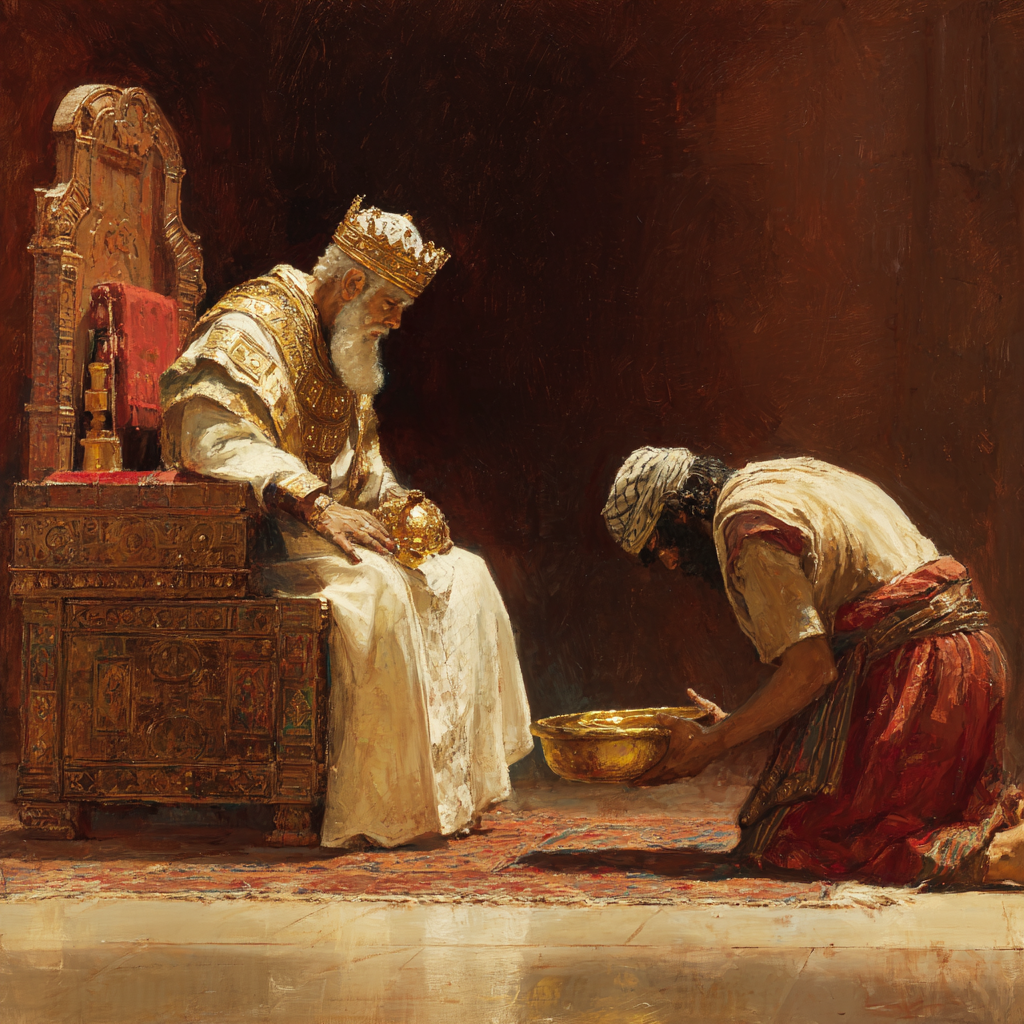
We “bless” His Name when we honor and revere Him. We “bless” His Name when we emulate Him and follow His example by adopting His Nature and Character. We are showing kindness, grace and mercy to others. We are forgiving and patient with them. We stand up for justice in making wrong things, right.
This is how we are to “bless” His Name. The two-lettered root is defined the following way by The Ancient Hebrew Lexicon of the Bible as:
RB בר Action: Feed, Fly, Fatten, Divide, Eat, Kneel, Thrust, Kneel Object: Grain, Soap, Wing, Pit, Fat, Meat, Palace, Warrior, Cypress, Sword, Knee Abstract: Covenant, Prevail Definition: The plant families of grains such as wheat and barley have a cluster of seeds at the top of the stalk called “heads”. These grains were used for food for both man and livestock. Ancient Hebrew: The pictograph B is a picture of a tent but also represents the family which resides inside the tent. The R is a picture of a head. Combined these have the meaning of “family of heads”.
This root indicates that is normally present is the gift is food. This could be physical food or spiritual food. When someone has a revelation from Him and shares it with us, they are feeding us spiritual food. It is a “blessing” or a “gift”. Revealing Yahuah’s Name is a “gift”. It is not meant to offend or create strife. It is a pretty awesome thing, when the King of Kings is taking the time to reveal Himself to us and tell us His actual Name. It is a great honor and privilege.
Sing Songs to His Name:
We are to “sing” to His Name. This is a different Hebrew word as well. “Singing” requires us to use our voices. King David tells us to “sing” to “Yahuah”. He is not telling us to “sing” to “HaShem”. He is not telling us to “sing” to “the LORD God”. We are to “sing” songs glorifying and exalting the Name of “Yahuah”.
O sing [H7891] unto Yahuah a new song: sing [H7891] unto Yahuah, all the earth. Sing [H7891] unto Yahuah, bless [H1288] His Name; show forth his salvation from day to day. Declare [H5068] his glory among the heathen, his wonders among all people. For Yahuah is great, and greatly to be praised [H1984]: He is to be feared above all elohiym.
The Hebrew word translated as “sing” is in the same word family as “Yashar’El” also known as “Israel”. The Ancient Hebrew Lexicon of the Bible defines it as:
RYF ( common, שיר / sh.y.r) Translation: SING (V) Definition: To express one’s voice in a melody or to music. Alternate Spellings:שור KJV Translations: sing, singer, behold Strong’s Hebrew #: h.7891
RYF ( masc., שיר / shir) שירה ( fem., שירה / shi-rah) Translation: SONG Definition: The act or art of singing. KJV Translations: song, musick, singing, musical, sing, singers Strong’s Hebrew #: h.7892
RYF שיר Definition: A stringed musical instrument uses thin cords for making music.

This is just another form for singing songs and playing musical instruments. The two-lettered root of this Hebrew word is related to “cords” which could be used for stringed instruments or “chords” played in music. It is defined by The Ancient Hebrew Lexicon of the Bible as:
RF שר Action: Tie, Remain, Loose, Sing Object: Cord, Straight, Relative, Caravan Abstract: Prosperity, Happy Definition: Ropes and cords were usually made of bark strips such as from the cedar or from the sinew (tendon) of an animal. The rope is made by twisting two fibers together. A single fiber is attached to a fixed point (top), and the two ends of the fiber are brought together. One fiber is twisted in a clockwise direction and wrapped over the other fiber in counter clockwise direction. The second fiber is then twisted in clockwise direction then wrapped around the first fiber in a counter clockwise direction. The process is repeated through the length of the rope. The twisting of the fibers in opposite directions causes the fibers to lock (press) onto each other making a stronger rope. The rope is used to tightly secure or support something, such as a load to a cart or the poles of the tent. Ancient Hebrew: The pictograph F is a picture of the teeth representing pressure, the R is a picture of the head representing the top or beginning. Combined these mean “press the beginning”.
This could also mean an “exchange of heads”. This word is also translated as an umbilical cord which represents the birth of a child who would eventually assume the role of his father as the head of the household. Thus, it represents an “exchange of heads” as well.
Conclusion:
The effort to conceal the Name of our Creator has been profound, extending to many previous generations who never really knew the actual Name of our Creator. This overwhelming evidence illustrates that those who are in relationship with our Father are to talk about Him and His Name all-of-the-time! There is no evidence illustrating that His Name is to be hidden or never spoken. The opposite is the truth. We are to call upon His Name; sing praises to His Name; declare His Name to the ends of the earth; exalt His Name and edify Him; make His Name shine brighter than the stars; make known His deeds; remember His Name and His deeds; and bless His Name. This is what the evidence is telling us.
Download this Article here