121-1 Why Restore His Name?
The Fear of Yahuah is the beginning of wisdom: they all have a good understanding that do his commandments: his praise endures forever.
Names are actually very important to people. People like it when others “remember” their name or say it. When we hear our name, we turn our heads to see who is calling our name. If my name is Debbie and someone tries to get my attention by calling me Judy, I am not going to turn my head to see who is trying to get my attention. It is not my name. If I realize they are trying to get my attention, I will correct them and tell them my actual name. If they continue to call me Judy, it would upset me because Judy is not my name.
Why do we think our Heavenly Father is any different?
Here are some questions to consider:
- Does He like it when people say His Name? We do. We like it when people say our name.
- Does He like it if we were to call Him, Zeus? If my name is “Dynah,” I would not like being called by the name, Judy. I especially would not like being called by the name of my husband’s previous wife or lover.
- If we call Him by a different name that does not belong to Him, would He even realize that we were talking to Him? Would we get His attention?
If we are serving a Living Creator, why do we treat Him as if He isn’t real or alive? Why do we fail to show Him the same respect as we do other people when using their names? Restoring the Name of our Father is important! When someone introduces themselves to me and tells me their name, I call them by the name they have given to me. All of us do this. Our Father has given us a plethora of Names to use in His Word. Doesn’t it seem reasonable and appropriate to use the Names He has given us?
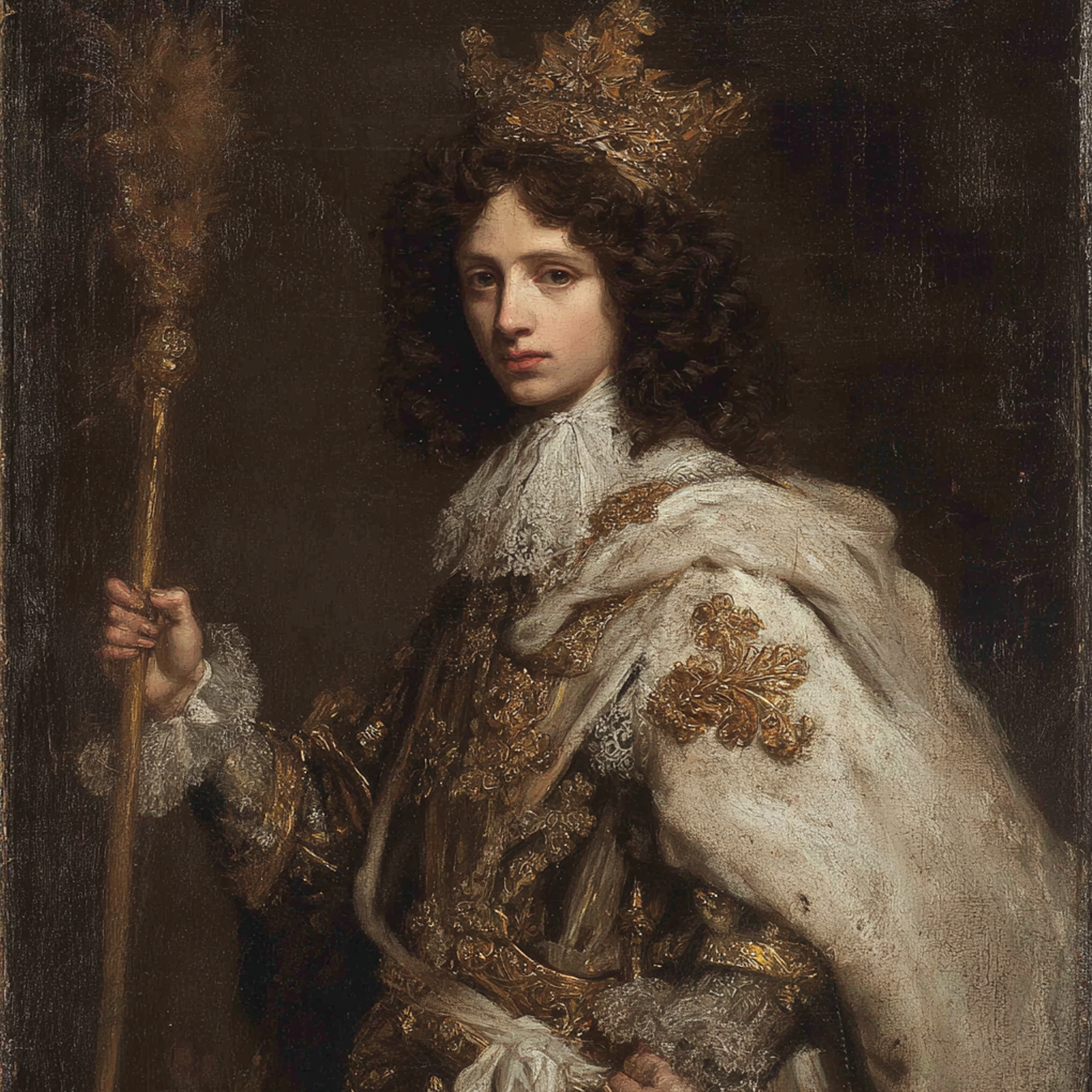
The reality is that Yahuah is a King of Kings. How do you think earthly kings would react if people called them by another name when approached? It is disrespectful, inconsiderate and dishonorable. There are actual protocols for approaching earthly kings. Here is one example in an article titled, Approaching the King.
There is a highly developed protocol involved in meeting a sovereign like King Charles III: you must first make a bow or a curtsy, you must always refer to him as “Your Majesty,” and you must not talk to him unless he first addresses you. And whatever you do, don’t touch him! https://www.reubenbredenhof.com/post/approaching-the-king#
These actions communicate reverence to an earthly King and Queen. There are protocols regarding names as well. Here is a question-and-answer segment on an article discussing the etiquette when meeting the King of England.
Q: Is it ever okay to use the king’s first name?
A: Typically, no. Formal address uses “Your Majesty” or “Sire.” Only if the king invites you to use his first name is it appropriate.
The only time it is appropriate for someone to say the King’s name is when he invites them to do so. The preference of the English monarchy is to be called “Your Majesty” or “Sire”. What would King Charles do if someone called him by another name like “George”? He would likely be offended.
Our King is not quite like the King of England. He has His own protocols for approaching Him and His Throne. We obtain those protocols by following the instructions in His Word. Here is testimony regarding some of His protocols when being in His Presence.
And Yahuah said unto Moshe, Lo, I come unto thee in a thick cloud, that the people may hear when I speak with you, and believe you forever. And Moshe told the words of the people unto Yahuah. And Yahuah said unto Moshe, Go unto the people, and set them apart today and tomorrow, and let them wash their clothes, And be ready against the third day: for the third day Yahuah will come down in the sight of all the people upon mount Sinai. And you shall set bounds unto the people round about, saying, Take heed to yourselves, that you go not up into the mount, or touch the border of it: whosoever touches the mount shall be surely put to death: There shall not an hand touch it, but he shall surely be stoned, or shot through; whether it be beast or man, it shall not live: when the trumpet sounds long, they shall come up to the mount. And Moshe went down from the mount unto the people, and set the people apart; and they washed their clothes. And he said unto the people, Be ready against the third day: come not near at your wives. And it came to pass on the third day in the morning, that there were thunders and lightnings, and a thick cloud upon the mount, and the voice of the trumpet exceeding loud; so that all the people that was in the camp trembled. And Moshe brought forth the people out of the camp to meet with Elohiym; and they stood at the nether part of the mount. And Mount Sinai was altogether on a smoke, because Yahuah descended upon it in fire: and the smoke thereof ascended as the smoke of a furnace, and the whole mount quaked greatly. And when the voice of the trumpet sounded long, and waxed louder and louder, Moshe spoke, and Elohiym answered him by a Voice. And Yahuah came down upon mount Sinai, on the top of the mount: and Yahuah called Moshe up to the top of the mount; and Moshe went up. And Yahuah said unto Moshe, Go down, charge the people, lest they break through unto Yahuah to gaze, and many of them perish. And let the priests also, which come near to Yahuah, set themselves apart, lest Yahuah break forth upon them. And Moshe said unto Yahuah, The people cannot come up to mount Sinai: for you charged us, saying, Set bounds about the mount, and set it apart. And Yahuah said unto him, Away, you get down, and you shall come up, you, and Aahron with you: but let not the priests and the people break through to come up unto Yahuah, lest he break forth upon them.
The protocols for meeting the King of Kings mentioned in this passage include the following:
- The preparation to meet the King of Kings requires three days.
- People must wash their clothes.
- They and the priests must set themselves apart.
- Men and women cannot be intimate with one another.
- They cannot even touch the base of the mountain where He sits. If they do, they will die.
Earthly Kings have their protocols; the King of Heaven has His protocols. His Presence is marked by thunder, lightning, fire and earthquakes. Trumpets sounded and smoke filled the air. The people trembled in fear. When they heard Yahuah speak the Ten Messages (Ten Commandments) in His own Voice, they said the following to the Prophet Moshe (Moses):
And all the people saw the thunderings, and the lightnings, and the noise of the trumpet, and the mountain smoking: and when the people saw it, they removed, and stood afar off. And they said unto Moshe, Speak with us, and we will hear: but do not let Elohiym speak with us, lest we die.
The people thought they would die if they heard His Voice again. It is for this reason, Yahuah uses prophets to speak on His behalf. The Prophet draws near to Yahuah Elohiym which means he must fulfill the protocols to be in the Presence of the King of Kings. Yahuah speaks to His Prophet and the Prophet speaks the message from Yahuah to the people. The Words of His true Prophets are His Words, not theirs.
Yahuah your Elohiym will raise up unto you a Prophet from the midst of you, of your brethren, like unto me; unto him you shall hear and obey; According to all that you desired of Yahuah your Elohiym in Horeb in the day of the assembly, saying, Let me not hear again the Voice of Yahuah my Elohiym, neither let me see this great fire any more, that I die not. And Yahuah said unto me, They have spoken well that which they have spoken. I will raise them up a Prophet from among their brethren, like unto you, and will put My Words in his mouth; and he shall speak unto them all that I shall command him. And it shall come to pass, that whosoever will not hear and obey My Words which he shall speak in My Name, I will require it of him.
Based on this evidence, it is apparently a frightening experience to be in the Presence of Yahuah Elohiym. People think they are going to die when they come near Him. This is called the “Fear of Yahuah” also known as the “Fear of the Lord”. This is another necessary protocol when meeting the King of Kings.
When the Prophet Moshe spent a great deal of time in the Presence of Yahuah, his face glowed like the sun which caused the people to be afraid, even the Aahron the High Priest was afraid of him.
And it came to pass, when Moshe came down from Mount Sinai with the two tables of testimony in Moshe’s’ hand, when he came down from the mount, that Moshe did not know that the skin of his face shone while he talked with him. And when Aahron and all the children of Yashar’El saw Moshe, behold, the skin of his face shone; and they were afraid [H3372] to come near him. And Moshe called unto them; and Aahron and all the rulers of the congregation returned unto him: and Moshe talked with them. And afterward all the children of Yashar’El came near: and he gave them in commandment all that Yahuah had spoken with him in Mount Sinai. And till Moshe had done speaking with them, he put a vail on his face. But when Moshe went in before Yahuah to speak with him, he took the vail off, until he came out. And he came out, and spoke unto the children of Yashar’El that which he was commanded. And the children of Yashar’El saw the face of Moshe, that the skin of Moshe’s face shone: and Moshe put the vail upon his face again, until he went in to speak with him.
Moshe put a vail across his face when he was with the people so they would not be afraid of him. It is this “fear” that causes us to give honor, respect and reverence to those in authority including Yahuah. This is a quality found in leaders who represent Yahuah including Prophets. They are to be highly revered and respected.
Moreover, you shall provide out of all the people able men, such as fear [H3373] Elohiym, men of truth, hating covetousness; and place such over them, to be rulers of thousands, and rulers of hundreds, rulers of fifties, and rulers of tens:
Moshe (Moses) chose men who “feared Elohiym”. Fear and reverence are strong feelings that motivate us to perform a certain set of actions. If we are afraid a thief will try to take our snowboard in the backseat of the car, we lock the doors to our car. The fear caused us to lock our car doors or to throw a blanket over the top of the snowboard to conceal it.
When I think of the way Yahuah descended upon that mountain, it causes me to fear. There were thunderings, lightnings, fire, smoke and loud trumpets sounding. The earth shook like an earthquake. If Yahuah descended upon the earth again, these same things would occur. This is not just a historical event. It describes what it would be like to be in His Presence right now. I can imagine what it might be like based on my personal experiences with these things. First of all, I don’t think I would be standing. I would be prostrate and I certainly would not call Him by any other Name than what He has given us. It is my fear of Yahuah that motivates me to restore His Name.
The “Fear of Yahuah” is the beginning of wisdom as declared by King David (Tehillim/Psalms 111:10). Testimony also says that Yahuah fulfills the desires of those who “fear” Him and He saves them.
He will fulfil the desire of them that fear [H3373] him: he also will hear their cry, and will save them.
The underlying Hebrew word in all these passages translated as “fear” is “yara”. It is defined by The Ancient Hebrew Lexicon of the Bible written by Jeff A. Benner as:
ARY ( common, ירא / y.r.a) Translation: FEAR (V) Definition: To be afraid of; to have a strong emotion caused by anticipation or awareness of danger; the flowing, or quivering, of the gut from fear or awe; to dread what is terrible or revere what is respected. KJV Translations: fear, afraid, terrible, dreadful, reverence, fearful Strong’s Hebrew #: h.3372
ARY ( masc., ירא / yarey) Translation: FEARFUL Definition: Full of fear or dread. KJV Translations: fear, afraid, fearful Strong’s Hebrew #: h.3373
Prophets, leaders and people who follow Yahuah Elohiym are afraid of Him. They have a dread inside of them when they think of being in His Presence. They do not want to offend Him. This “fear” motivates them to give Him the utmost honor and respect. They would never dream of calling Yahuah by any other name than what He has designated in His Word. The people were scared when they were in the Presence of Yahuah. What would have happened if one of them called Him by the name, Zeus, in that moment? They would not have dared to do such a thing. No one dares to call King Charles by another name in his presence and he is just a man. Why would we do this for the King of Kings?
The two-lettered root of “yara” is defined the following way by The Ancient Hebrew Lexicon of the Bible as:
RY יר Action: Throw Object: River, Rain Abstract: Fear Definition: The hand of man is used for the throwing. A flowing of water in a river. A throwing of the finger to show a direction to walk or live. The throwing of an arrow. The throwing down of water in rain. Awe or fear where one throws self to the foot of one in authority. Relationships: Related to רה and רי. Ancient Hebrew: The pictograph Y is a picture of a hand, the R is a picture of a man. Combined these mean “hand of man”.
The letter “yod” is a picture of a man’s arm and hand and involves the functions of the arm and hand. Nearly every action done by a man or woman involves their arms and hands. In this definition, the focus is upon “throwing” something. But it can also be related to cause and effect. The “Fear of Yahuah” causes us to perform a certain set of actions (effect).
For example, I am using my arms and hands to type this study on a computer. People are going to read this study and it is going to affect them in a particular way and may cause them to change something in their life. Perhaps they share this study with someone else and it has a similar effect on them. The initial action flows like a river in society through a process of cause and effect. It is a domino effect. When one domino falls, they all fall. It is a chain reaction of events.
Here is another example. Two people decide to get married. They move into a house together and begin a life together. The “river” of their respective lives has changed course and is now flowing a different direction through a series of actions that would have not otherwise taken place if they remained single. The words and actions of an individual flows like a river.
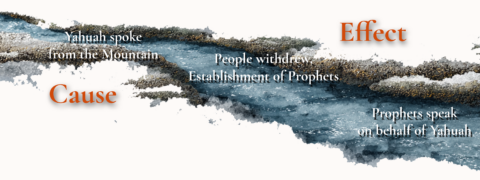
People “feared” the Prophet Moshe (Moses) when his face shined. This caused them to stay away from him (effect). They didn’t want to get close to Him. This situation created a “cause and effect”. The people who stood in the Presence of Yahuah and heard Him speak the Ten Messages (Ten Commandments) from Mount Sinai did not want Yahuah to speak to them again. This led to the establishment of Prophets representing Yahuah Elohiym which has rippled across time like a river flowing down the side of a mountain. It is the “fear” that causes us to act which leads to more actions like it. Here is an illustration showing its relationship to a flowing river.
“Yara” is related to the word translated as “river”. They are in the same Hebrew word family. The Ancient Hebrew Lexicon of the Bible defines it as:
RWAY ( masc., יאור / ye-or) Translation: STREAM Definition: A body of running water; any body of flowing water. KJV Translations: river, brook, flood, stream Strong’s Hebrew #: h.2975
Here is a passage which translates it as “river”:
And it came to pass at the end of two full years, that Pharaoh dreamed: and, behold, he stood by the river [H2975].
Rivers begin in the mountains and flow down crevices and valleys until they reach a larger body of water like the sea or lake. The river flows down the path of least resistance. It carves the banks of the river and changes course sometimes. This is a physical concept that relates to a spiritual concept. The mind of an individual is the mountain top. Our words and actions take the path of least resistance and flow from its source (mind) on a daily basis. Sometimes we do not even think about the things we are doing or the words we are speaking. They just flow. It is our words and actions that direct the course of our river or journey in life, like getting married, getting a new job, or starting a business. Here are the three ancient Hebrew pictographic letters expressed in pictures found in the Hebrew word “Yara”: Yod, Resh and Aleph.

In its simplest form, the word “yara” means “works of man that are strong”. Fear is a strong motivator that produces a certain set of actions as we have previously illustrated. That one incident at the base of Mount Sinai established the Prophet as a Messenger of Yahuah which has affected generations of people in a powerful way.
Fear was the primary feeling that motivated me to restore the Name of our Creator. It was a very strong emotion that caused me to make this change immediately. I didn’t sit there and contemplate whether or not I should restore His Name. I said to myself, “He does not ever refer to Himself as ‘the LORD God’ in His Word and they do not describe any characteristics about Him. Can mankind really assign an arbitrary label to our Creator? Does mankind have the authority to ‘name’ our Father in Heaven?” From my perspective, mankind does not have the authority to “name” the King of Kings.
The other emotion that motivated me was “honor”. I see Yahuah as the King of Kings. I see the way people treat earthly kings, presidents and prime ministers. In my mind, we ought to at least honor our Father in Heaven the way we honor these earthly leaders. Yahuah tells His people to “honor their fathers and mothers”.
Honor [H3513] your father and your mother: that your days may be long upon the land which Yahuah your Elohiym gives you.
Our Creator is our Father. This instruction is telling us to “honor” Him. The Ancient Hebrew Lexicon of the Bible defines the Hebrew word translated as “honor” the following way:
DBK ( common, כבד / k.b.d) Translation: BE.HEAVY (V) Definition: To be great in weight, wealth or importance. Alternate Translations: honor (when written in the piel [intensive] form) KJV Translations: honour, glorify, heavy, harden, glorious, sore, great, many, promote Strong’s Hebrew #: h.3513
DBK כבד Definition: Someone or something that is heavy in weight, wealth, abundance, importance or respect. Relationship to Parent: from the stars as abundant.
Modern-day kings, presidents and prime ministers are heavy in weight because they are considered important. If the opportunity would arise to meet them in person, we would all prepare ourselves by learning the protocols for that meeting. Yahuah Elohiym is the King of Kings. His weight is exponentially much higher than these earthly leaders. Messiah Yahusha says it this way:
And do not fear them which kill the body, but are not able to kill the soul: but rather fear him which is able to destroy both soul and body in She’ol.
Leaders of the world have the power and authority to preserve life or take it away. But they do not have power over the grave. Yahuah Elohiym is our Creator. He fashioned us from the dust of the earth and it is by His Word that we return to the dust of the earth. It is by His Word that we are resurrected and it is by His Word that we will perish again. Earthly leaders are also subject to Him. He can destroy them, establish them, cause them to return to the dust of the earth, resurrect them and cause them to perish again. Yahuah is the King of Kings. He is the Judge of all the earth and its inhabitants including our leaders.
The two-lettered root of this Hebrew word uses the letters “beyt and dalet”. It is defined the following way in The Ancient Hebrew Lexicon of the Bible as:
DB (בד) Action: Separate, Perish, Devise Object: Ruins, Pieces Abstract: Alone, Destruction, Virginity Definition: The father of the tent often sat alone at the door of the tent. Here he could receive shade from the sun, watch over his household and watch the road for approaching strangers. (see Genesis 18:1,2) Ancient Hebrew: The pictograph ב is a representation of a tent. The ד is a picture of the tent door. These two pictographs represent “the door of the tent”.
DB ( masc., בד / bad) Translation: FIBER Definition: A branch (which may be used as a staff), string or filament, as separated from the tree or plant. Linen that is made from the fibers of the flax plant. Often used in the idiom “to his/her own fiber” meaning alone or self. Relationship to Root: Anyone or anything that is alone, apart or separated from the whole or from something else. Alternate Translations: linen; part; alone; aside; only; self; that alone (when prefixed with “to~”); besides (when prefixed with “from~” and “to~”) Edenics: bad – as being alone KJV Translations: linen, stave, beside, branches, alone, only, strength Strong’s Hebrew #: h.0905, h.0906
Yahuah is our Eternal Father. He sits alone at the door of His tent watching over His Household. Fathers are important. They are the leader of their household from an ancient Hebrew nomadic perspective. Their responsibility is to protect and provide for the members in their household. Without the father, they are vulnerable.
The letter “kaph” at the beginning of “kabad” is a picture of an open palm. This has the meaning of “tame, submission, bent to another’s will, allow”. “Kabad” essentially means “bent to the will of the one who sits at the door of the tent”. Here are the pictures representing the word “kabad” using the ancient Hebrew pictographic language:
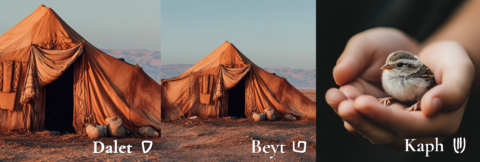
Yahuah Elohiym is our Father. His hands are filled with food and we are the little bird that feels comfortable enough to land on His hands and eat the food inside. He is sitting at the door of His tent watching over His Household. The bird is not attacking Him or ignoring Him. The bird has become tame enough to come to Him and eat from His hand. This is what it means to “honor our father and mother”.
We approach our fathers and mothers. We eat from their hands meaning we listen to their wisdom and apply it to our lives. We do not ignore them or attack them. Leaders of nations are the fathers and mothers of the people they lead. It is good and right to give them “honor” as well even if we do not necessarily agree with the wisdom they impart. They have been placed in these positions of authority by Yahuah Elohiym. “Honoring” them is akin to “honoring” Him.
Yahuah Elohiym gives His Prophets authority to speak on His behalf. He has placed them in these positions of authority as well. Their words spoken on His behalf is His Words. They provide the spiritual food that sits in the hands of our Creator. Eating from their hand is the same as eating from the hand of Yahuah Elohiym. “Honoring” them is akin to “honoring” Him.
We restore our Father’s Name because we “fear” Him and we “honor” Him. He is a great and mighty King. He is the King of Kings. He is our Creator who fashioned us from the dust of the earth. He is our Intelligent Designer who gave us life. He deserves honor and respect just as we give honor and respect to earthly Kings.
From my perspective, He deserves far greater honor and respect than earthly Kings. I will not call Him by a name that He has not sanctioned in His Word in the underlying Hebrew. He discusses His preferences in His Word. Those names assigned to Him by men and women will not be uttered from my lips in reference to Him or be used in anything I write. I do these things because I “fear” Him and I “honor” Him.
The Fear of Yahuah is the beginning of wisdom: and the knowledge of the set-apart is understanding.
MISHLE (PROVERBS) 9:10
Download this Article here