121-2 What is a “Name”?
And when Abram was ninety years old and nine, Yahuah appeared to Abram, and said unto him, I am El Shaddai; walk before me, and be you perfect.
In our society, we give people “names” as identifiers. They are labels we attach to a person, place or thing that helps us communicate with one another. If someone calls me “Debbie,” I will not answer them because my name is “Dynah”. It is not because I am rude. I just don’t realize that this individual is talking to me. They did not use the “identifier” attached to me. If someone uses the name, “Dynah,” I will look up to see who called my name even if they are not trying to get my attention. Perhaps they are talking to someone else who is named “Dynah”.
Labels are useful when communicating with others. If I say, “Mom, could you hand me that blue cup?” She knows that I am talking about the cup that is blue. She is able to hand me the cup that I desire. We place labels on animals, stars, plants and places so that we can clearly communicate ideas to others. They are labels we all have agreed to attach to these people, places and things.
The common label our society has attached to our Creator mentioned in the Hebrew and Greek writings is the “LORD God”. When we use these labels, people know who we are talking about. When I refer to Him as “Yahuah Elohiym,” people do not know who I am talking about because this has not become widely accepted by a majority of the people. Generally speaking, they do not make the same associations to our Creator when this Name is spoken.
His Name is unfamiliar to most people. However, in His realm in Heaven, His heavenly hosts do not call Him by the labels we have assigned to Him. They do not call Him, “the LORD God”. His society is different than our society. In His realm, they call Him by the Names He has assigned to Himself. He has a list of “identifiers” or “labels” that He has established for Himself. They are an “approved” list of Names that people use to refer to Him. “The LORD God” is not on that list. It is like there are two different realms operating at the same time.
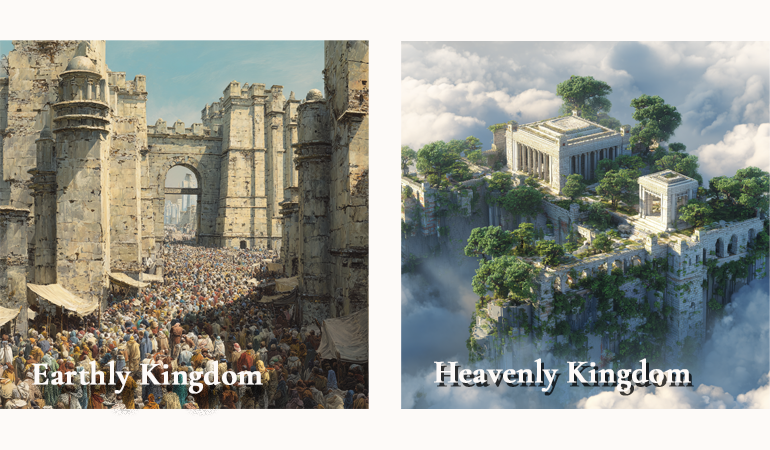
The Heavenly Kingdom operates differently than the Earthly Kingdom. In the realm of our Creator, He still uses His Language. He still uses the same manner and customs conveyed in the Hebrew writings. Therefore, it becomes necessary for us to determine a “name” from this mindset. Is it simply a “label” or “identifier” in His realm?
It seems like a “name” would have the same purpose in His Kingdom that it does in Earthly Kingdoms but that is not the case. “Names” in His realm are given based on the function of an individual and not just a beautiful label assigned to us as individuals. For example, Noach (Noah) was given this name because of his function or purpose.
And he called his name Noach, saying, This same shall comfort us concerning our work and toil of our hands, because of the ground which Yahuah has cursed.
We defined Noach’s name in our study titled: Intelligent Designers Communicate under the heading The Identity of our Father. The letters in “Noach’s” name are the Hebrew letters: nun, vav, and chet. His name means “continue outside securely” based on the ancient Hebrew pictographic language. Here are the pictures representing the ancient Hebrew pictographic letters in the name, “Noach”
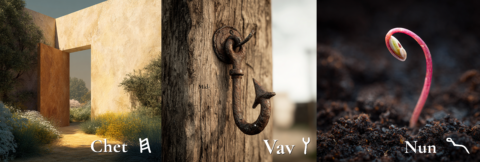
The seed of Noach (Noah) continued securely on the outside of the wall. Mankind still exists “outside” the Garden of Eden. Noach and his family still lived “outside”. After the flood, all the violence had ceased and they found rest, safety and security on the other side of the flood. The chaos had ended. Here are some passages that confirm the meaning of the name “Noach”. Yahuah ceased from working on the seventh day. He “rested”.
For in six days Yahuah made heaven and earth, the sea, and all that in them is, and rested [H5117] the seventh day: wherefore Yahuah blessed the Sabbath day, and set it apart.
The word translated as “rest” is “Noach”. This communicates to us that there is an end to violence and chaos. It is a time of rest, safety and security. The Shabbat symbolizes the end of strife and wickedness. “Noach” means no work as it relates to the Shabbat on the seventh day. In the following passage, “no rest” or “no Noach” is associated with persecution and labor.
Our necks are under persecution: we labor, and have no rest [H5117].
The Shabbat is an end to persecution and heavy labor imposed by our leaders. “Noach” is associated with the end of wicked rulers by the hand of Yahuah:
Yahuah has broken the staff of the wicked, and the scepter of the rulers. He who smote the people in wrath with a continual stroke, he that ruled the nations in anger, is persecuted, and none hinders. The whole earth is at rest [H5117], and is quiet: they break forth into singing. Yea, the fir trees rejoice at thee, and the cedars of Lebanon, saying, since you are laid down, no feller is come up against us.
The wicked ruler in this situation smote the people in wrath. He ruled the nations in anger. These qualities are associated with “no rest”. The Hebrew word “Noach” indicates an end to wicked rulers, persecution, hard labor, and being ruled with harshness and anger. It is the process of providing comfort to the people. These qualities provide a more detailed description of what it was like before the flood event, that Noach and his family endured. The whole earth was at “rest” then and it will be again as prophesied by Yeshayahu (Isaiah) in the above passage. The name “Noach” described his function.
On Yahuah’s Shabbat, His people do not cause chaos or violence. They do not impose hard labor on others. They do not persecute or cause strife. They do not exhibit anger or harshness. They rest, provide comfort, security and safety to others. They provide for the needs of others to establish wholeness or shalom in their lives. Their behavior is an expression of hope for a world-to-come that will put an end to wicked rulers. It is a time to practice the way of life that will exist under the authority of His Messiah.
Yahuah was communicating an important message when Noach was given his name. If his name was “George,” we would not have made these same associations. There is nothing wrong with the name, “George”. However, it has nothing to do with the events that occurred during the flood. Yahuah was and is very intentional regarding “names”.
This significance can be observed in the actual definition of the Hebrew word translated as “name”. In the beginning, Adam “named” all of the living creatures. Here it is the word used in a passage.
And out of the ground Yahuah Elohiym formed every beast of the field, and every fowl of the air; and brought them unto Adam to see what he would call them: and whatsoever Adam called every living creature, that was the name [H8034] thereof.
The Sons of Adam perform this function to this very day. When a new creature has been found, scientist assign a “label” to it. When a new star is found, astronomers will “name” the star or object crossing the night sky. This is a function of mankind to this day. The Ancient Hebrew Lexicon of the Bible written by Jeff A. Benner defines “shem” the following way:
MF ( masc., שם / sheym) Translation: TITLE Definition: A word given to an individual or place denoting its character. The character of an individual or place. Relationship to Root: Hebrew names are words given to describe the character of the individual or place. KJV Translations: name, renown, fame, famous Strong’s Hebrew #: h.8034 Strong’s Aramaic #: a.8036
In his definition, he states that Hebrew name are words given to describe the character of the individual or place. This has been illustrated in our explanation of the name, “Noach”. His “name” described his purpose. Noach’s “name” was not assigned to him because his parents thought it sounded good or that it seemed like a good name for a son. It was assigned to him for a very special purpose he would fulfill later in life.
Definition of “Shem”:
The Hebrew word, “shem” is a two-lettered root in this Hebrew word family. It is in the same word family as “shamayim” which is translated as “heaven”. The first letter is a “shin” and is a picture of two front teeth.

This letter means “teeth continue”. When we are a young child, newer, bigger teeth replace our baby teeth. Our “teeth continue”. There is an “exchange” of inferior teeth for teeth that are better and stronger. It can also mean “two” or “second” as we get a “second set of teeth” or “two sets of teeth” or “two front teeth”. It can also mean “pressure” just as the teeth exert pressure when eating food.

The letter “mem” or “mah” is a picture of water but it can also represent the air. Both water and air have the same qualities. For example, both take the shape of their containers. Ballons filled with air and water have the same shape. The difference between them is weight. One is heavier than the other. Also, the movement of air across the earth flows in “jet-stream” like rivers of air.
Sound waves ripple through air like ripples in a pond. Water and air have the same characteristics. We cannot separate one air or one water from the whole. If we have ten balls in a basket. We can remove one of them from the basket. We cannot do this with air or water.
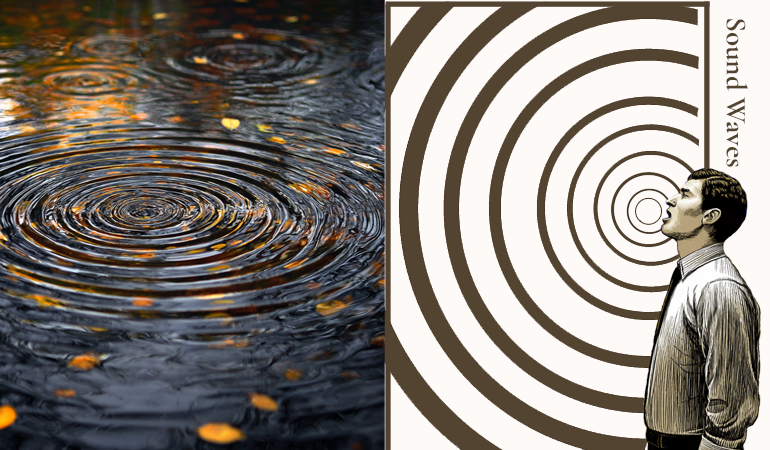
The letter “mem” or “mah” can represent water or air. The Hebrew word for “water” is “mayim” and it is always written with the plural ending because we cannot take one water from the whole. The Hebrew word for “heaven” is “shamayim” and it is always written with a plural ending for the same reason. Here are the words side-by-side. The parts highlighted in red are identical. The word for “heaven” has an additional letter which is the letter “shin”.
MYM
mayim (water)
MYMF
shamayim (water)
“Heaven” can literally mean the “second waters” in the ancient Hebrew pictographic language. The first waters are the sea and the second waters is the air we breathe or “heaven”. Mankind cannot “breathe” water but they can “breathe” the “second waters”. We inhale and exhale our breath. There is an “exchange of breath” which is the literal meaning of “shem”.
F
Exchange
M
Air/Breath
We use our breath to speak words which reflect the contents of our hearts. If there is no flow of air through our vocal cords and our mouths, we cannot speak words. The words we speak are a reflection of our character. If we are dead, we are not breathing so we are no longer speaking. Messiah Yahusha confirms these concepts in the following testimony:
O generation of vipers, how can you, being evil, speak good things? for out of the abundance of the heart the mouth speaks. A good man out of the good treasure of the heart brings forth good things: and an evil man out of the evil treasure brings forth evil things.
We cannot speak that which we do not know. Biology teachers can teach biology because they have acquired the information and have stored it inside their minds. People who have not acquired this information are not qualified to teach biology. They simply do not have the information inside their minds to impart to others. People with good and kind hearts only know goodness and kindness. They do not have the capacity to do mean things because that kind of information doesn’t exist within them. The same is true of those who do mean and evil things. They do not have the capacity to do good and be kind. This kind of information does not exist within them. Our words and actions are a reflection of the information stored within us. Therefore, our breath is our character.
This is further confirmed in the following passage. Yahuah is addressing the House of Yahudah (Judah) but He calls them “Sodom and Gomorrah”. He addresses them this way because their character is in alignment with Sodom and Gomorrah and not with the name, “Yahudah”.
Hear the word of Yahuah, you rulers of Sodom; give ear unto the Law of our Elohiym, you people of Gomorrah.
Have the leaders of this earth done the same thing to Yahuah? He has clearly given us His Name in His Word. Are we addressing Him by “the LORD God” because He embodies the character of this name from the perspective of the leaders and people? What does He see and hear when we use these substitutions?
Our breath represents the spirit living inside of our physical bodies. It is our spirit that moves our body. When our breath or our spirit leaves our body, our physical body becomes motionless. Mean people stop being mean when they are dead. Good people stop doing good when they are dead. The part of us that behaved these ways has departed. It is gone just like the breath is gone.
There is a phenomenon called “phantom limb pain” among people who have experienced an amputation. They still feel like they have a limb even though it has been removed. As a nurse, I have asked my patients if this is true and it is. Do they still have their “spiritual” limb? It is our spirit that gives life to the body and makes it move. Our spirit gives “character” to our body. The dead body of the individual does not have the personality or mannerisms that existed when the individual’s spirit was present in the body. “Shem” represents the “character” of our breath or our spirit. It represents our qualities and our purpose. We illustrated this in the name, “Noach”.
“El Shaddai”:
Yahuah has a list of “Names” that He uses to describe His nature and character. He is communicating to us that these Names represent the personality and mannerisms of His Spirit. One of those Names is “El Shaddai”. The first occurrence in the Hebrew writings is in the following passage with Abraham. This is the moment Yahuah gave the covenant of circumcision to Abraham and his offspring. It is most often translated as “God Almighty”.
And when Abram was ninety years old and nine, Yahuah appeared to Abram, and said unto him, I am El Shaddai [H7706]; walk before me, and be you perfect.
Here is the phrase as it appears in the Hebrew writings:
YDF LA
El Shaddai (God Almighty)
“El” means “Strong Authority”. We defined this term in our study titled: The Influence of His Language upon the Nations. The Hebrew word “Shaddai” includes the following letters: shin, dalet and yod. The Ancient Hebrew Lexicon of the Bible written by Jeff A. Benner defines the two-lettered root of this Hebrew word as:
DF Action: Spoil Object: Breast, Ravine Ancient Hebrew: The pictograph F is a picture of the two front teeth, the D is a picture of a tent door that dangles down. Combined these mean “two that dangle”.
DF ( masc., שד / shad) Translation: BREAST Definition: Milk-producing glandular organs situated on the chest in the female; the fore part of the body between the neck and the abdomen. Also a goat-idol from the teats of the goat. KJV Translations: breast, teat, pap Strong’s Hebrew #: h.7699, h.7700
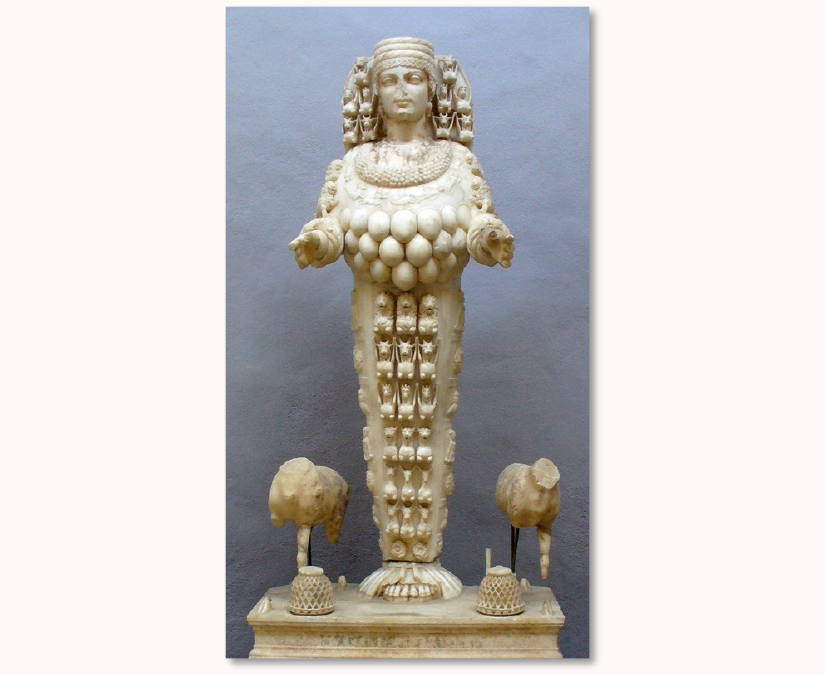
This definition was quite shocking to me when I read it for the first time. How in the world did translators select the word “Almighty” for “Shaddai”? This concept and understanding can be observed in carved statutes representing the deities of other nations. The picture to the left is the goddess “Diana” of Ephesus. She has multiple breasts for feeding her young. This image is influenced by the Hebrew word, “Shaddai”.
The letter “shin” does look like the breasts of a woman: F. However, we must remember that the ancient Hebrews were more focused upon the “function” of something and not necessarily its appearance. Women’s breasts are used to feed babies. They provide nourishment for their children so they can grow and prosper. We see this function in the context of the same passage in which “El Shaddai” is first used:
And I will make you exceeding fruitful, and I will make nations of you, and kings shall come out of you.
Being fruitful is the process of bearing children. In the context of the passage, this is the time when Sarah would become pregnant with Yitzhak (Isaac) who is the heir to these promises given to Abraham. This Hebrew word does not mean that Yahuah has breasts that dangle like a woman. The focus is on the function of the breasts.
Yahuah bears characteristics of both males and females. This is not describing the physical appearance of Yahuah but “functional characteristics” of Him. “Shaddai” is an example of this. Here is the passage:
So, Elohiym created man in his own image, in the image of Elohiym created he him; male and female created he them.
When someone attacks a woman’s child, she becomes vicious and extremely protective like a bear. Mama bears are much more aggressive when they have cubs. Yahuah also has offspring which are people who bear His Image and Likeness. When someone attack them, He is like a mama bear. This is conveyed in the following passage:
Therefore, I will be unto them as a lion: as a leopard by the way will I observe them: I will meet them as a bear that is bereaved of her whelps, and will rend the caul of their heart, and there will I devour them like a lion: the wild beast shall tear them.
Mama bears are fierce.
A mother bear is fiercely protective of her cubs. She is constantly on the lookout for danger, whether it’s from other bears, particularly adult males, or other predators. She will not hesitate to defend her young, and her size and strength make her a formidable opponent. This constant vigilance teaches the cubs to be aware of their surroundings and to recognize potential threats. https://kodiakbearcenter.com/how-mama-bears-raise-their-cubs/#:
Mama bears are much more aggressive when they have cubs. This is another aspect behind the Hebrew word, “Shaddai,” because this word also is related to “spoil” or “destruction”. This is likely where translators decided to use the word “Almighty” in place of “Shaddai”. The Ancient Hebrew Lexicon of the Bible defines it the following way:
DDF ( common, שדד ) Translation: SPOIL (V) Definition: To dry up and shrivel and be of no use. KJV Translations: spoil, spoiler, waste, destroy, robber Strong’s Hebrew #: h.7703
DDF שדד Definition: Breasts that are dried up and shriveled.
When a child stops breastfeeding, the milk glands dry-up and no longer produce milk. They no longer have a “function”. However, the context of passages does not convey breasts that are dried-up. This would indicate that our Father is no longer capable of providing nourishment for us. The message they convey is more like a mama bear defending her cubs who are still breast-feeding. For example, the “Day of Yahuah” also known as the “Day of the Lord” is related to “Shaddai”.
Alas for the day! for the day of Yahuah is at hand, and as a destruction from Shaddai [H7706] shall it come.
Yahuah is functioning as a mama bear who will destroy the people who have hurt His cubs. In the following passage, Ya’akob (Jacob) calls our Father, “El Shaddai”. In the context of the passage, he is talking about his own “bereavement” of his children. Ya’akob is a man but he still experiences bereavement. All men do. However, papa bears do not defend their young like a mama bear. Yahuah wants to communicate to His people that even though He is a male, He will defend His people like a mama bear. Here is the passage:
And El Shaddai [H7706] give you mercy before the man, that he may send away your other brother, and Benjamin. If I be bereaved of my children, I am bereaved.
Ya’akob (Jacob) is appealing to Yahuah as one mama bear to another mama bear so-to-speak. Ya’akob knows that Yahuah has experienced bereavement, Himself. Because Yahuah knows what it is like, Ya’akob prays that He will have mercy upon him regarding his own children. In the next passage, “Shaddai” is associated with someone who protects and cares for His people.
He that dwells in the secret place of the Most High shall abide under the shadow of Shaddai [H7706]. I will say of Yahuah, He is my refuge and my fortress: my Elohiym; in him will I trust. Surely, he shall deliver you from the snare of the fowler, and from the noisome pestilence.
This is like a mama bear protecting her cubs. The Hebrew word is Strong’s Exhaustive Concordance of the Bible reference number H7706. Reference number H7703 is the same exact word. It is most often translated as “destroyer” or “spoiler”. Here are three examples.
A grievous vision is declared unto me; the treacherous dealer deals treacherously, and the spoiler [H7703] spoils [H7703]. Go up, O Elam: besiege, O Media; all the sighing thereof have I made to cease.
The integrity of the upright shall guide them: but the perverseness of transgressors shall destroy [H7703] them. Riches profit not in the day of wrath: but righteousness delivers from death.
O daughter of my people, gird you with sackcloth, and wallow yourself in ashes: make your mourning, as for an only son, most bitter lamentation: for the spoiler [H7703] shall suddenly come upon us.
In the last passage, the bitter lamentation is for the loss of an only son. The “spoiler” or “Shaddai” will suddenly come upon them. This is describing a mama bear defending her cubs or attacking the killer of her cubs. “El Shaddai” is describing characteristics of Yahuah.
- He feeds His people and nourishes them.
- He causes them to be exceedingly fruitful.
- He protects and defends His people like a mama bear protecting her cubs.
Here are the pictures representing the ancient Hebrew pictographic letters:
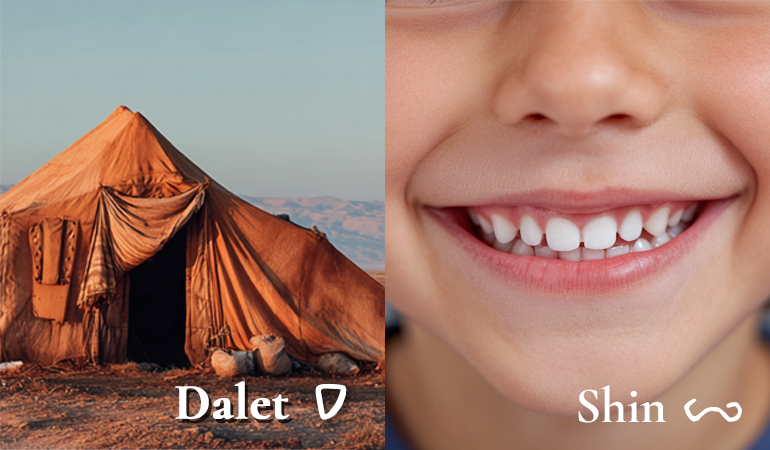
A door “dangles” in front of the tent’s entrance. The letter “shin” can represent the number “two”. The literal meaning of this word is “two dangles”. Women have two breasts that “dangle”. Breasts are used for feeding and nourishing their young. This is one of Yahuah Elohiym’s purposes. He is like a mama bear protecting and defending her cubs.
Yahuah did not select the Name, “Shaddai” because He liked the way the word sounded when spoken. He chose this Name because it described His nature and character. This is true of all the Names He has sanctioned in His Word. This describes Yahuah’s mindset behind the concept of a “name”. It is not just a “label” attached to a particular person.
Download this Article here