
122-2 Yahuah’s Salvation
And he turned him unto his disciples, and said privately, Blessed are the eyes which see the things that you see:
People argue over the pronunciation of Yahusha’s name as well. Some believe if one does not pronounce it correctly, they are not “saved”. Do parents stop caring for their infant if they do not pronounce “mama” or “dada” correctly the first time? Would I stop talking to someone and reject them because they call me “Diane, Deanna or Di”? It is a ridiculous notion to claim our salvation is dependent upon pronouncing the Name of our Creator as well as our Messiah correctly. I have personally called our Messiah, “Jesus, Yeshua, Yehoshua and now Yahusha”. He has answered me every time with every name.
The change I noticed from “Jesus” to “Yeshua” was greater intimacy. I felt closer to him and he taught me much more. I didn’t feel like I had grown that much in my relationship with him when I called him “Jesus”. I had a basic knowledge built upon Christian principles some of which needed to be unlearned in order to see the truth.
In some ways, the name “Jesus” was a stumbling block that prevented me from seeing the name of our Messiah revealed in Yeshayahu (Isaiah) 52:10-53:12.
Stumbling blocks are manmade beliefs and traditions that we accept as truth that prevent us from seeing the real truth. Initially, I believed names were given in the Word of our Father were for the same reasons we give names to our children. We simply like the way the name sounds. If we are used to calling him “Jesus” and he answers, why should we bother to restore his name? Yahusha is a real-life person. He has preferences and he told Shaul of Tarsus (Paul) his name after the resurrection in the Hebrew tongue.
It would be like me having a conversation with someone and they called me “Deanna”. I would say to them, “I prefer to be called ‘Dynah’ or ‘Dianna’”. They would say, “okay, no problem. I’m sorry if I offended you”. Envision having a conversation with Yahusha. You are calling him, “Jesus” and he says to you, “I prefer to be called ‘Yeshua’ or ‘Yahusha’”. What would you do? If I were having this conversation with anyone in the world, I would call them by the name they prefer; always and in every instance. I would not insist on calling him “Jesus”.
The name “Jesus” does not contain the Name of “Yahuah” in it. There is no letter “J” in the Name of our Father. It is a name morphed from the Greek name “Iesous” pronounced “ye-ay-soos”. The name “Jesus” is no longer a transliteration of the underlying Greek name either. There is no letter “J” in the Greek language.
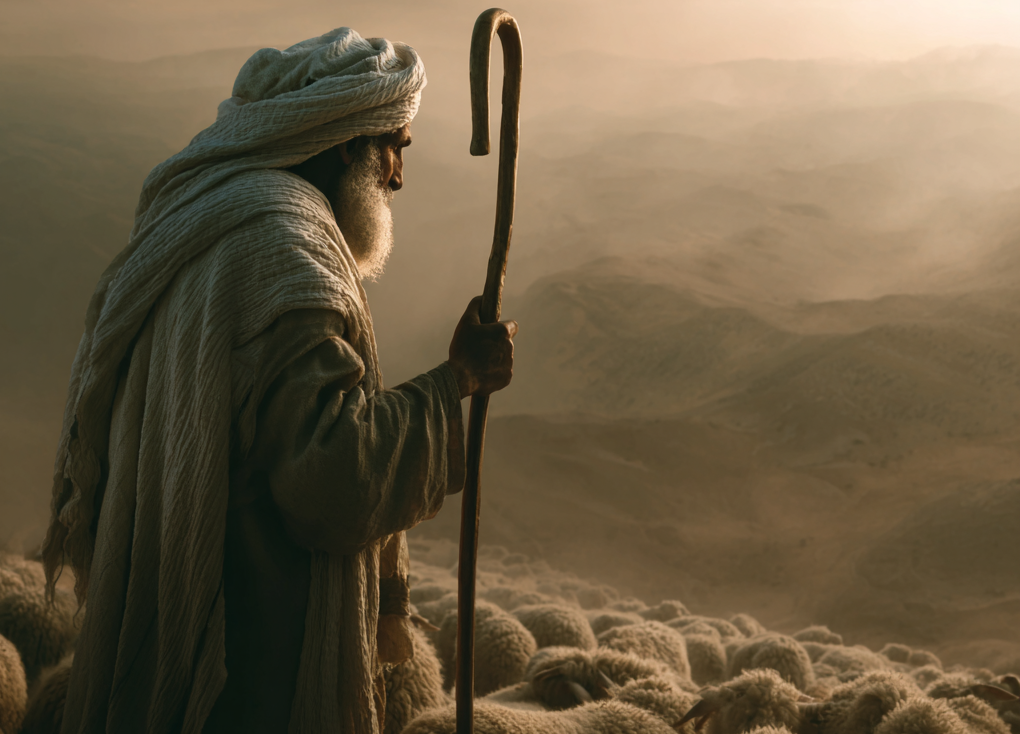
The name “Yahusha” bears the Name of our Father in his name: Yahu-. This is like the prophets Yeshayahu (Isaiah), Yirmeyahu (Jeremiah), and Zakaryah (Zechariah). We can also see this in the name Yahudah. The last part of his name includes -sha which means “destroyer watches”. It is a picture of a shepherd watching over his sheep who destroys the enemy of his flock.
Our Messiah shares the same name as Yahusha (Joshua) Son of Nun who was the successor to the prophet Moshe and caused the people to inherit the land of promise.
But charge Yahusha, and encourage him, and strengthen him: for he shall go over before this people, and he shall cause them to inherit the land which you shall see.
Here is the name of Yahusha, Son of Nun, as it appears in the Hebrew writings. The part highlighted in red are three of the letters found in Yahuah’s Name.
[FHWY
Yahu-sha
Here is his name with the vowel points added by the Masoretes taken from the entry in Strong’s Exhaustive Concordance of the Bible:
יְהוֹשֻׁעַ
Yaho-shua
The Masoretes caused the “vav” to be pronounced with the long “O” sound rather than the more common “EW” sound. They added the three dots under the letter “shin” which makes an “EW” sound and they added a dash under the “ayin” to make the “ah” sound. This is the source for the pronunciations of “Yeshua, Yehoshua and Yehushua”. The Masoretes claim that the sound for the letter “ayin” has been lost and so the letter is silent in the modern-Hebrew language.
However, the Greek language is based on the Phoenician language which is the same as the ancient Hebrew pictographic language. It does not make sense to include a letter in the Alephbet that does not have an associated sound. In the Phoenician and Greek language, the letter “ayin” is the letter “O”. We can see the similarities with our own eyes in the English language which is based upon the Greek language.
[ O
Based on this evidence, the letter “ayin” likely had an “O” sound. It could be the short “O” sound as in the name “Bob” or could have the long “O” sound as in the word “hope”. With the short “O” sound, the last two letters would be pronounced “Shah”.
[F
Shah
The letter “vav” or “waw” primarily carries the “U” sound as in “EW”. If the “ayin” has the “O” sound then it does not make sense that the letter “vav” or “waw” would need to carry the “O” sound. It is more likely that it carries the “U” sound and the “W” sound: U and Double U.
U W
Is it a coincidence that the “W” is called a double “U”? It is two UU together. The most common sound for the letter “vav” or “waw” is “U”. It would make sense that it could also make the double “U” sound as well. This is where we get the “Yahweh” pronunciation for the Name of our Creator. The most common pronunciation of the first three letters of our Father’s Name is “Yahu-”. Therefore, the most likely pronunciation of our Messiah’s name is “Yahu-sha”.
[HWHY
Yahu-sha
There are several other prophecies surrounding this name as well. For example, Yahusha (Joshua) Son of Nun was originally named “Hoshea”. Moshe changed his name to “Yahusha”. Here is the passage:
These are the names of the men which Moshe sent to spy out the land. And Moshe called Husha the son of Nun, Yahusha.
Here are the two names taken from directly from the text. The black letter is a prefix meaning “to” or “toward”.
[WFHL
[WFHY
The letter “yod” was added to his name by the prophet Moshe. Yahusha, Son of Nun, caused the House of Yashar’El to enter the land of promise after the first exodus from Egypt. This is a prophetic picture communicating to us that Yahusha Ben David will cause the House of Yashar’El to enter the land of promise after the second exodus. The Prophet Moshe was telling us the name of our promised Messiah.
Zakaryah (Zechariah) also tells us the name of our Messiah. He had a vision with Yahusha, the High Priest at the time who also had the same name as our Messiah. Here is the name taken directly from the passage:
H[FHY
Yahu-sha
It is the same exact name as our Messiah. Here is the text regarding the prophecy spoken by Zakaryah (Zechariah).
And he showed me Yahusha the High Priest standing before the messenger of Yahuah, and the Adversary standing at his right hand to resist him. And Yahuah said unto the Adversary, Yahuah rebuke you, O the Adversary; even Yahuah that has chosen Yerushalayim rebuke you: is not this a brand plucked out of the fire?
Zakaryah (Zechariah) saw Yahusha standing by the Adversary which is often translated as “Satan”. The messenger of Yahuah is rebuking the Adversary. The vision continues.
Now, Yahusha was clothed with filthy garments, and stood before the messenger.
Yahusha is clothed in filthy garments which represents iniquity. This is revealed in the next passage:
And he answered and spoke unto those that stood before him, saying, Take away the filthy garments from him. And unto him he said, Behold, I have caused your iniquity to pass from you, and I will clothe you with change of raiment. And I said, Let them set a fair mitre upon his head. So, they set a fair mitre upon his head, and clothed him with garments. And the messenger of Yahuah stood by.
His iniquity was removed and was given a change of clothing and a crown upon his head. This is the message told to Yahusha.
And the messenger of Yahuah protested unto Yahusha, saying, Thus, says Yahuah of hosts; If you will walk in my ways, and if you will guard my charge, then you shall also judge My House, and shall also guard my courts, and I will give you places to walk among these that stand by.
The Messiah will judge the House of Yashar’El. He will judge the entire earth as declared by the Prophet Yeshayahu (Isaiah).
And shall make him of quick understanding in the fear of Yahuah: and he shall not judge after the sight of his eyes, neither reprove after the hearing of his ears: But with righteousness shall he judge the poor, and reprove with equity for the meek of the earth: and he shall smite the earth with the rod of his mouth, and with the breath of his lips shall he slay the wicked.
Zakaryah (Zechariah) is not speaking about the man who was the High Priest at the time. He is speaking about the Messiah who would also bear the name “Yahusha”. This is is discussed in the last part of the vision:
Hear now, O Yahusha the High Priest, you, and your fellows that sit before you: for they are men wondered at: for, behold, I will bring forth my servant the BRANCH. For behold the stone that I have laid before Yahusha; upon one stone shall be seven eyes: behold, I will engrave the graving thereof, says Yahuah of hosts, and I will remove the iniquity of that land in one day.
The “BRANCH” is a common reference to the Messiah. The iniquity of mankind was removed in one day through the redemption offered through Yahusha Ben David. He has earned the right to judge the earth just as the prophecy states. Zakaryah (Zechariah) is telling us the name of our Messiah. The prophet also has another prophecy regarding Yahusha as well.
And the word of Yahuah came unto me, saying, Take of them of the captivity, even of Chelday, of Tobiyah, and of Yedayah, which are come from Babylon, and come you the same day, and go into the house of Yoshiyah the son of Tzephanyah; Then take silver and gold, and make crowns, and set them upon the head of Yahusha the son of Yahu-Tzedeq, the High Priest; And speak unto him, saying, Thus speaks Yahuah of hosts, saying, Behold the man whose name is The BRANCH; and he shall grow up out of his place, and he shall build the temple of Yahuah: Even he shall build the temple of Yahuah; and he shall bear the glory, and shall sit and rule upon his throne; and he shall be a priest upon his throne: and the counsel of peace shall be between them both. And the crowns shall be to Chelem, and to Tobiyah, and to Yedayah, and to Chen the son of Tzephanyah, for a memorial in the temple of Yahuah. And they that are far off shall come and build in the Temple of Yahuah, and you shall know that Yahuah of Hosts has sent me unto you. And this shall come to pass, if you will diligently obey the voice of Yahuah your Elohiym.
Yahusha the High Priest shall be Priest and King upon his throne. He will build the Temple to Yahuah. This is a prophecy regarding the “BRANCH” as well which is the Messiah. When I knew Yahusha as “Jesus,” I did not see him in these prophecies. Once I restored his name, they became very clear. We have three known, verified Prophets representing Yahuah who have told us the actual name of our Messiah and King: Moshe (Moses), Yeshayahu (Isaiah) and Zakaryah (Zechariah).
There are significant details in the names of the fathers as well: Yahusha Son of Nun and Yahusha Son of Yahu-Tzedeq. The name “Nun” has two letter “nuns”. The Ancient Hebrew Lexicon of the Bible written by Jeff A. Benner defines “Nun” the following way:
NN נן Action: Sprout Object: Heir Abstract: Continue Definition: The seed is the continuation of life from the parent plant. This cycle continues generation after generation. Ancient Hebrew: The pictograph נ is a picture of a seed. Combined these mean “seed of seed”.
NWN נון Definition: The son who continues the family lineage and properties.
NWN ( masc., נון / nun) Translation: CONTINUE Definition: Maintain the action, to forge ahead with intention. KJV Translations: n/a Strong’s Hebrew #: [Found in names only]
The word essentially means “seed of seed” which represents a continuance of the family lineage. Messiah Yahusha is the “Son of Continuance”:
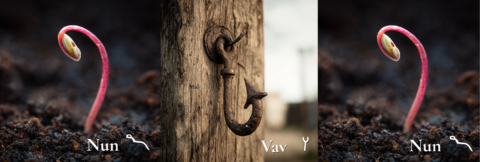
Adam died because he no longer had access to the Tree of Life. Yahusha Ben David is living in the Presence of Yahuah and has access to the Tree of Life. He is the “Son of Continuance”.
The name “Yahu-Tzedeq” means “Yahuah’s righteousness”. “Tzedeq” is also part of the name “Melek-Tzedeq” mentioned in the following encounter.
And Melek-Tzedeq, King of Shalom brought forth bread and wine: and he was the Priest of the Most High Elohiym.
The Messiah is a Melek-Tzedeq Priest as stated in the following prophecy:
Yahuah has sworn, and will not repent, You are a Priest forever after the order of Melek-Tzedeq. Adonai at your right hand shall strike through kings in the day of his wrath. He shall judge among the nations; he shall fill the places with the dead bodies; he shall wound the heads over many countries.
“Salvation” means the “destroyer watches”. This Tehillah (Psalm) says that he will fill the places with dead bodies and wound the heads over many countries. The shepherd destroys the enemies of his sheep. This passage is also confirming that our Messiah’s name is “Yahu-sha” or “Yahuah’s Salvation”. He is a Priest after the order of “Melek-Tzedek” which means “King of Righteousness”. This prophecy is also telling us that Yahusha will be Priest and King on his throne which is in agreement with the prophecy spoken by the Prophet Zakaryah (Zechariah). Here is the name “Melek-Tzedeq” taken from the text from Tehillah 110:4.
QDC YKLM
Melek-Tzedeq
The letter “yod” in black represents the word “of” so this phrase can be translated as “King of Righteousness”. The Ancient Hebrew Lexicon of the Bible defines the Hebrew word “Melek” the following way:
KLM ( masc., מלך / me-lekh) Translation: KING Definition: The male ruler of a nation or city state. KJV Translations: king, royal, counsel Strong’s Hebrew #: h.4428 Strong’s Aramaic #: a.4430, a.4431
“Melek” is a ruler of a nation. The two-lettered root is defined the following way by The Ancient Hebrew Lexicon of the Bible as:
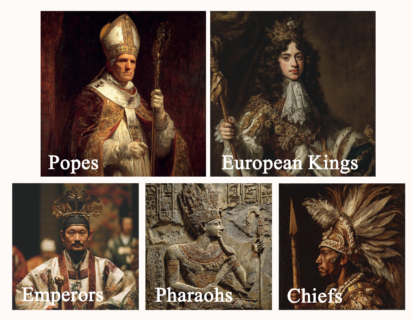
KL לך Action: Walk, Travel, Reign Object: Messenger, Journey, King, Stick Abstract: Kingdom Definition: A nomad traveled on foot with a staff in his hand to provide support in walking as well as a weapon to defend against predators or thief’s. Ancient Hebrew: The pictograph L is a picture of shepherd staff, the K is a picture of the palm of the hand. Combined these mean “staff in the palm”.
The shepherd’s staff is represented by the scepter held in the hand by rulers. Here are pictures of rulers holding scepters in their hands:
Here are the pictures of the letters representing the word “Melek”:

Kings are mighty like the sea. Their authority flows over their realm to the boundaries of its container. For example, the authority of the President of France extends to the accepted boundaries of its country. Water takes the shape of its container. Likewise, authority takes the shape of its container. When Yahuah destroyed the entire earth with a flood, it covered the area of His Authority which is the entire earth and not just a country.
Kings carry a scepter which is a sign of their power and authority. They have the authority to take a life or preserve it. They are the shepherd of their sheep which are their citizens. Like a shepherd, their responsibility is to protect and preserve the sheep from predators or enemies. The scepter is in the hand of the King represented by the letter “kaph”. But this letter also represents the responsibility of the King to nurture and feed his people. They are not afraid of the King and come to him like this little bird in the hands of this individual. This is a “King” or “Melek” in the eyes of Yahuah.
The Hebrew word “Tzedeq” means “righteousness” and it is defined by The Ancient Hebrew Lexicon of the Bible as:
QDC ( masc., צדק) Translation: STEADFAST Definition: The following of the established path or course of action. KJV Translations: righteousness, just, justice, righteous, right Strong’s Hebrew #: h.6664
QDC ( common, צדק / ts.d.q) Translation: BE.STEADFAST (V) Definition: To walk on the right path without losing the way. KJV Translations: justify, righteous, just, justice, cleanse, clear, righteousness Strong’s Hebrew #: h.6663
QDC צדק Definition: To follow a traveled path to prevent from getting lost. Relationship to Parent: In the sense of a straight path from the straightness of the side.
“Tzedeq” is someone who is walking on the right path from the perspective of Yahuah Elohiym. The two-lettered root is defined the following way by The Ancient Hebrew Lexicon of the Bible as:
DC צד Action: Hide, Lay down, Hunt, Correct, Limp Object: Side, Snare, Meat, Flank, Straight Abstract: Stronghold, Righteous Definition: One lies down to sleep, hide or ambush. Ancient Hebrew: The pictograph C is a picture of the side of a man.
Here is a picture of the letter explained with an image for comparison:
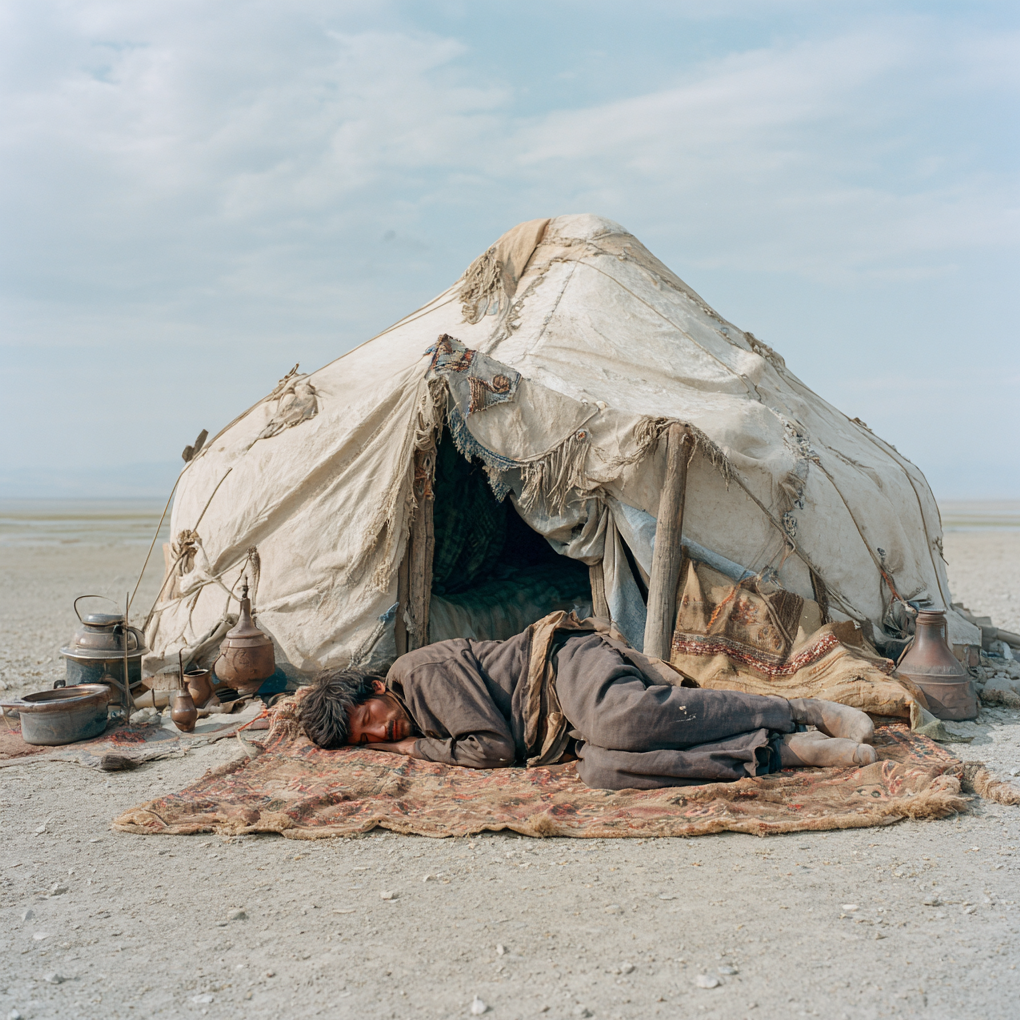
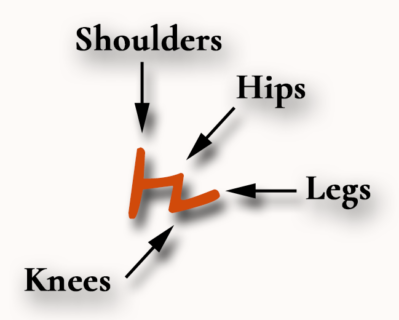
This letter is also a picture of a zigzag trail leading to the “door” or “gates” of a stronghold built into the side of the mountain.
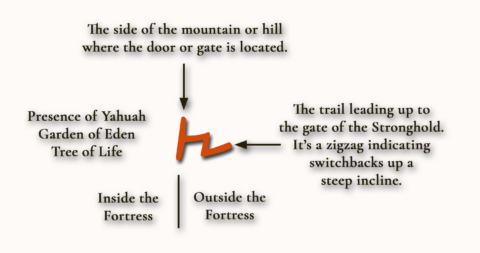
In Mr. Benner’s definition, he does not include an explanation for the letter “dalet” which is a picture of a door. The letter “tzade” is an aerial view of the pathway leading to Yahuah Elohiym’s Stronghold which is the Garden of Eden. People who are walking on this trail are following His instructions and are described as “Tzedeq” or “righteous”. The letter “quph” is a picture of the sunrise on the horizon and means “gathering light”. Here are the three pictures together:

Those who “Tzedeq” are on the trail to the door or gates to the Garden of Eden where the light gathers. Yahusha did say that we are the “light of the world” in the following testimony:
You are the light of the world. A city that is set on a hill cannot be hid. Neither do men light a candle, and put it under a bushel, but on a candlestick; and it giveth light unto all that are in the house. Let your light so shine before men, that they may see your good works, and glorify your Father which is in heaven.
The reference to “good works” can be defined as “works of righteousness”. The “gathering light” includes the people who are the “light of the world” doing “works of righteousness”. Messiah Yahusha did not sin which means he was on the trail leading to the gates of Yahuah Elohiym’s Stronghold. He is “Tzedeq” or “righteous”. He is “Yahu-Tzedeq” which means “Yahuah’s Righteousness”. There is a messianic prophecy regarding this particular name:
And I will gather the remnant of my flock out of all countries where I have driven them, and will bring them again to their folds; and they shall be fruitful and increase. And I will set up shepherds over them which shall feed them: and they shall fear no more, nor be dismayed, neither shall they be lacking, says Yahuah. Behold, the days come, says Yahuah, that I will raise unto David a righteous Branch, and a King shall reign and prosper, and shall execute judgment and justice in the earth. In his days Yahudah shall be saved, and Yashar’El shall dwell safely: and this is his name whereby he shall be called, “Yahuah our Righteousness”.
In the Brenton Septuagint, they actually use the name “Yahu-Tzedeq” which is identical to the name in Zakaryah (Zechariah).
In his days both Yahudah shall be saved, and Yashar’El shall dwell securely: and this is his name, which Yahuah shall call him, Yahu-Tzedeq among the prophets.
This name is best translated as “Yahuah’s Righteousness”. Messiah Yahusha Ben David is an example of Yahuah’s Righteousness. The passage in Yirmeyahu (Jeremiah) makes references to a “shepherd” which feeds his flock. His sheep will no longer be afraid meaning the shepherd destroys their enemies. They will lack nothing because the shepherd will provide for them. He saves his flock and causes them to dwell safely. These are the qualities of a “King” or “Melek” in the eyes of Yahuah. This passage is describing the “Melek-Tzedeq” by this role’s function. Yirmeyahu also refers to the King in this passage as the “branch” like the Prophet Zakaryah (Zechariah).
- Moshe (Moses) lived 1300-1400 years before Messiah Yahusha Ben David.
- Yeshayahu (Isaiah) lived 700 years before Messiah Yahusha Ben David.
- Yirmeyahu (Jeremiah) lived 600 years before Messiah Yahusha Ben David.
- Zakaryah (Zechariah) lived 500 years before Messiah Yahusha Ben David.
Yahuah says that He declares events before they occur.
I am Yahuah: that is My Name: and my glory will I not give to another, neither my praise to graven images. Behold, the former things are come to pass, and new things do I declare: before they spring forth, I tell you of them.
The Prophets representing Yahuah Elohiym spoke of these events before they happened. They prophesied of many things that were fulfilled by Messiah Yahusha Ben David when he appeared the first time. He took away the iniquity of mankind in one day through his death. He redeemed mankind. We can fully expect him to fulfill the remainder of these prophecies upon his return when the second greater exodus occurs. We delve deeper into these prophecies in our series titled: The Message of Salvation in the Torah. We have just touched the tip of the iceberg in this study.
In this study, we have conclusively proven that the name of our Messiah prophesied by the Prophets in the Hebrew writings is “Yahusha Ben David”. He will be a High Priest and King upon his throne after the order of Melek-Tzedeq. He is the “Son of Continuance” because he was resurrected from the dead and lives forever. He is the “Son of Yahuah’s Righteousness” because he did not sin. The statistical odds of these prophecies being fulfilled by random chance in one man is virtually impossible. We discuss the statistical odds regarding Yahusha’s fulfillment of prophecies in the Hebrew writings in a separate study titled: Random Chance or Miracle?
Yahusha Ben David is the Messiah and our returning King.
Download this Article here